 Custer
 Birch Bay's Coastline Is Hard on Siding
Birch Bay sits right on the water, and that changes what a home's exterior has to deal with every single day. Homes a mile inland in Custer face wind and rain like anywhere else in Whatcom County. Homes near the Birch Bay shoreline face all of that plus salt-laden air blowing straight off the water, near-constant marine humidity, and driving rain that hits siding sideways instead of just running down it. Add in the shaded, tree-lined lots common around the bay and you get a long moss and algae season that starts earlier and ends later than it does elsewhere in the county.
None of that is a reason to panic about siding. It's a reason to be specific about what you install and how it's installed. A lot of siding failures we see in this area aren't because a product is inherently bad — they're because a product that's fine in a dry inland climate was never built for salt exposure and constant moisture cycling, or because it went up without the detailing that coastal exposure demands. This page is about what actually works on Birch Bay homes and why we install James Hardie fiber cement, and only James Hardie, on every siding job we take on around the bay.
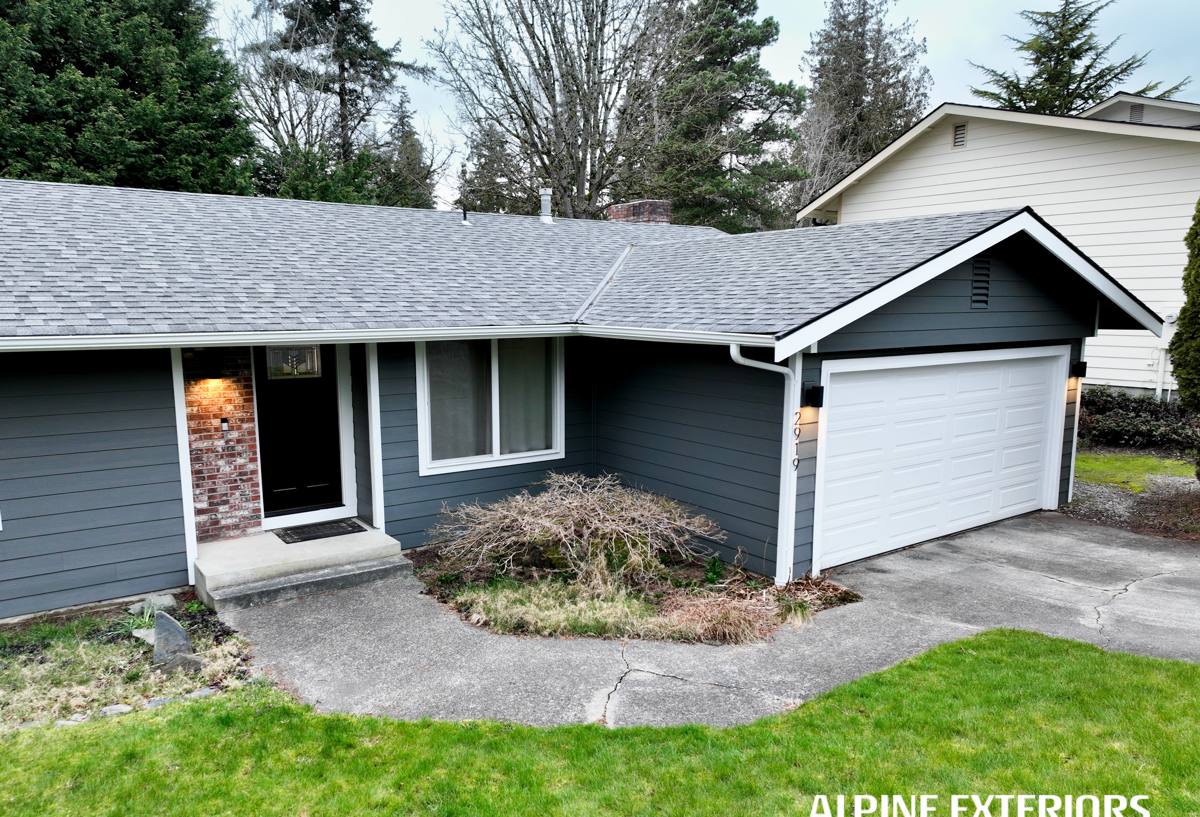
What Salt Air and Coastal Moisture Actually Do to Siding
It helps to understand the mechanism, not just the symptom.
Salt Air
Airborne salt is hygroscopic — it pulls moisture out of the air and holds it against whatever surface it lands on. On metal fasteners, trim, and flashing, that means accelerated corrosion. On paint and factory finishes, it means the surface film has to fight a constant low-grade chemical assault instead of just weathering from UV and rain. Cheaper finishes chalk, fade, and break down faster in this environment than they would twenty miles inland.
Wind-Driven Rain
Birch Bay's open exposure to the water means rain doesn't just fall on a house here — it's pushed into seams, laps, and butt joints by wind. Siding systems that rely on gravity alone to shed water, or that have loose tolerances at the joints, let moisture find its way behind the cladding. Once water gets behind siding on a coastal lot, it doesn't dry out quickly because the ambient humidity stays high.
Moss and Algae
Shaded, damp conditions near the bay are ideal for moss, algae, and mildew growth on exterior surfaces. This is mostly a cosmetic and maintenance issue rather than a structural one, but the products and finishes that resist staining and that can be cleaned without damage make a real difference in how a house looks five and ten years after install.
Why We Install James Hardie in Birch Bay — and Nothing Else
Custer Siding installs James Hardie fiber cement exclusively. We don't install vinyl, LP SmartSide, Cemplank, Allura, or wood siding, and on a coastal job like Birch Bay the reasons matter even more than they would on an inland property.
- Non-combustible material. Fiber cement doesn't feed a fire the way wood-based products can, which matters for insurance and for long-term peace of mind regardless of proximity to water.
- Engineered for wet, coastal climates. James Hardie makes climate-specific product lines, including an HZ formulation engineered for regions with high moisture exposure. That's a meaningfully different starting point than a general-purpose siding product.
- ColorPlus factory finish. The baked-on, factory-applied finish is more consistent and more resistant to fading and chalking from UV and salt exposure than field-applied paint, and it comes with its own finish warranty.
- Dimensional stability. Fiber cement doesn't swell, warp, or rot the way wood-based products can when they take on repeated moisture cycling — a real concern on a lot that stays damp for long stretches of the year.
- Strong transferable warranty. A product warranty is only as good as the material behind it, and Hardie's track record on installed longevity is why we're comfortable standing behind it on demanding coastal exposures.
We're not saying every other product on the market is unusable. We're saying that once you've seen what salt air and driving rain do to a home over a decade, you stop wanting to gamble on it, and we made a business decision to only put our name behind one system.
What "Correct Installation" Means on a Birch Bay Home
Material choice is half the equation. The other half is installation detail, and this is where coastal jobs separate a good contractor from one that's just fast.
Rain Screen Gap
A ventilated rain screen gap behind the siding lets any moisture that does get past the cladding drain and dry instead of sitting against the wall assembly. On a wind-driven-rain site like Birch Bay, this isn't optional — it's one of the biggest factors in whether a wall assembly stays dry over time.
Flashing and Water Management
Every window, door, and horizontal trim transition is a place water can get behind the siding if it isn't flashed correctly. Proper head flashing, kick-out flashing at roof-wall intersections, and correctly lapped house wrap matter more here than in a drier, more sheltered location.
Fastener Selection
Corrosion-resistant fasteners, installed at the manufacturer's specified pattern and depth, are non-negotiable in a salt-air environment. The wrong fastener, or fasteners driven too deep or too shallow, is a slow-motion failure point that won't show up for a few years — right about when it's expensive to fix.
Joints, Caulking, and Gaps
James Hardie's install specifications call for specific gaps at butt joints and trim, sealed with the right sealant for the exposure. Skipping or shortcutting this step is one of the most common ways fiber cement siding underperforms — not because the product failed, but because the installation didn't follow spec.
How Coastal Exposure Compares to a Sheltered Inland Lot
| Factor | Sheltered Custer/inland lot | Birch Bay shoreline exposure |
|---|---|---|
| Salt air corrosion risk | Low | Moderate to high — fasteners and trim need corrosion resistance |
| Wind-driven rain | Occasional | Regular, especially in fall/winter storms off the water |
| Moss/algae pressure | Seasonal | Extended season on shaded, damp lots |
| Rain screen importance | Recommended | Strongly recommended, near-essential |
| Finish/paint stress | Standard UV and moisture cycling | UV, moisture, and salt exposure combined |
Our Process for a Birch Bay Siding Job
The process itself isn't dramatically different from any siding job — the difference is what we pay attention to at each stage given the exposure.
- On-site assessment. We look at wind exposure, shading, current moisture damage, and how water currently moves off the roof and around the foundation before we talk product or price.
- Tear-off and wall inspection. Removing the old siding lets us check sheathing condition, existing house wrap, and framing for hidden moisture damage — common on older coastal homes that have taken on water over the years.
- Water management install. House wrap, flashing at every penetration and transition, and the rain screen gap go in before a single piece of siding is hung.
- James Hardie installation to spec. Correct fastener pattern, correct gaps, correct sealant — installed to the manufacturer's specification for the product line and exposure, not a generic approach.
- Trim and detail work. Corners, window and door trim, and transitions get the same attention as the field siding, since these are the most common failure points in a coastal environment.
- Final walkthrough. We go over the finished job with the homeowner, including what routine maintenance looks like given the site's exposure.
What to Ask Before Hiring a Birch Bay Siding Contractor
Coastal exposure raises the stakes on workmanship, so it's worth being more selective, not less, when choosing who does the work.
- Do they install to the manufacturer's written specification for your specific exposure, or a generic approach used everywhere?
- Do they include a rain screen gap and proper flashing as standard, or as an upsell?
- Can they explain what corrosion-resistant fasteners they use and why?
- Have they worked on homes near the water in Whatcom County before, and can they speak to what's different about it?
- Is the manufacturer's warranty registered and transferable, and do they explain what voids it?
Maintenance: What Birch Bay Homeowners Should Actually Expect
Fiber cement done right is low-maintenance, not no-maintenance, and coastal exposure means a slightly more active routine than an inland home.
- Rinse the exterior periodically to clear salt residue and organic buildup, especially on north- and shade-facing walls where moss and algae take hold.
- Keep gutters and downspouts clear so water isn't overshooting onto siding or pooling at the base of walls.
- Trim back vegetation that keeps siding shaded and damp longer than it needs to be.
- Have caulking and sealant joints checked periodically — they're the first thing to show wear in a high-moisture environment and the cheapest thing to catch early.
- Watch for any staining or discoloration around trim and flashing, which can be an early sign of a water management issue worth addressing before it becomes bigger.
What a New James Hardie Exterior Changes for a Birch Bay Home
Beyond weather resistance, homeowners near the bay tell us they care about how the house holds its look over time — the ColorPlus finish resists the fading and chalking that a salt-air environment accelerates on lesser finishes, so the home doesn't need repainting on the same short cycle a painted wood or vinyl exterior might. Combined with correct water management behind the cladding, that's the difference between a home that looks tired in five years and one that still looks sharp in fifteen.
If you own a home in Birch Bay and your current siding is showing its age — or you're planning ahead before it becomes a problem — we'd be glad to take a look and talk through what your specific lot and exposure call for. Reach out for a free, no-pressure estimate using the form below.