 Custer
 Fiber Cement Siding for Bellingham Homes
Fiber cement has become the material most homeowners in Bellingham ask about by name, and for good reason. It's the product that holds up to a marine climate without asking for constant upkeep, and it's the one we've settled on after years of tear-offs, repair calls, and honest comparisons against everything else on the market. This page is specifically about fiber cement siding as a service in Bellingham: what the material has to survive here, what a correct installation actually involves, and how our process works from first walkthrough to finished wall.
We install James Hardie fiber cement exclusively. That's a narrower offering than most siding contractors give you, and it's intentional. Bellingham's combination of salt-tinged bay air, sideways rain, and a moss season that barely takes a break is a demanding, specific test, and we'd rather stand fully behind one system than split our attention across several.
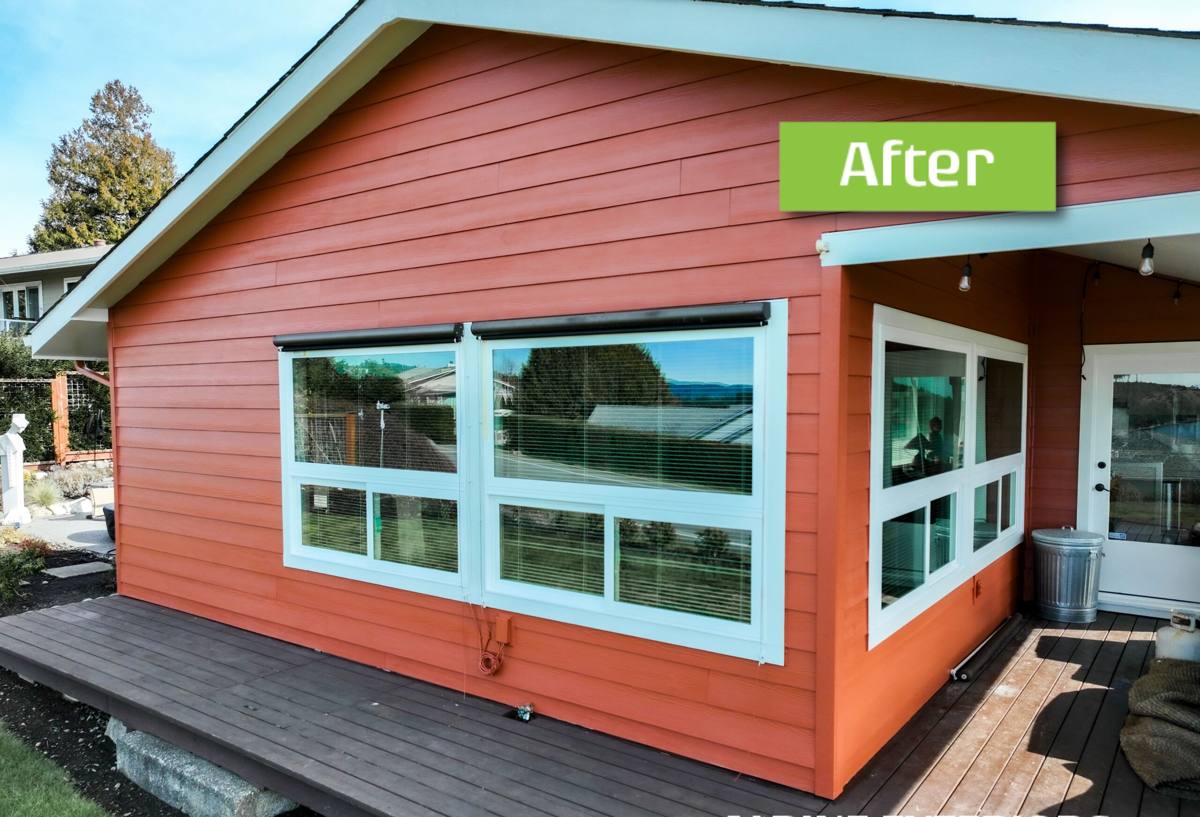
What Bellingham's Climate Puts Fiber Cement Through
None of the three factors below is unusual for the Pacific Northwest on its own. What makes Bellingham a tougher-than-average test is that all three run at the same time, most of the year, on most properties in town.
Salt-Tinged Air Off the Bay
Homes near Bellingham Bay and the Salish Sea sit in a steady flow of moisture-laden, salt-carrying air, and that exposure isn't limited to waterfront lots. It travels. Salt air is hard on fasteners, trim hardware, and any coating that isn't formulated to resist it, and the damage tends to be gradual, showing up as premature fading or corrosion years before anyone would call it a failure.
Rain That Doesn't Fall Straight Down
Wind off the water pushes Bellingham's rain sideways for a large share of the year, which changes what a siding system actually has to do. A lap joint or trim seam that would shed a vertical rainfall just fine can still take on water when it's being driven in at an angle, which is why the flashing and joint detailing behind the siding matters as much as the siding material itself.
A Moss and Mildew Season That Runs Most of the Year
Mild temperatures combined with near-constant dampness give moss and mildew a long runway on shaded, tree-covered, and north-facing walls, which describes a lot of Bellingham's older hillside neighborhoods and tree-lined residential streets. Organic growth on a wall surface isn't just cosmetic; it holds moisture against whatever is underneath it, and that's where a lot of long-term siding damage actually starts.
What Fiber Cement Siding Is, and Why It Handles This Climate
Fiber cement is a manufactured siding material made from Portland cement, sand, and cellulose fiber, cured under pressure into rigid boards and panels. It's inorganic, meaning it doesn't have a wood-based or foam core that can absorb water and swell, rot, or feed insects the way organic siding materials can. That composition is the main reason it performs differently than wood, engineered wood, or vinyl in a wet, salt-exposed climate: there's no organic substrate for moisture to work on in the first place.
The HZ5 Product Line
James Hardie engineers its siding differently depending on the climate it's headed to, and the HZ5 line is built specifically for regions with sustained moisture and freeze-thaw cycling, which is a closer match for Bellingham's winters than a product engineered for a hot, dry market. Specifying the correct HZ line for this region isn't a minor footnote; it's part of what determines how the board actually performs over decades rather than just on a spec sheet.
ColorPlus Factory Finish
Rather than relying on paint applied on site, Hardie's ColorPlus finish is baked onto the board in a controlled factory setting, in multiple coats, before it ever reaches a Bellingham job site. That finish carries its own warranty separate from the substrate warranty and is formulated to resist the fading and moisture intrusion that salt air and UV exposure cause faster in a field-painted finish.
Dimensional Stability
Because fiber cement doesn't expand and contract with moisture the way wood-based products do, it holds its fastening pattern and joint alignment through repeated wet-dry cycles instead of gradually working loose or cupping at the edges. On a climate that delivers those wet-dry cycles constantly rather than seasonally, that stability is a big part of the long-term performance difference.
Fiber Cement Compared to Other Siding Materials
We don't install the products in the rows below, but homeowners deserve a straight comparison rather than a vague claim that fiber cement is "better." Here's how the materials actually differ on the factors that matter most in Bellingham's climate.
| Material | Moisture Behavior | Fire Resistance | Realistic Upkeep in Bellingham |
|---|---|---|---|
| James Hardie fiber cement | Inorganic core; doesn't absorb and swell | Non-combustible | Low; factory finish resists moss and fading |
| LP SmartSide (engineered wood) | Wood-fiber core; sensitive at cut edges and fasteners if seals fail | Treated, but wood-based core | Moderate; edge sealing needs ongoing attention |
| Vinyl siding | Sheds water at the surface but seams aren't sealed; can trap moisture behind panels | Not fire-resistant; can soften or warp under heat | Low labor, but hidden moisture issues are hard to spot |
| Cedar or primed spruce | Organic and absorbent; depends on an intact paint or stain film | Combustible | High; repainting or resealing on a recurring schedule |
Cemplank and Allura are also fiber cement, and fiber cement as a category is the right direction for a climate like this. We standardized on James Hardie specifically because of its HZ5 climate engineering, its ColorPlus finish, and the depth of certified installer support and warranty backing it has in this region.
What a Correct Fiber Cement Installation Actually Involves
Fiber cement's reputation rides heavily on installation quality. A good board installed out of spec can develop the same problems people associate with cheap siding, so we treat the install details as seriously as the material choice itself.
- House wrap or a weather-resistive barrier installed and correctly lapped before any siding goes up
- Manufacturer-specified clearances from grade, roofline, and decks so splash-back and standing moisture stay off the board edge
- Correct fastener type, length, and spacing, driven at the right depth so the board isn't cracked or overdriven
- A drainage gap or rainscreen behind the siding so any moisture that gets past the surface can dry out instead of sitting against the wall
- Flashing installed and lapped correctly at windows, doors, corners, and every penetration, directing wind-driven rain away from seams
- Factory-cut edges used wherever the layout allows, with any field-cut edges primed and sealed before installation
Skip any one of these and the wall can still look right for a year or two. The problems that come from cutting these corners, moss holding moisture at a seam, staining at a fastener line, soft sheathing behind a poorly flashed window, tend to take a few wet seasons to surface, which is exactly why a rushed install can pass a first inspection and still fail the homeowner later.
Our Process for a Bellingham Fiber Cement Project
Walkthrough and Assessment
We start at the house, not a price sheet. We look at wall orientation, tree cover, existing siding condition, and any signs the wall assembly underneath already has moisture problems that need addressing before new siding goes up. Installing fiber cement over hidden rot just buries the same problem under better-looking material.
Tear-Off and Substrate Repair
Where the existing siding comes off, we can actually see what's underneath, sheathing condition, insulation, any old water damage, and repair what needs it before the new siding goes on. This step is where a lot of long-deferred problems get found, and it's better to find them now than under a warranty claim in five years.
Installation to Manufacturer Spec
Every fastener, clearance, and flashing lap follows James Hardie's published installation requirements for this climate zone, not a generic national standard applied without adjustment. That's what keeps the manufacturer's warranty intact and what actually determines how the wall performs through Bellingham's wet seasons.
Final Walkthrough
We walk the finished project with you, explain what little maintenance fiber cement actually needs, and make sure you know what a healthy wall looks like if you ever want to check it yourself down the road.
Cost Factors for Fiber Cement Siding in Bellingham
| Factor | Why It Moves the Price |
|---|---|
| Home size and wall complexity | More square footage, dormers, and roof intersections mean more material and more flashing detail |
| Tear-off vs. install over existing siding | Tear-off costs more upfront but exposes and lets us repair hidden moisture damage before it's buried again |
| Substrate condition | Rot or water damage found under old siding needs repair before new fiber cement goes on |
| Siding profile and trim selection | Lap, shingle, and board and batten profiles use different amounts of material and labor |
| Site access and lot terrain | Sloped hillside lots and mature landscaping, common around Bellingham, can add staging time |
Fiber cement typically costs more upfront than vinyl and is comparable to, or somewhat above, engineered wood, reflecting the heavier material and more labor-intensive install. Where it tends to win back that difference is in lower maintenance cost over the life of the siding and a warranty structure that's worth something when you actually need it. We'll walk your specific home and give you real numbers rather than a rough estimate off square footage alone.
What Fiber Cement Actually Needs From You Afterward
Low-maintenance doesn't mean zero-maintenance, and we'd rather set that expectation honestly than let it come as a surprise.
- Rinse the siding periodically, especially on shaded or north-facing walls where moss and mildew get a head start
- Keep landscaping trimmed back from the siding so walls get airflow and sunlight instead of staying damp under branches
- Check and re-caulk trim joints and penetrations on a normal maintenance cycle, the same as you would for any exterior material
- Address any impact damage, a cracked corner, a chip from a ladder or falling branch, before it becomes an entry point for moisture
- Keep gutters and downspouts clear so roof runoff isn't dumping extra water down the wall face
Why Hire a Crew That Already Works Bellingham
A crew that's installed fiber cement across Bellingham through multiple wet seasons has already seen how this specific climate treats a wall, which orientations stay damp longest under tree cover, how much clearance actually holds up against wind-driven rain here versus what a generic install guide assumes, and where the extra ten minutes of flashing work is the difference between a callback in year three and a wall that's still tight in year twenty. That judgment doesn't show up on a spec sheet or a low bid, and it's usually the real gap between an install that looks fine on day one and one that actually performs for decades.
If you're considering fiber cement siding for a home in Bellingham, we're glad to walk the property, look at what's on the walls now, and give you a straightforward, no-pressure estimate. There's a form below, reach out and we'll set up a time to take a look.