 Custer
 Building Decks in Ferndale's Coastal Climate
Ferndale sits close enough to the water and the Nooksack River bottomland that a deck here lives a different life than the same structure would thirty miles inland. Salt-laden air moving in off the Strait, long stretches of driving rain from fall through spring, and a moss season that can run eight or nine months out of the year all work on wood, fasteners, and finishes at the same time. None of that means a deck can't hold up for decades in this area — it just means the build has to account for those conditions from the footings up, not patch around them after the fact with extra coats of sealer.
Most of the deck problems we get called out to look at in this part of Whatcom County trace back to the same handful of decisions made early: undersized or unflashed ledger connections, decking run without enough gap for drainage, fasteners that weren't rated for the exposure, or a footprint that traps water and shade in the same spot. A deck built to actually match Ferndale's weather looks almost the same as one built anywhere else — the difference is in details most homeowners never think to ask about.
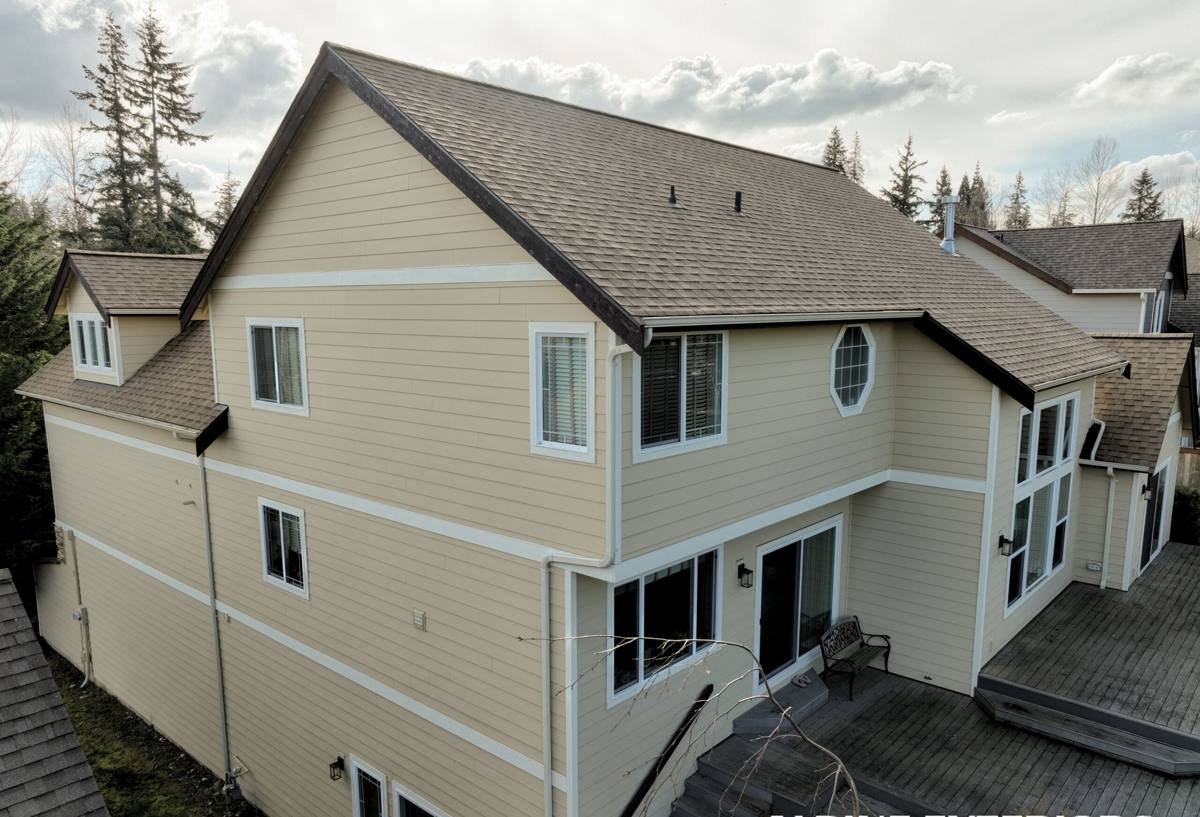
What Ferndale Homes Need From a Deck
Whatcom County's mix of low winter sun angles, tree cover, and moisture means a lot of Ferndale lots have at least one side of the yard that stays damp and shaded for much of the year. That's the spot where moss, algae, and mildew take hold fastest, and it's usually where we recommend the most attention to slope, gap spacing, and ventilation underneath the deck. Homes closer to the water or open to prevailing wind off the Strait deal more with wind-driven rain finding its way into ledger connections and rail post bases, which is a structural and rot concern more than a cosmetic one.
A deck built for this area needs to shed water quickly, dry out between rain events, and keep metal-to-wood contact points from becoming rust or corrosion points. That's true whether it's a small ground-level platform off a kitchen door or a full second-story deck with stairs down to the yard.
Site Factors We Look At
- Sun exposure and how much of the day the deck surface actually dries out
- Wind direction and how much wind-driven rain hits the house wall behind the ledger board
- Soil drainage around footings, especially on lots with heavier clay or a high water table
- Existing moss or algae growth on nearby hardscape as a sign of how damp that spot of the yard stays
- Tree canopy overhead, which affects both shade and the volume of debris that will collect between boards
Framing and Structural Choices That Hold Up
The framing is where a deck's real lifespan gets decided, and it's the part least visible once the project is done. Ledger boards need proper flashing that directs water away from the house sheathing rather than trapping it against the rim joist — this is one of the most common failure points on older decks we're asked to repair or rebuild in this area, and it's almost always cheaper to do right the first time than to fix after rot sets in. Joist tops benefit from a protective tape or coating that keeps standing water from soaking into end grain and fastener holes, which matters more here than in drier climates simply because of how many wet days the framing sits through each year.
Footings need to go below frost depth and bear on solid, well-draining soil — on lots with heavier or poorly draining soil, that can mean deeper or wider footings than a standard plan calls for. We also pay attention to under-deck ventilation on lower decks; a structure that's boxed in tight to the ground with no airflow will stay damp long after the rain stops, which speeds up both wood rot and moss growth on the underside of the joists.
Decking Material Options
There's no single "right" decking material for Ferndale — it comes down to how much maintenance a homeowner wants to take on versus upfront cost, and how the material behaves under repeated wet-dry cycles.
| Material | Upfront Cost | Maintenance in This Climate | Notes |
|---|---|---|---|
| Pressure-treated wood | Lowest | Annual cleaning, periodic sealing or staining | Needs consistent upkeep to resist moss and moisture staining; most affordable option |
| Cedar | Moderate | Regular sealing to hold color and resist graying | Naturally more rot-resistant than treated wood but still needs maintenance in wet conditions |
| Composite decking | Higher | Occasional washing, no sealing or staining | Resists rot and moisture absorption well; surface can still grow algae or moss film if never cleaned |
| PVC/capped polymer | Highest | Minimal — occasional washing | Fully moisture-resistant board, best for the wettest or shadiest sites; premium price point |
Composite and capped polymer boards from manufacturers like Trex, TimberTech, or Fiberon have become popular in this area precisely because they hold up to repeated soaking without the annual maintenance wood requires. That said, no decking surface is maintenance-free in a climate like ours — even composite boards will grow a thin film of algae or moss in a shaded, damp corner if they're never washed off. We walk homeowners through the honest trade-offs for their specific site rather than defaulting to whatever's easiest to sell.
Railings, Fasteners, and Hardware
Salt air accelerates corrosion on standard fasteners and connectors, which is part of why we spec stainless steel or coated, corrosion-rated hardware for structural connections — joist hangers, ledger bolts, post bases — rather than standard galvanized products that are fine further inland but can start showing rust streaks and weakening within a few years this close to the water. Streaking from a corroding fastener isn't just cosmetic; it's usually a sign the fastener itself is degrading faster than it should.
Railing systems face the same exposure. Wood rail caps need the same maintenance schedule as the decking itself, while metal or composite rail systems need hardware and cable or baluster connections rated for coastal exposure. We check code-required rail height and baluster spacing as part of every design regardless of material — those requirements don't change with the weather, but the hardware that has to survive the weather does.
Moss, Mildew, and Drainage Management
Moss season in Whatcom County isn't a minor nuisance for a deck — left unmanaged, moss and algae hold moisture against the board surface and speed up both rot and slip hazards. The fix starts in the build: proper gap spacing between boards for drainage, a slight slope away from the house so water doesn't pool, and enough airflow underneath the deck that the structure actually dries between storms rather than staying damp for weeks at a stretch.
Ongoing care matters too, and it's lighter than most homeowners expect once the deck is built right:
- Sweep leaves and debris out of board gaps before they compost in place and hold moisture
- Rinse or lightly scrub shaded areas a couple times a year where moss tends to establish first
- Keep gutters and downspouts near the deck clear so runoff isn't dumping extra water onto the structure
- Check ledger flashing and fastener heads annually for early rust staining or gaps in caulking
- Trim back overhanging branches to let more light and air reach the deck surface
Our Deck Building Process
We start with an on-site look at the lot — sun exposure, drainage, soil, and how the deck will tie into the house — before talking through material and layout options. From there we handle design, a written estimate that spells out material and labor separately, permitting where required, and a build schedule that accounts for weather rather than fighting it; framing and footing work in particular go better on drier stretches, which we plan around when possible.
During the build we flash every ledger connection, tape joist tops, use corrosion-rated fasteners throughout, and set gap spacing for real drainage rather than just visual consistency. Before we call a project finished, we walk the deck with the homeowner, cover the maintenance schedule for whatever material was chosen, and make sure questions about care and warranty are answered before we leave.
Permits and Codes
Deck permitting requirements depend on the size, height, and attachment method of the structure, and whether the project falls under Whatcom County or City of Ferndale jurisdiction depending on the specific address. Rather than guess at requirements for a given lot, we pull the actual permit requirements for that property before work starts and build to the guardrail, footing, and attachment codes that apply. Skipping this step is one of the more common corners cut on lower-cost deck jobs in this area, and it can turn into a real problem at resale when a deck shows up on an inspection report without permit history.
Why Hire a Crew That Already Works Ferndale
A contractor who's already built and repaired decks around Ferndale and the rest of Whatcom County has seen which lots drain poorly, which sides of a house take the worst of the wind-driven rain, and which material and fastener choices actually hold up here versus what looks fine on paper. That local pattern recognition shows up in small decisions — footing depth, flashing detail, board gap spacing — that don't show up on a glossy brochure but are exactly what separates a deck that's still solid in fifteen years from one that needs major repair in five.
What to Look for When Hiring a Deck Builder Here
- Willingness to walk the specific site and talk through drainage and sun exposure before quoting
- A written estimate that separates material and labor costs, not a single lump number
- Clear answers about fastener and hardware corrosion resistance for this climate
- Experience pulling permits with the correct local jurisdiction
- A straightforward explanation of maintenance requirements for whatever decking material is proposed
If you're planning a new deck or replacing an aging one in Ferndale, we're happy to take a look at the site and put together a straightforward, no-pressure estimate. Use the form below to get started.