 Custer
 Living With Storms in Whatcom County
Everson sits in the part of Whatcom County where weather rolling in off the Pacific and down the Fraser Valley meets a lot of tree cover and a long, wet winter. Homes here don't just get rained on — they get driving rain that comes in sideways during a windstorm, salt-tinged air drifting in from the Salish Sea, and enough shade and moisture most of the year to grow a healthy crop of moss on any roof that isn't kept clear. Any one of those on its own is manageable. All three together, over several seasons, is what turns a small storm-damaged spot into a leak that eventually shows up on your ceiling.
This page is specifically about storm damage roof repair for homes in and around Everson — what the damage tends to look like out here, what a repair actually needs to include to hold up through the next windstorm and the next moss season, and how we approach the work when a call comes in.
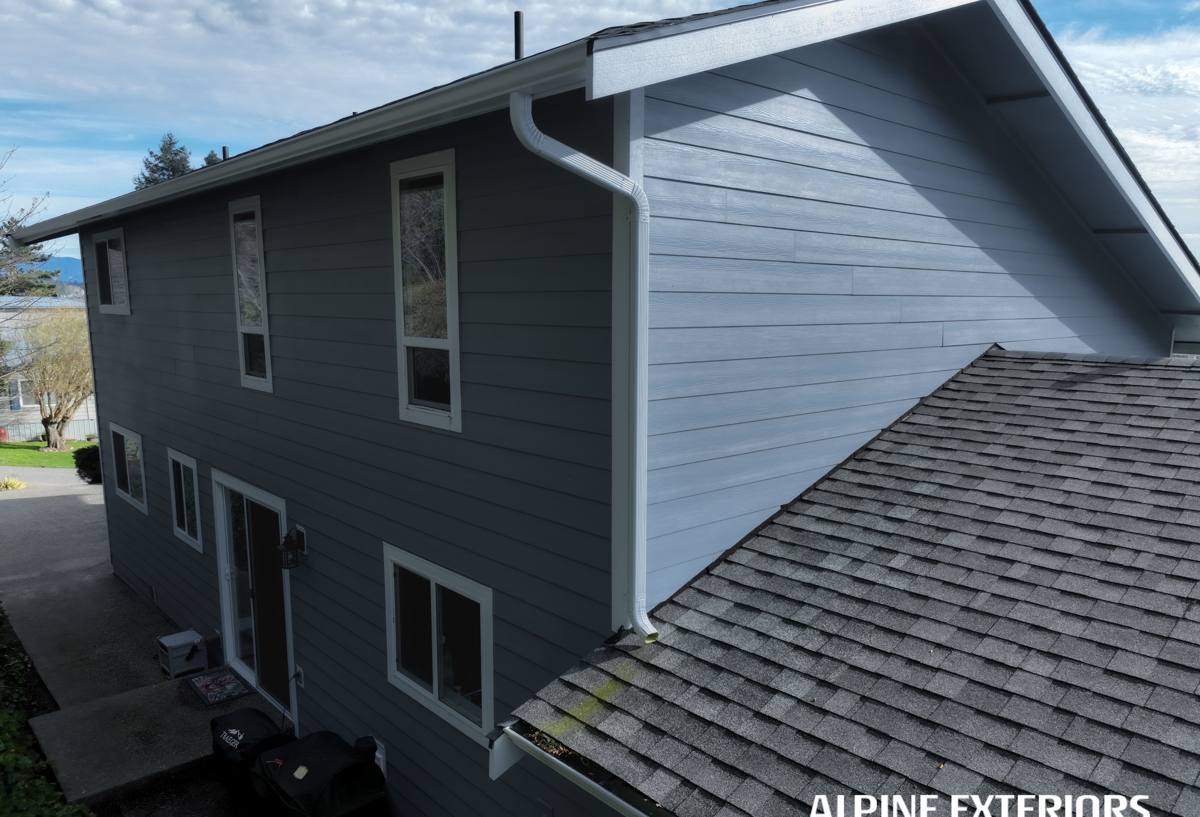
What Local Weather Does to a Roof
Wind and Driving Rain
When a windstorm comes through this part of Whatcom County, the damage isn't always dramatic. Often it's a handful of shingles lifted at the tab edge, a ridge cap that's been worked loose, or flashing around a chimney or vent pipe that's been bent just enough to open a gap. Driving rain finds that gap immediately — it doesn't take much of an opening to get up under a shingle or behind flashing, especially when wind is pushing water uphill against the roof's natural drainage path instead of letting it run off.
Moss and a Long Wet Season
Moss season around Custer and Everson runs long. Shaded roofs, north-facing slopes, and anything under tree cover can stay damp for weeks at a stretch, even between storms. Moss holds moisture directly against the shingle surface and works its way under tabs and around fasteners, which accelerates wear in exactly the spots storm damage already weakened. A roof carrying both unaddressed storm damage and active moss growth deteriorates faster than either problem would on its own — that combination is one of the more common things we get called out for.
Salt Air and Metal Fatigue
Proximity to the Salish Sea means a steady, low-level amount of salt in the air, which is harder on exposed metal than most homeowners expect. Flashing, exposed fasteners, and gutter hardware corrode faster here than they would further inland, and corroded flashing is one of the more common hidden contributors to a leak that homeowners initially blame entirely on "the last storm." In reality, the storm often just finished off a flashing detail that salt air had already been working on for years.
Signs Your Everson-Area Roof Has Storm Damage
Storm damage isn't always obvious from the ground. Some of it shows up right away; some of it takes a season or two of moss and rain working on a weak spot before it turns into a visible leak. Here's what we tell Everson homeowners to check for after any significant wind or rain event:
- Shingles that look lifted, curled, or out of alignment compared to the rest of the roof plane
- Granules collecting in gutters or piling up at the base of downspouts after a storm
- Visible gaps or bent sections in flashing around chimneys, vents, or roof-to-wall transitions
- Water stains on interior ceilings or in the attic, even faint or old-looking ones
- Missing or torn ridge cap shingles along the roof's peak
- Moss buildup concentrated in one area rather than spread evenly across the whole roof
- Soft or spongy-feeling spots when walking the roof, which can mean water has already reached the decking
If you notice any of these after a storm, the right move is a full inspection — not a quick patch on the one spot you can see from a ladder.
What a Correct Storm Repair Actually Involves
A Full Inspection, Not Just a Patch
A storm damage repair done right starts with checking more than the obvious spot. Wind and rain rarely damage just one shingle in isolation — a gust strong enough to lift one tab usually stressed the ones around it too. We look at the whole roof plane, the flashing details, the decking underneath where it's accessible, and the attic for any sign water already got through. Patching one visible spot while missing a second weak point nearby is how homeowners end up calling back a year later about what looks like the "same" leak in a slightly different spot.
Deciding Between Repair and Replacement
Most storm damage on an otherwise sound roof is a repair job — a section of shingles, a flashing detail, or a run of ridge cap. But if the storm damage lands on a roof that was already near the end of its service life, or if moss and moisture have compromised a wider area than the storm itself damaged, we'll tell you honestly whether a repair is a short-term fix or whether full replacement is the better long-term value. We'd rather give you that tradeoff up front, in plain terms, than sell a repair we don't actually expect to hold.
Matching Materials the Right Way
Repairs also need to match what's already on the roof — not just in color, but in shingle profile, weight, and exposure — so the repaired section sheds water the same way the rest of the roof does. A mismatched patch can shed water differently than the surrounding shingles, which sometimes creates a new weak point instead of fixing the old one.
Common Storm Damage & What It Takes to Fix It
Every storm-damaged roof is a little different, but most of what we see in the Everson area falls into a handful of categories:
| Damage Type | What Typically Causes It | Typical Repair Scope |
|---|---|---|
| Lifted or missing shingles | High wind gusts catching a tab edge | Section replacement matched to existing shingle profile and exposure |
| Damaged flashing | Wind flex, age, and salt-air corrosion around chimneys, vents, and walls | Flashing removal and re-installation with new underlayment tie-in |
| Granule loss / bare spots | Wind-driven rain and debris abrasion | Inspection for decking exposure; targeted shingle replacement |
| Ridge cap damage | Sustained wind pressure along the roof's highest, most exposed line | Ridge cap removal and reinstallation, checked against attic ventilation |
| Moss-accelerated wear | Long wet season on shaded or north-facing slopes | Moss removal and treatment, plus repair of any shingle already compromised beneath it |
| Soft or damaged decking | A prolonged, undetected leak from any of the above | Decking replacement before new shingles or flashing go back on |
The cost of any of these varies with the size of the affected area, roof pitch and access, the age and material of the existing roof, and whether decking underneath needs to be replaced. We don't quote a number without seeing the roof in person — but we'll walk you through what's actually driving the cost on your specific repair before any work starts.
Our Process From Call to Cleanup
- Inspection. We walk the roof and check the attic where it's accessible, looking at both the storm damage itself and anything nearby it may have affected.
- Documentation. We photograph the damage and the surrounding area — useful for your own records and for any insurance claim you decide to file.
- Written estimate. You get a clear scope of work and price before anything is repaired, including whether we found damage beyond what prompted the call.
- Temporary protection, if needed. If the damage is actively letting water in and the repair can't happen immediately, we can tarp or otherwise stabilize the area first.
- Repair. Shingles, flashing, ridge caps, or decking get replaced to match the existing roof as closely as possible, with attention to the details — underlayment tie-in, fastener pattern, ventilation — that determine whether a repair actually lasts through the next storm season.
- Cleanup and walkthrough. We clear debris and old materials and walk the finished repair with you before we consider the job done.
Working With Your Insurance Company
Many storm damage repairs in Whatcom County get filed as insurance claims, and a clear, well-documented inspection makes that process go smoother. We can provide photos and a written description of the damage for your adjuster, and point out anything we find that isn't visible from the ground. We're not a public adjuster and we don't negotiate your claim on your behalf, but a straightforward, honest assessment of what's actually damaged — no more, no less — is generally what helps a claim move without friction on either side.
Why a Crew That Already Works Everson Matters
A roofing crew that regularly works in and around Everson and the rest of Whatcom County has already seen how the local combination of wind, driving rain, moss, and salt air plays out on real roofs, season after season. That matters for a few practical reasons: we know which repair details tend to fail first out here — flashing and ridge lines, mostly — we're not guessing at how local moss growth interacts with existing storm damage, and we're close enough to get eyes on a damaged roof quickly, which matters when water is actively getting into a home.
It also means we're still around after the repair is done. If something about a repair doesn't hold up the way it should, you're calling a crew that's still local and still working in the area, not chasing down a company that did one job here and moved on.
If a recent storm has left you with damage — or you're just not sure whether what you're seeing is storm-related — we're glad to take a look. Use the form below to request a free, no-pressure estimate, and we'll give you an honest read on what your roof actually needs.