 Custer
 Why Everson's Climate Wears Out Siding Faster Than People Expect
Everson sits in the part of Whatcom County where marine air off the Salish Sea meets the Nooksack River valley. That combination means homes here deal with more sustained moisture exposure than most homeowners realize — not just rain totals, but how long surfaces stay wet between storms. Add wind-driven rain that gets pushed sideways into siding laps and trim joints, salt-tinged air that corrodes unprotected fasteners over time, and tree cover dense enough to keep north- and shade-facing walls damp for weeks at a stretch, and you get a climate that's genuinely tough on exterior materials.
Moss is the visible symptom most homeowners notice first — dark green streaks running down siding, buildup in horizontal laps, staining that comes back every year no matter how many times it's pressure washed off. But moss is really a signal of a longer problem: siding staying wet for extended periods, which is exactly the condition that causes wood-based and engineered-wood products to swell, delaminate, or rot from the inside out. Whatcom County's moss season isn't a few weeks in spring — it's most of the year, because the humidity and shade that support moss growth rarely let up here.
What Siding Actually Needs to Do in This Environment
For a house in Everson, siding has one job above all others: manage moisture without absorbing it. That sounds simple, but it rules out a lot of products that perform fine in drier climates. The material needs to:
- Resist water absorption at the core, not just at a painted surface layer
- Hold its shape and dimensions when saturated and dried repeatedly, season after season
- Resist fungal growth and rot even where sun exposure is limited
- Take a factory finish that doesn't rely on the homeowner repainting every few years to stay sealed
- Stand up to wind-driven rain at every seam, corner, and penetration — not just on the flat field of the wall
This is the exact reason we standardized on James Hardie fiber cement and stopped installing engineered wood siding, vinyl, and other alternatives years ago. It's not a marketing position — it's what held up on the homes we service in Whatcom County and what didn't.
Why We Don't Install LP SmartSide, Vinyl, or Primed Wood Here
LP SmartSide and similar engineered-wood products use a wood-strand core, which means the core itself can absorb moisture at cut edges, fastener penetrations, and any point where the factory coating gets compromised during installation. In a climate with Everson's rain totals and humidity, that's a real long-term risk, not a hypothetical one. Vinyl has the opposite problem — it doesn't rot, but it flexes and warps with temperature swings, fades over time, and its seams and J-channels give wind-driven rain more opportunities to work behind the cladding. Primed wood and cedar look great new but demand a repainting and caulking schedule that most homeowners can't keep up with once moss and mildew take hold. None of these are "bad" products in every setting — they're just not what we're willing to warranty on homes that see this much sustained moisture.
James Hardie Fiber Cement: Built for This Specific Climate
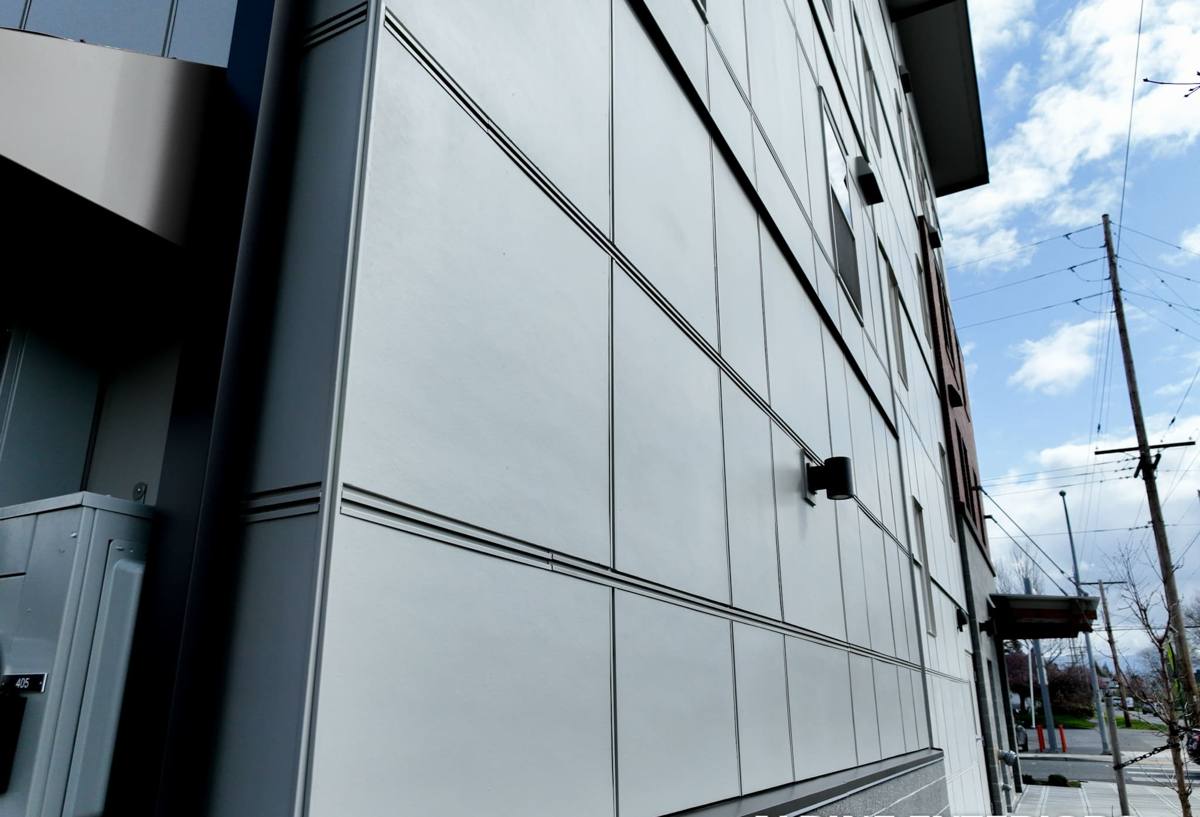
James Hardie engineers its siding in climate-specific formulations, and the HZ5 product line — the one used throughout Western Washington — is formulated for exactly the freeze-thaw cycles, high humidity, and heavy rainfall Whatcom County sees. Fiber cement's cellulose-reinforced cement composition doesn't absorb water the way wood-based products do, and it won't warp, crack, or provide a food source for the mold and mildew that thrive in shaded, damp conditions. The ColorPlus factory finish is baked on under controlled conditions and carries its own finish warranty separate from the product warranty — meaning the color and the substrate are backed independently, and homeowners aren't relying on a field-applied coat of paint to keep water out.
For a house near Everson, that combination — a non-absorptive core plus a factory finish that doesn't rely on annual maintenance — is what actually stands up to a marine-influenced climate over 20-30 years rather than 5-8.
What a Correct Fiber Cement Installation Actually Involves
Fiber cement siding is only as good as the installation behind it. This is where a lot of jobs go wrong — not because the material failed, but because the moisture management details underneath it weren't done correctly.
Moisture Barrier and Flashing
Every installation starts with a code-compliant weather-resistive barrier, correctly lapped so water sheds downward and outward, never into a seam. Flashing at windows, doors, and every roof-to-wall intersection has to be installed in the right sequence — under the barrier above, over the barrier below — so wind-driven rain has nowhere to get behind the cladding. This is the single most common point of failure we find when we tear off older siding in this area.
Clearances and Gaps
Fiber cement needs proper clearance from grade, roof lines, decks, and other horizontal surfaces where water pools or splashes back. Skipping these clearances is one of the fastest ways to trap moisture against the bottom edge of the siding, which is exactly where we see rot and staining show up first on homes that weren't installed to spec.
Fastening
Corrosion-resistant fasteners, driven to the manufacturer's specified depth and pattern, matter more in a salt-influenced coastal climate than almost anywhere else. Overdriven or underdriven nails compromise the board's ability to move slightly with temperature changes, which eventually cracks the material or opens gaps at the laps.
Caulking and Trim Details
Butt joints, corners, and trim transitions need the right sealant, applied correctly, at every point where two pieces of material meet. This is detail work that takes longer to do right — and it's the difference between a wall system that sheds water for decades and one that starts letting moisture in within a few years.
Cost Factors for an Everson Fiber Cement Project
| Factor | Why It Affects Your Project |
|---|---|
| Tear-off and sheathing condition | Homes with existing moisture damage often need sheathing repair before new siding goes on — this is common on older homes in wetter parts of the county |
| Siding profile (lap, shingle, panel) | Different HardiePlank and HardiePanel profiles vary in material cost and installation labor |
| Trim and accessory scope | Fascia, soffit, corner boards, and window trim replacement adds labor but closes off the moisture entry points siding alone can't address |
| Home size and wall complexity | Multiple gables, dormers, and cut-ins increase flashing and fitting time significantly |
| ColorPlus vs. field-applied finish | Factory-finished ColorPlus costs more upfront but eliminates the repainting cycle that field-finished siding requires in this climate |
| Access and site conditions | Tree cover, slope, and setback from neighboring structures affect staging and crew time |
Our Process for Everson Homes
Assessment
We start by looking at what's actually happening behind the existing siding, not just what it looks like from the curb. Moss staining, soft spots, and stained trim tell us where moisture has already gotten in, which shapes the tear-off and repair scope before we ever talk about the new siding itself.
Installation
Tear-off, sheathing repair where needed, weather-resistive barrier, flashing, and then the James Hardie siding system itself — installed to the manufacturer's specifications for HZ5 climate zones, not shortcuts that happen to look finished on installation day.
Final Walkthrough
Before we consider the job done, we walk the exterior with the homeowner, checking every trim line, corner, and penetration. Any questions about maintenance or what to expect in year one get answered on-site, not left for a phone call later.
Why It Matters That We Already Work This Area
A crew that regularly works Whatcom County knows what happens to siding installed without the right moisture details — because we're the ones who get called to tear it off and see it firsthand. We know which wall orientations in this area take the worst of the wind-driven rain, how long moss takes to become a real problem versus a cosmetic one, and what flashing details actually hold up through a full Pacific Northwest wet season. That's not something a crew unfamiliar with this specific climate picks up on the first job.
Maintenance: What Fiber Cement Actually Requires
- Rinse siding annually to clear pollen, dust, and early moss growth before it takes hold
- Inspect caulking at trim joints and penetrations every year or two, and re-caulk if it's cracked or pulling away
- Keep gutters clean and downspouts directed away from the foundation to reduce splash-back onto lower siding courses
- Trim back vegetation and tree limbs that keep walls shaded and damp longer than necessary
- Watch for any soft spots, staining, or gaps at seams and address them early rather than waiting
Compared to the repainting and caulking schedule that wood-based and engineered-wood siding demand in this climate, that's a short list — and it's the reason ColorPlus-finished James Hardie siding holds up with so little upkeep over its service life.
If you're weighing a siding replacement in Everson or elsewhere around Custer, we're happy to take a look at your home and walk through what we'd actually recommend — no pressure, no obligation. Use the form below to request a free estimate.