 Custer
 Building a Deck That Actually Holds Up in Everson
Everson sits in a part of Whatcom County where weather isn't gentle on outdoor structures. Between salt-laden air drifting in off the Strait of Georgia and Puget Sound, long stretches of driving rain through fall and winter, and a moss season that can stretch from October into May, a deck here works harder than a deck almost anywhere else in the state. A deck built to a generic national spec will show problems within a few seasons: soft spots near the house, green film on the boards, corroding hardware, and railings that start to wobble. A deck built for this specific climate looks the same on day one and on year ten.
We build and repair decks throughout the Custer and Everson area, and most of the calls we get for "deck repair" trace back to the same handful of decisions made at construction time — the wrong fastener, no drainage plan, decking laid tight against the house wall, or a substructure that was never rated for how wet this region actually gets. This page walks through what a correctly built deck in Everson needs to do, how we build it, and what you should expect from a contractor working in this environment.
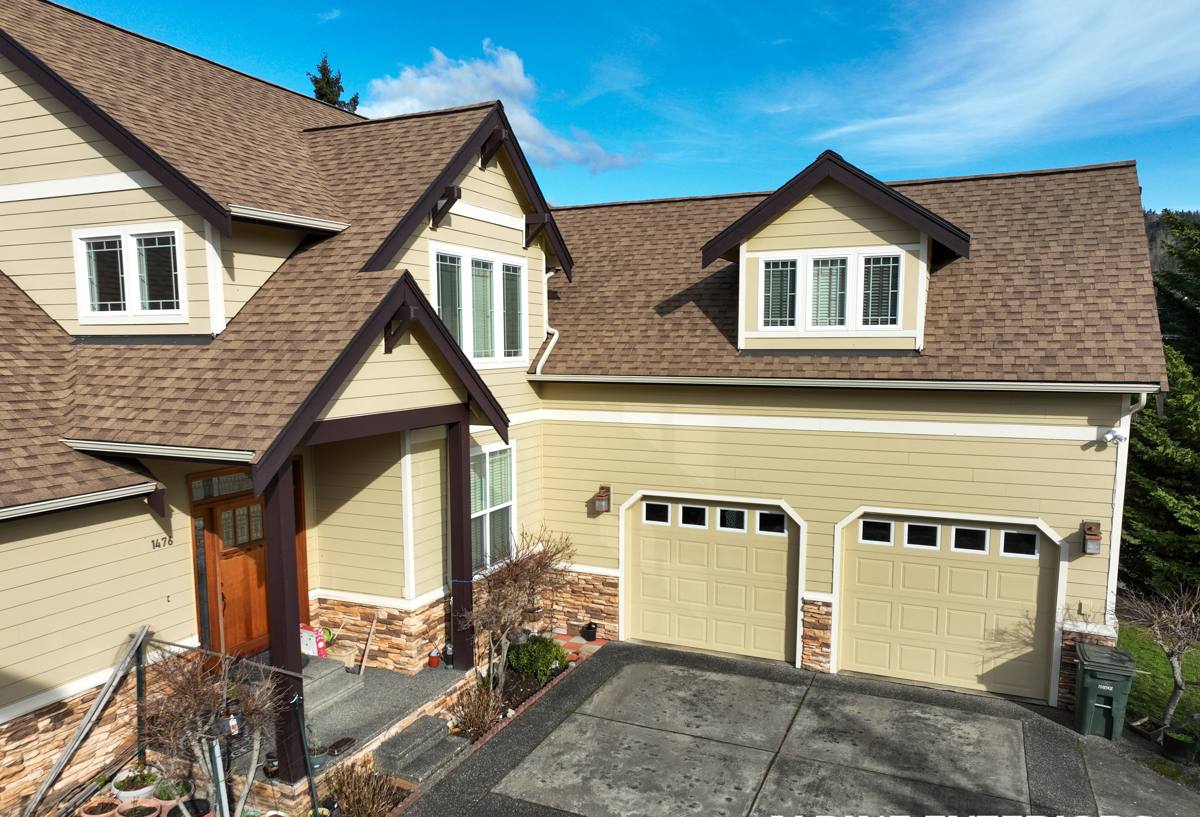
What Salt Air, Rain, and Moss Season Actually Do to a Deck
Salt Air and Metal Fasteners
Coastal air carries fine salt particles that settle on every exposed surface, including the nails, screws, brackets, and joist hangers holding a deck together. Standard galvanized fasteners can start corroding within a few years in this kind of exposure. Once a fastener rusts, it loses grip strength long before it looks obviously bad — which is why a deck can seem solid right up until a board or a railing post suddenly isn't.
Driving Rain and Water Intrusion
Rain here doesn't just fall straight down — wind-driven rain gets pushed sideways into ledger boards, under railings, and into any gap where flashing was skipped. Over time that moisture works into end grain and fastener holes, which is where wood decking and framing actually rot first, not on the flat surface of the boards.
Moss, Algae, and Surface Buildup
With extended damp, low-light stretches, moss and algae get a real foothold on any deck surface that doesn't drain and dry quickly. Beyond looking bad, moss holds moisture against the board surface for days after it rains, which accelerates rot in wood decking and can make composite and even some sealed surfaces genuinely slick and dangerous underfoot.
Choosing Decking Material for This Climate
There's no single "best" decking material — the right choice depends on your budget, how much upkeep you want to do, and how the deck is oriented relative to sun and rain exposure. Here's how the common options actually perform under Everson conditions:
| Material | Moisture Behavior | Moss/Algae Resistance | Maintenance |
|---|---|---|---|
| Pressure-treated wood | Prone to cupping and checking if not sealed regularly | Low — needs regular cleaning | Annual cleaning and re-sealing recommended |
| Cedar | Naturally decent rot resistance, but still absorbs moisture over time | Moderate | Periodic oil or sealant to maintain appearance and protection |
| Composite decking | Doesn't rot, but lower-grade boards can absorb some moisture at cut ends | Better than wood, but still needs washing | Occasional washing; no sealing needed |
| PVC / capped composite | Fully moisture-resistant surface and core | Best resistance, sheds surface growth more easily | Lowest — mainly seasonal washing |
In a climate like this, we lean toward capped composite or PVC decking for most Everson homeowners simply because it removes the moisture-absorption variable entirely. Wood and cedar can still be the right call if you want a specific look or a lower upfront cost — we'll be honest with you about the maintenance commitment that comes with that choice rather than talk you into it.
Where Decks Actually Fail: The Substructure
The decking boards are the part everyone sees, but the framing underneath is what determines whether a deck lasts 8 years or 25. In our experience, most deck failures in this region start in one of three places:
The Ledger Board Connection
Where the deck attaches to the house is the single most water-exposed connection on the whole structure. Without proper flashing that directs water away from the house sheathing, driving rain gets pushed behind the ledger and rots both the ledger and the wall framing behind it — often invisibly, until siding or interior damage shows up.
Joist Hangers and Fasteners
We use fasteners and hangers rated for the coastal, high-moisture exposure this area sees — not the cheapest galvanized option available. It costs a little more upfront and is invisible once the deck is finished, but it's the difference between hardware that's still solid in fifteen years and hardware that's rusting through in five.
Post Bases and Ground Contact
Posts set directly in soil or concrete without a proper standoff base wick moisture continuously. We set posts on elevated metal bases that keep the wood itself off wet ground and concrete, which matters even more here given how long the ground stays saturated during the wet months.
Our Deck Building Process
- On-site assessment — we look at sun exposure, drainage slope, proximity to the house, and how the deck will actually be used before recommending materials.
- Design and material selection — honest conversation about wood versus composite versus PVC based on your budget and how much maintenance you want to take on.
- Permitting — most new decks and significant rebuilds in Whatcom County require a permit; we handle that process rather than leaving it to you.
- Framing and flashing — ledger flashing, hardware rated for coastal exposure, and post bases that keep wood off wet ground.
- Decking installation — correct board spacing and fastening pattern for the material chosen, with attention to drainage at the house line.
- Railings and finishing — code-compliant railing height and spacing, with hardware matched to the same corrosion-resistance standard as the framing.
- Final walkthrough — we go over care and maintenance specific to the material you chose before we consider the job done.
Drainage, Spacing, and the Details That Prevent Moss
A deck that sheds water quickly is a deck that doesn't grow moss. We pay close attention to a few details that generic builds often skip:
Board spacing has to be wide enough to let water drain through rather than pool on the surface, but tight enough that it doesn't feel uneven underfoot. We also keep decking pulled back slightly from the house wall so water isn't funneled straight into the siding, and we make sure the deck surface has a slight slope away from the structure. On lower decks close to grade, we check that there's enough clearance underneath for airflow — a deck sitting low and tight to damp ground is one of the fastest ways to grow moss on the underside of the boards and shorten the life of the framing.
Permits and Working in Whatcom County
Whatcom County generally requires a building permit for new decks above a certain height or size, and for any deck attached to the house. Rules can shift based on your specific lot and the scope of the project, so we confirm what's required for your Everson property before work starts rather than assuming. Skipping a required permit isn't just a paperwork risk — it can become a real problem later if you sell the home or need to file an insurance claim.
Deck Maintenance Checklist for This Climate
Whatever material you choose, a little seasonal attention goes a long way in this climate. We recommend:
- Sweep or rinse the deck surface regularly during wet months to keep moss and algae from getting established
- Check railing posts and stair connections once a year for any looseness
- Inspect the ledger flashing area where the deck meets the house for any signs of staining or soft wood
- Clean debris out from between boards so water can keep draining freely
- For wood or cedar decking, re-seal on the schedule recommended for that specific product — don't wait until it visibly needs it
- Trim back overhanging vegetation that keeps the deck surface shaded and damp longer than it needs to be
Why Hire a Crew That Already Works in Everson
A deck built by a crew unfamiliar with this specific stretch of Whatcom County often looks fine at handoff and then reveals its problems two or three winters later, once the salt air and driving rain have had time to find every shortcut. We build decks in this area routinely, which means our material choices, fastener selection, and drainage details are already calibrated to what actually happens here — not to a generic regional average. That familiarity is also why we can give you a realistic maintenance expectation up front instead of a sales pitch, and why we stand behind the framing decisions we make, since we're the ones who'll be back if something needs attention.
If you're planning a new deck or need an honest look at one that's showing its age, we're happy to come take a look. Fill out the form below for a free, no-pressure estimate — we'll walk the site, talk through material options, and give you a straight answer on what your Everson deck actually needs.