 Custer
 Why Semiahmoo Homes Need a Different Approach to Windows
Semiahmoo sits close enough to the water that homes here take a different kind of weathering than houses just a few miles inland. Salt-laden air moves through window hardware and frame seams, wind off the bay drives rain sideways into gaps that would stay dry elsewhere, and the long stretch of gray, damp months every year gives moss and algae months at a time to establish themselves on anything that stays wet. A window that performs fine in a drier part of Whatcom County can fail early here — not because the product is bad, but because it wasn't installed or specified with this specific exposure in mind.
We work on homes in and around Semiahmoo and Custer regularly, and the failure patterns we see are consistent: fogged double-pane glass from seal failure, soft trim or sill wood from slow leaks nobody noticed for a year or two, and hardware that's corroded to the point of sticking or seizing. Energy-efficient windows done right in this neighborhood aren't just about a lower heating bill — they're about keeping water and salt air from finding their way into the wall assembly in the first place.
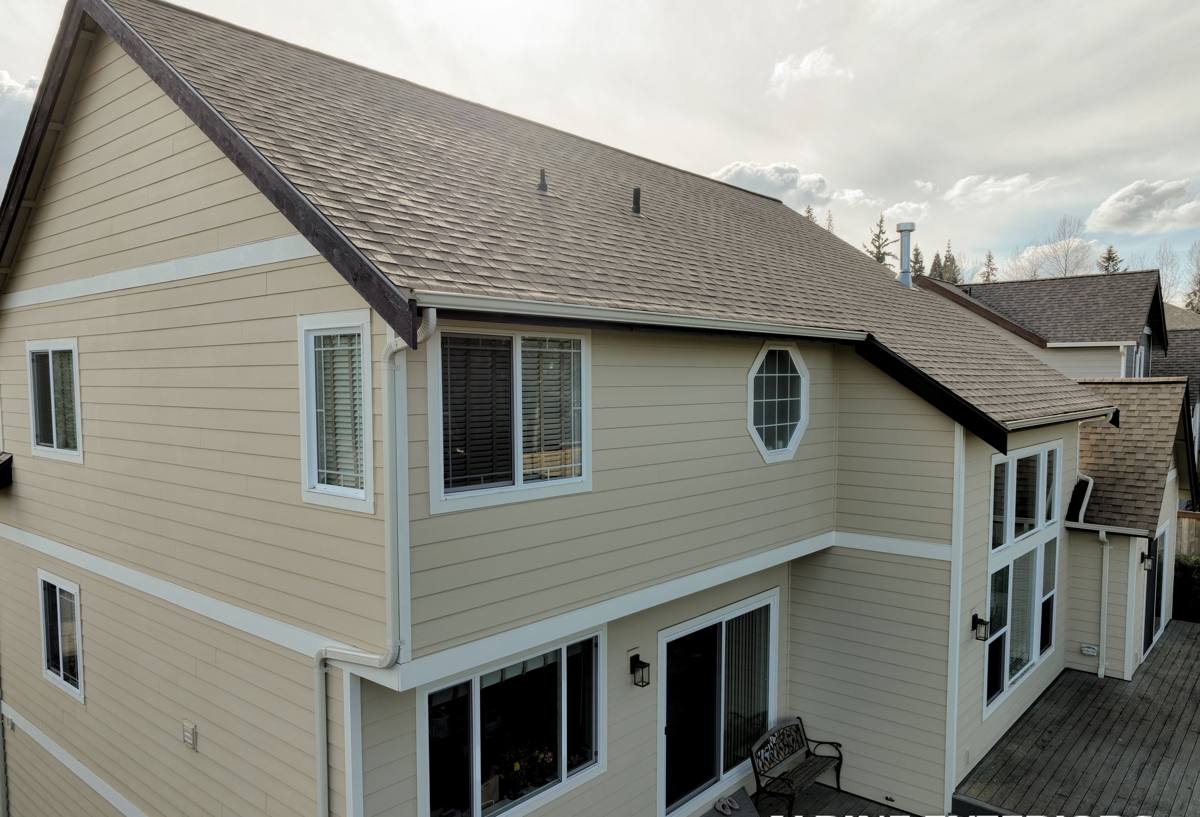
What Whatcom County's Coastal Climate Does to Windows Over Time
Salt Air and Corrosion
Airborne salt is corrosive to unprotected metal, and that includes window hardware, weep hole covers, and lower-grade fasteners. Over years, corrosion can cause locks and cranks to bind, weep systems to clog with rust and debris, and finishes on aluminum-clad products to pit or discolor faster than the manufacturer's literature would suggest for an "average" home.
Driving Rain and Wind-Driven Water
Semiahmoo's exposure to wind off the water means rain doesn't just fall straight down — it gets pushed sideways and upward under eaves and into any gap in the flashing or sealant around a window opening. A window that's watertight in still conditions can still leak in a wind-driven storm if the flashing details underneath it weren't done correctly. This is one of the most common reasons we get called out to a "good" window that's leaking: the problem usually isn't the window unit, it's what's around it.
Long Moss Season and Prolonged Moisture
Whatcom County's moss season runs long — often eight or nine months of the year with enough moisture and shade to keep organic growth active. On windows, that shows up as moss and algae staining on sills, trim, and lower sashes, and it also means any wood trim or sill that isn't properly sealed or is a poor material choice stays damp longer between dry spells, accelerating rot.
What "Energy-Efficient" Actually Means for a Semiahmoo Home
Energy efficiency in a window comes down to a handful of measurable factors, but for this climate two of them matter more than the marketing usually emphasizes: how well the unit resists air and water infiltration, and how well the frame material holds up to sustained moisture and salt exposure without warping, corroding, or needing constant upkeep.
| Factor | Why It Matters Here | What to Look For |
|---|---|---|
| U-Factor | Lower U-factor means less heat loss through the glass and frame during our long wet, cool season | Look for a U-factor suited to Pacific Northwest coastal conditions, not a national average spec |
| Air infiltration rating | Wind off the bay finds any gap; a poor air-infiltration rating means drafts and moisture intrusion | Lower infiltration numbers, verified by the manufacturer's testing |
| Frame material | Salt air and moisture stress frames differently than an inland climate | A frame and hardware finish rated for coastal or marine exposure |
| Glazing/gas fill | Double or triple glazing with an inert gas fill improves both efficiency and condensation resistance | Confirm the spacer system is a warm-edge design, which resists seal failure longer in temperature swings |
| Weep system design | Weep holes need to shed water even with debris and salt buildup | Ask how the weep system is protected from clogging over time |
What a Correct Installation Involves
The window unit itself is only part of the job. In a coastal microclimate like Semiahmoo's, the installation details around the window are just as important as the product specification — often more so, since most leaks we're called to repair trace back to flashing or sealant, not the window itself.
- Removing old units carefully to expose the rough opening and check for hidden rot or prior water damage before anything new goes in
- Correcting any soft framing or sill damage found during removal, rather than covering it back up
- Installing house wrap and flashing tape in the correct shingle-lap order so water is always directed outward and down, never trapped behind the new window
- Using a sill pan at the base of the opening to catch and redirect any water that gets past the primary seal
- Sealing and insulating the gap between the window frame and rough opening without over-compressing the frame, which can affect how the window operates
- Setting the window level, plumb, and square, then confirming smooth operation before final trim and sealant work
- Finishing exterior sealant joints designed to shed wind-driven rain, not just still-air moisture
Choosing the Right Window for This Microclimate
There's no single "best" window for every home, but for Semiahmoo we steer homeowners toward products and configurations that hold up to salt exposure and sustained moisture with the least amount of upkeep. That generally means favoring finishes and hardware rated for coastal use, frame materials that don't require regular repainting or refinishing to stay protected, and glazing packages that resist condensation on cool, humid days rather than just rating well on a summer heat-loss chart.
We also pay attention to orientation. A window facing the prevailing wind and weather off the water takes more direct exposure than one on a sheltered side of the house, and in some cases that affects which glazing or frame option makes the most sense for that specific opening — it's not always the same choice on every elevation of the same house.
Our Process, From Estimate to Final Inspection
- On-site assessment — we look at each window opening individually, not just the house as a whole, since exposure and condition can vary window to window
- Honest scope of work — if we find rot, prior leak damage, or flashing problems during the assessment, we tell you before work starts, not after
- Product selection — we walk through the realistic options for your budget and exposure level, including the trade-offs of each
- Careful removal and prep — old units come out cleanly, and any hidden damage gets addressed properly rather than covered
- Installation to manufacturer and flashing best practices — including sill pans, correct flashing lap order, and non-compressive insulation
- Final check — operation, seal, and weather-tightness are confirmed before we consider the job finished
Signs Your Current Windows Are Costing You Money
Many Semiahmoo homeowners live with underperforming windows longer than they need to simply because the signs show up gradually. Watch for these:
- Visible fog or moisture between panes of double-pane glass — a sign the seal has failed and the insulating gas has escaped
- Cold drafts near the window frame even when the window is fully latched
- Condensation forming on the inside of the glass regularly during cooler months
- Sticking, seized, or hard-to-operate locks and cranks, often from corrosion
- Soft or discolored sill and trim wood, especially on wind-exposed elevations
- Visible moss, algae, or black staining building up on sills and lower sashes
- A noticeably higher heating bill compared to similarly sized homes nearby
Why Hiring a Crew That Already Works in Semiahmoo Matters
A contractor who mainly works inland doesn't necessarily think about weep system maintenance access, wind-driven rain at this specific exposure, or how long moss season here really runs. We work on homes throughout Custer and the surrounding Whatcom County coastline regularly, so the flashing details, sealant choices, and frame recommendations we make are based on what actually holds up in this exposure over years, not just on a manufacturer's general installation guide written for a nationwide audience.
That local familiarity also shows up in smaller ways — knowing which elevations of a typical Semiahmoo home take the worst of the weather, recognizing early signs of salt corrosion before they become hardware failures, and understanding how the area's moisture cycle affects wood trim and sealant life span.
Maintenance That Keeps New Windows Performing
Even a correctly installed, well-specified window benefits from basic upkeep in this climate. Rinsing salt residue off frames and hardware periodically, keeping weep holes clear of debris and moss, and checking exterior sealant joints once a year for cracking or separation will extend the life of the installation significantly. None of this is difficult, but it's easy to overlook until a problem has already started — a quick seasonal check is usually all it takes.
If you're dealing with drafty, fogged, or hard-to-operate windows in Semiahmoo, or you're planning ahead for a remodel, we're happy to take a look and give you a straightforward, no-pressure estimate using the form below.