 Custer
 Why Birch Bay Puts Windows to the Test
Birch Bay sits right on the water, and that changes what a window has to deal with compared to a house even a few miles inland. Homes here face salt-laden air off the bay, wind-driven rain that hits siding and window openings sideways instead of straight down, and a wet season that stretches long enough to grow moss on anything that doesn't dry out. None of that is unique to any one house — it's just what Whatcom County's marine climate does to a building envelope year after year. Windows are one of the first places that shows up, because they're full of seams, seals, and moving parts.
A window that's rated efficient on paper but installed or built without accounting for this environment will underperform here faster than the same window would in a drier part of the state. That's the gap we focus on closing: matching the product and the install to what Birch Bay actually throws at a house, not just what a spec sheet says in general.
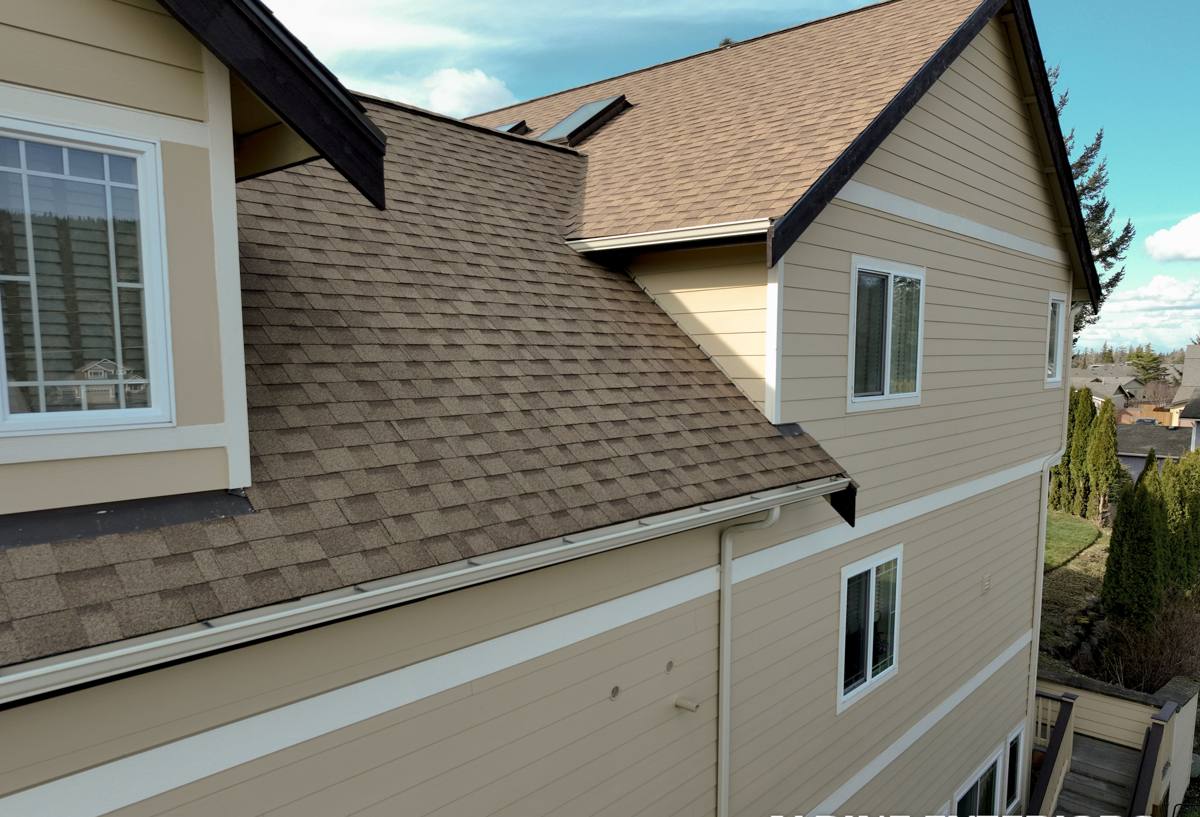
What "Energy-Efficient" Actually Means in This Climate
Efficiency ratings on a window box are only useful once you know what they're measuring and which ones matter for a coastal Whatcom County home.
U-Factor
U-factor measures how well a window resists heat transfer — lower is better. This is the number that matters most locally, since our climate is defined more by damp cold and constant humidity swings than by extreme heat. A low U-factor window keeps interior surfaces warmer, which also cuts down on the condensation that feeds mold and mildew growth around frames and sills in a house that already deals with a lot of ambient moisture.
Solar Heat Gain Coefficient (SHGC)
SHGC measures how much solar heat a window lets in. Because Birch Bay doesn't get punishing summer sun, homeowners here generally don't need to chase the lowest possible SHGC the way someone in a hot, sunny climate would. A moderate SHGC that lets in some free winter warmth on clear days, without turning a west-facing room into a greenhouse in July, is usually the right balance.
Air Leakage and Condensation Resistance
These two ratings matter more here than in most inland climates. Air leakage rate affects how much wind-driven moisture and drafts get past the sash and frame during a storm. Condensation resistance affects whether you see fogging or water beading on the interior glass and frame during our long stretches of cool, humid weather — which, left unaddressed, is exactly what feeds mold and rot around a window opening.
| Frame Material | Coastal / Salt-Air Performance | Maintenance | Typical Lifespan Here |
|---|---|---|---|
| Vinyl | Good — won't corrode or rot; some flexing in temperature swings | Low; occasional cleaning | 20–30 years |
| Fiberglass | Very good — dimensionally stable, resists moisture and salt exposure well | Low | 30+ years |
| Aluminum | Prone to corrosion pitting near salt air unless well-coated; conducts cold | Moderate — coatings need monitoring | 20–25 years near the water |
| Wood / Wood-clad | Needs the cladding or finish to stay intact; exposed wood suffers in damp/salt conditions | Higher — finish upkeep required | Varies widely with maintenance |
We don't push one frame material for every house. We do steer homeowners away from bare or poorly clad wood and unprotected aluminum in direct salt-air exposure, not because those products are bad in general, but because they demand a level of upkeep that most people don't want to sign up for a block or two from the water. Vinyl and fiberglass hold up with far less maintenance in this specific setting.
Signs Your Current Windows Are Costing You Money
Old or poorly sealed windows in a house like this usually show themselves in a few predictable ways before a homeowner connects the dots to their energy bill.
- Condensation forming between the panes (a sign the seal has failed on a double-pane unit)
- Visible moss or dark staining building up on the exterior sill or frame
- A noticeable draft near the window even when it's fully latched
- Wood trim or sill that feels soft, or paint that's bubbling near the frame
- Difficulty opening, closing, or locking the window — often a sign the frame has swelled or shifted
- Rooms near windows that feel noticeably colder or damper than the rest of the house
- Rising heating costs without a clear cause elsewhere in the house
Any one of these on its own isn't necessarily an emergency, but a window showing two or three of them is usually past the point where sealant or weatherstripping alone will fix it.
What a Correct Installation Actually Involves
The window unit itself is only part of the performance. In a climate that drives rain sideways and keeps humidity high most of the year, the installation details around the window matter just as much as the glass.
Flashing and Water Management
Proper flashing directs any water that gets past the window's exterior surface back out, rather than letting it track down into the wall cavity. This is one of the most common places we find shortcuts on older installs — flashing skipped, reversed, or taped over instead of properly lapped.
Air and Moisture Sealing
The gap between the window frame and the rough opening needs to be sealed with the right materials — not just caulk on the exterior trim, but proper backer rod, sealant, and, where called for, a compatible flashing tape system. Done wrong, this gap becomes a path for both drafts and moisture intrusion, hidden behind the trim where you won't see it until there's damage.
Fit and Structural Support
A window that's shimmed and leveled correctly operates smoothly and seals evenly around its full perimeter. One that's racked or under-supported will develop uneven gaps over time, which shows up later as drafts, sticking sashes, or premature seal failure.
Our Process for Birch Bay Window Replacement
- On-site assessment — we look at each window's current condition, exposure to wind and rain, and any existing moisture or trim damage before recommending anything.
- Product recommendation — we walk through frame material, glass package, and performance ratings suited to that specific window's exposure, not a one-size answer for the whole house.
- Removal and opening inspection — once the old window is out, we check the rough opening and sheathing for hidden rot or moisture damage before anything new goes in.
- Flashing and sealing — proper flashing and air-sealing are installed as part of the job, not treated as an optional add-on.
- Installation and fit-check — the new window is shimmed, leveled, and tested for smooth operation and even sealing before we consider the job done.
- Interior and exterior finish work — trim, caulking, and finish details are completed to match the rest of the house.
- Final walkthrough — we go over the finished work with you and answer any questions about care and operation before we leave.
Why Local Experience Matters Here
A crew that mostly works drier, inland projects can still install a window competently, but they're not necessarily thinking about salt exposure, moss growth patterns, or how wind-driven rain hits a particular elevation of a house near the water. Working regularly in and around Birch Bay and the rest of Whatcom County means we're used to spotting the early signs of moisture damage before they turn into a bigger repair, and we know which frame materials and installation details hold up under this specific set of conditions versus which ones create maintenance headaches a few years down the road.
Cost Factors to Expect
| Factor | Why It Affects Cost |
|---|---|
| Frame material | Vinyl is typically the most affordable; fiberglass and wood-clad options cost more upfront |
| Glass package | Double-pane vs. triple-pane, and low-E coatings, add cost but also add performance |
| Number and size of openings | Larger or custom-sized windows cost more than standard sizes |
| Condition of the rough opening | Hidden rot or water damage found during removal adds repair work before the new window goes in |
| Install complexity | Second-story access, unusual trim details, or full-frame vs. insert replacement change labor time |
We give homeowners a broad, honest range once we've actually looked at the windows in question — we don't quote sight unseen, because the condition behind the old trim is often the biggest variable in the job.
Maintenance in a Salt-Air Environment
Even a well-installed, quality window benefits from a little seasonal attention this close to the water. Rinsing salt residue off exterior frames a few times a year, keeping weep holes clear so water can drain out of the frame, and checking caulking lines annually for cracking will all extend the life of a window system significantly. Moss and algae buildup on sills and trim should be cleaned off before it holds moisture against the frame long-term — it's a cosmetic issue at first, but it doesn't stay that way if it's ignored through multiple wet seasons.
If your windows are drafty, fogging, or just old enough that you're not sure what condition they're really in, we're happy to take a look and walk you through your options. Fill out the form below for a free, no-pressure estimate — we'll tell you honestly what we find.