 Custer
 Why Ferndale Homes Put Different Demands on a Window
Ferndale sits close enough to the Strait of Georgia and the Nooksack lowlands that homes here deal with a specific mix of weather most inland window installers rarely think about: salt-laced air, wind-driven rain that hits siding and glass at an angle instead of straight down, and a wet season that runs long enough for moss and algae to get a foothold on anything that stays damp. None of that is dramatic on its own, but it adds up year after year, and it shows up first at the windows — because a window is where the wall envelope has the most seams, the most hardware, and the most opportunities for water to find a way in.
Salt Air and Metal Components
Homes within a few miles of the water pick up airborne salt that settles on window hardware, screen frames, and exposed fasteners. Over time this accelerates corrosion on lower-grade hinges, cranks, and locks, and it can pit unprotected aluminum. It's rarely enough to notice in the first year or two, which is exactly why it gets ignored until a crank handle seizes or a lock won't seat cleanly.
Wind-Driven Rain and Water Intrusion
Whatcom County storms don't always drop rain straight down. When wind pushes rain sideways into a wall, the window's flashing and sealant details matter more than the window itself. A well-built window installed with poor flashing will still leak. A modest window installed with correct flashing, sloped sills, and proper weather-resistive barrier integration will usually outperform it.
Moss, Shade, and Slow-Drying Trim
Ferndale's tree cover and long damp season mean north-facing and shaded window trim can stay wet for days after a storm. Wood trim in those spots is where we most often see rot start — not from one bad storm, but from wood that never gets a chance to dry out between rains. That single detail changes what trim material and paint schedule we'd recommend on a shaded elevation versus a sun-exposed one.
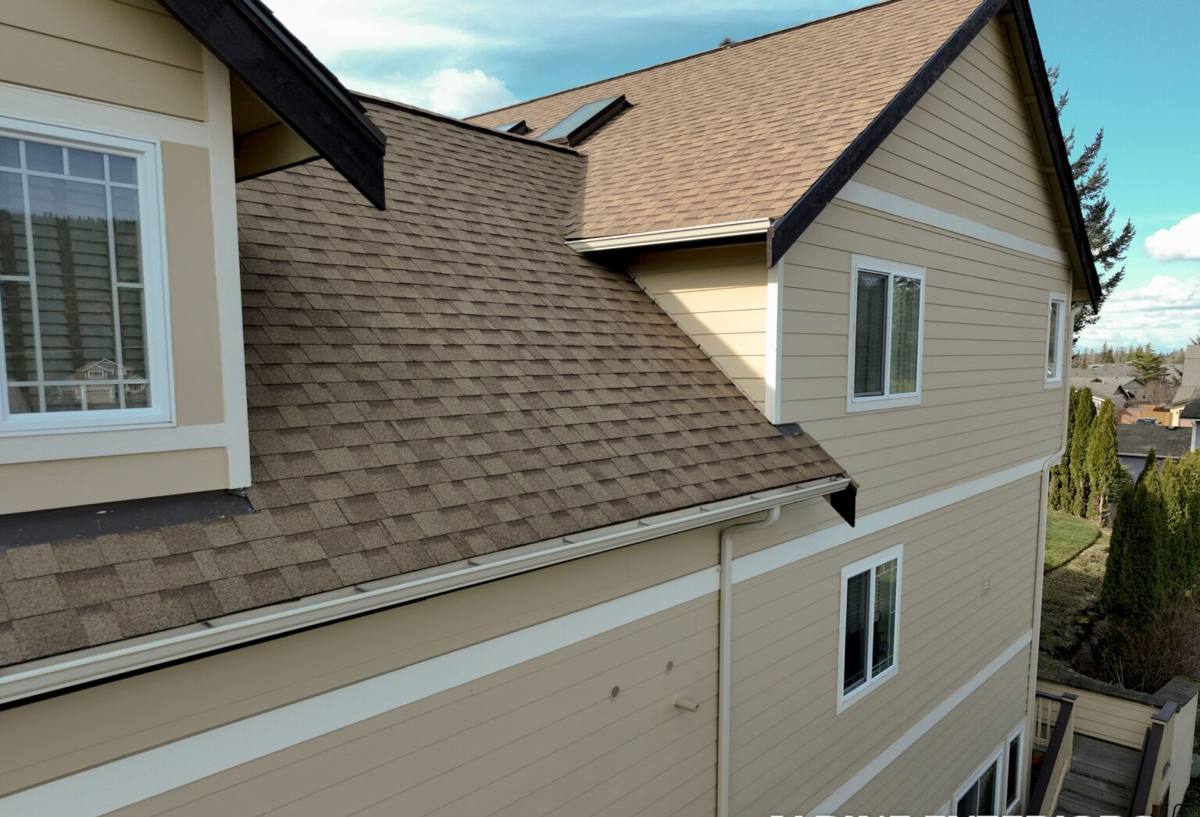
What "Custom" Actually Means for a Window Job
"Custom" gets used loosely in this trade. For us it means two things: the window is built to fit your actual rough opening rather than forcing your opening to fit a stock size, and the material, glass package, and trim details are chosen for where that specific window sits on your house — not a one-size answer applied to every wall.
Matching Openings, Not Just Ordering Sizes
Older Ferndale homes, especially anything built before standardized window sizing became common, often have openings that are slightly out of square or don't match a modern manufacturer's stock dimensions. Custom sizing avoids the shims, foam, and filler trim that a forced-fit stock window needs — which also means fewer gaps for water and air to work through later.
Frame Material Choices for Whatcom County Conditions
We look at exposure before recommending a frame material. A window under deep eaves on a sheltered side of the house has different needs than one on an exposed gable end taking direct wind-driven rain. Frame choice, glass package, and even hardware finish can shift based on that exposure — which is a conversation we have on-site, not over the phone.
Signs Your Ferndale Home's Windows Are Due for Replacement
Most homeowners call us after noticing one or two of these. If you're seeing several at once, it's worth a look before the next wet season rather than after.
- Fog or moisture between the panes of a double-pane window (a failed seal, not a cleaning issue)
- Soft or discolored wood trim around the frame, especially on shaded or north-facing walls
- Cranks, locks, or hinges that stick, feel gritty, or won't fully engage
- Visible daylight or a noticeable draft along the frame edges
- Condensation forming on the inside of the glass regularly through fall and winter
- Paint that's bubbling or peeling specifically at the window trim rather than the whole wall
- A noticeable rise in heating costs without any other explanation
Comparing Frame Materials for This Climate
There's no single "best" material for every home — it depends on budget, exposure, and how much upkeep you want to take on. Here's how the common options stack up for a marine climate like ours.
| Material | Moisture Behavior | Maintenance | Typical Lifespan |
|---|---|---|---|
| Vinyl | Won't rot; unaffected by salt air | Low — occasional cleaning | 20–30 years |
| Fiberglass | Very stable, minimal expansion/contraction | Low | 30+ years |
| Wood (unclad) | Attractive but vulnerable in shaded, damp spots | High — regular painting/sealing | Varies widely with upkeep |
| Wood-clad (aluminum or vinyl exterior) | Good — exterior shell protects the wood core | Moderate — interior wood still needs attention | 25–35 years |
Our default recommendation for exposed elevations in Ferndale leans toward vinyl or fiberglass, simply because they don't give moss and moisture a foothold the way exposed wood does. Wood-clad is a solid middle ground when a homeowner wants a wood interior look without the exterior maintenance burden. We'll walk through the honest trade-offs for your specific walls rather than pushing one product across the board.
How We Approach the Installation
The window unit itself is maybe half the job. The other half is everything around it — and that's where most of the leaks and failures we get called to fix actually started.
- On-site assessment of each opening, exposure, and existing trim or siding condition
- Removal of the old unit with attention to what the flashing and sheathing underneath actually look like
- Repair of any hidden rot or damaged sheathing before the new window goes in — never covered over
- Correct flashing sequence (sill pan, side flashing, head flashing) integrated with the house wrap or building paper, shingle-lapped so water sheds outward
- Setting the window level, plumb, and square, then insulating the gap properly without overcompressing the frame
- Sealing and trimming with materials suited to the exposure of that specific wall
- Final operation check on every sash, lock, and screen before we call it done
Flashing and Weatherproofing Details
A sill pan under the window opening gives any water that does get past the sash somewhere to go besides your wall cavity. It's a small, inexpensive detail that's easy to skip and expensive to have skipped later. We treat it as standard, not an upsell.
Why Installation Technique Matters More Than the Window Brand
We've seen quality windows fail early because of poor flashing, and modest windows perform for decades because the installation was done right. If you're comparing quotes, ask what happens at the flashing and sill — not just which brand is being installed.
Energy Performance in a Marine Climate
Whatcom County doesn't see the extreme temperature swings of a continental climate, but our winters are long, damp, and gray, and heating bills reflect it. A properly installed, well-sealed window with a glass package matched to your home's orientation makes a real difference in comfort — less cold radiating off the glass on a January evening, fewer drafts near the sash, and less condensation buildup on the interior pane during cold snaps. We'll talk through glass options (low-E coatings, gas fill, pane count) based on which direction a given window faces and how exposed it is, rather than quoting the same package for every opening on the house.
Why a Crew That Already Works Ferndale Matters
A window installer who mostly works drier, inland climates can still do competent work, but they're often learning the local failure points on your house instead of already knowing them. Working regularly in and around Ferndale and the rest of Whatcom County means we've already seen which elevations take the worst wind-driven rain in this area, which trim details hold up under a long moss season, and which hardware finishes actually resist salt air over time instead of just looking good in year one. That's not a marketing point — it's the difference between guessing and knowing what this specific climate does to a window installation over ten or fifteen years.
Maintenance That Actually Matters Here
New windows still need a little seasonal attention in this climate, and it's minor compared to what you'd spend fixing a neglected one later.
- Rinse salt residue and grime off frames and glass a couple of times a year, more often if you're close to the water
- Keep gutters and downspouts clear so overflow isn't running down the wall past your windows
- Lubricate cranks, hinges, and locks annually to keep salt air from seizing them up
- Check caulk lines at the trim each fall before the wet season sets in, and touch up anything that's cracked or pulling away
- Trim back vegetation that's shading a window and keeping trim from drying out
If your windows are showing their age, or you're planning a renovation and want the openings done right the first time, we're happy to come take a look. A free, no-pressure estimate gets you a straight answer on what your home actually needs — no upsell, just an honest assessment. The form below will get us started.