 Custer
 Building a Deck That Actually Holds Up in Bellingham's Climate
A deck in the Bellingham area near Custer lives a different life than a deck in a dry inland climate. Whatcom County sits close enough to the water that salt-laden air reaches yards that are nowhere near the beach, and the region's long wet season means a deck can spend months at a time damp, shaded, or both. Add in the moss and algae that thrive in our mild, wet winters, and you have a structure that needs to be built with the local climate in mind from the footings up — not just picked out of a catalog and nailed together.
We build custom decks for homeowners in and around Bellingham who want something that looks good the day it's finished and still looks good, and performs safely, five and ten years later. That means paying attention to drainage, fastener choice, ventilation under the deck, and the small construction details that either shed water or trap it.
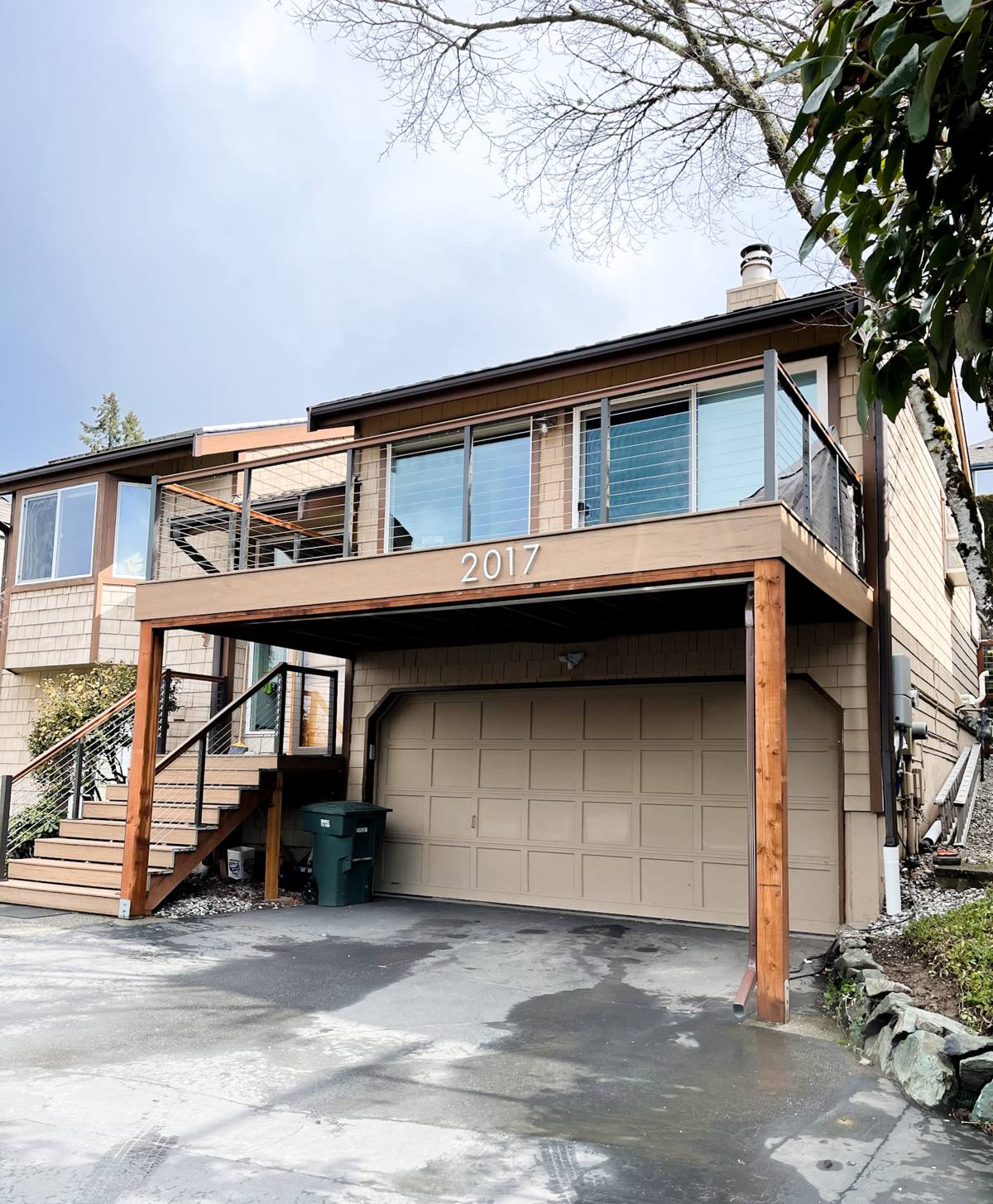
What Bellingham-Area Homes Need From a Deck
Salt Air and Corrosion
Coastal and near-coastal air carries fine salt particles that accelerate corrosion on anything metal — fasteners, brackets, railing hardware, and structural connectors. On a deck built with the wrong grade of hardware, this shows up as rust streaks on the decking, weeping stains around screw heads, and eventually weakened connections at points you can't see from above. It's a slow problem, which is exactly why it gets ignored until a railing post or ledger connection has lost real strength.
Driving Rain and Drainage
Storms here often come in sideways, driven by wind off the water. That means water gets pushed into places a calm, straight-down rain never would — under railing base plates, behind fascia boards, into the gap where decking meets the house. A deck that isn't detailed for driving rain will develop hidden rot in exactly those spots, often years before it shows on the surface.
Moss, Algae, and a Long Wet Season
Western Washington's mild, damp winters are ideal growing conditions for moss and algae, especially on shaded decks under trees or on the north side of a house. Beyond the cosmetic issue, moss holds moisture against the decking surface and becomes genuinely slick underfoot — a real slip hazard on stairs and ramps. A deck built with the right surface material, spacing, and slope handles this far better than one that wasn't designed with it in mind.
Decking Material Options for This Climate
There's no single "best" decking material — the right choice depends on budget, how much upkeep you're willing to do, and how much sun or shade the deck gets. Here's how the common options compare for a Bellingham-area yard:
| Material | Moisture & Moss Resistance | Maintenance | Typical Lifespan |
|---|---|---|---|
| Pressure-treated lumber | Good if properly sealed and re-sealed | Annual cleaning and periodic sealing | 15-20 years with upkeep |
| Cedar | Naturally rot-resistant, still needs sealing | Regular cleaning, refinishing every few years | 15-25 years with upkeep |
| Composite decking | Very good — won't rot, but can still grow surface moss in deep shade | Periodic washing, no sealing or staining | 25-30+ years |
| PVC decking | Excellent — fully synthetic, no wood fiber for moss to grip | Occasional washing | 25-30+ years |
In heavily shaded, north-facing yards common around Custer's tree cover, we often steer homeowners toward composite or PVC for the surface boards specifically because they hold up better against constant moisture and are easier to keep moss off. Wood is still a good, honest choice when it fits the budget or the look of the house — it just asks for more attention over time.
What a Correctly Built Deck Involves
The parts of a deck you can see are only half the job. The parts that determine whether it lasts are underneath and behind the finish surface:
- Footings sized for our soil and frost conditions — undersized or shallow footings are a common source of deck movement over time.
- Proper ledger board flashing where the deck attaches to the house — this is the single most common failure point on older decks in wet climates, and it's invisible until there's a problem.
- Joist tape or flashing on top of every joist to keep water from sitting in fastener holes and wicking into the wood grain.
- Stainless steel or coated, corrosion-rated fasteners and hardware — standard hardware store fasteners corrode faster in salt air and can stain lighter-colored decking.
- Correct board spacing and slope so water actually drains off the surface instead of pooling.
- Airflow underneath the deck so the framing can dry out between rain events instead of staying damp for weeks.
Skip any one of these and the deck may still look fine for a few years — the problems that come from cutting corners on drainage and hardware are cumulative, not immediate.
Our Process, Start to Finish
- On-site consultation. We look at your yard's sun and shade exposure, drainage, and how the deck will connect to your house before recommending materials.
- Design and material selection. We walk through the tradeoffs — wood versus composite, railing style, stair placement — based on your budget and how you'll use the space.
- Permitting. Deck projects in Whatcom County typically require a permit depending on size and height; we handle that process as part of the job.
- Site prep and footings. Proper layout and footing depth come first, before any framing goes up.
- Framing, flashing, and structural connections. This is where the climate-specific detailing — ledger flashing, joist protection, corrosion-rated hardware — gets built in.
- Decking, railing, and stairs. Final surface installation with attention to spacing and slope for drainage.
- Final walkthrough. We go over care and maintenance for the specific material you chose before we consider the job done.
Railings, Fasteners, and Hardware — Why the Details Matter
Railings take a lot of abuse from weather because they're the most exposed part of the structure — full sun, full rain, full wind, with less shelter than the deck surface itself. We use hardware rated for exterior and coastal-adjacent exposure, and we pay attention to how railing posts are anchored to the frame, since a loose or corroding post connection is a safety issue, not just a cosmetic one. On composite and PVC railing systems, we also make sure post sleeves and base plates are installed with drainage in mind so water doesn't collect inside them.
Maintenance Expectations by Material
Every deck needs some maintenance in this climate — the question is how much and how often. Wood decks need annual attention: a cleaning to knock back moss and mildew, and periodic sealing or staining to keep water from penetrating the grain. Composite and PVC decking mostly need washing a couple of times a year to keep organic buildup from getting a foothold, especially in shaded areas. In either case, keeping gutters clear above the deck and trimming back overhanging branches goes a long way toward reducing how much moss and moisture the deck has to deal with in the first place.
Simple Signs Your Existing Deck Needs a Look
- Dark streaking or green growth that comes back quickly after cleaning
- Soft or spongy spots underfoot, especially near the house or stairs
- Rust stains around screw heads or bracket locations
- Water that pools instead of draining off after rain
- Railing posts that flex or feel loose when pushed
- Gaps or separation where the deck meets the house wall
Any of these are worth a professional look before they turn into a bigger repair.
Permits and Local Considerations
Deck construction in Whatcom County generally falls under local building permit requirements, with specifics depending on the deck's height, size, and attachment to the house. Setback rules can also apply depending on your lot and its proximity to property lines or shoreline areas, which is worth checking early in the planning process rather than after materials are ordered. We handle the permitting conversation as part of our process so you're not left figuring out code requirements on your own.
Why Hire a Crew That Already Works in the Bellingham Area
A contractor who works this specific stretch of Whatcom County already knows which details matter here — how much rain exposure to plan for, which yards are going to fight moss year-round, and where salt air is going to shorten the life of the wrong hardware. That's the difference between a deck built to a generic national spec and one built for the conditions it will actually face outside Bellingham and Custer. It also means someone local you can call if a question comes up after the project is done, rather than a crew that's moved on to another region entirely.
If you're planning a new deck or replacing one that's showing its age, we're happy to come take a look and talk through what makes sense for your yard, your budget, and this climate. Reach out for a free, no-pressure estimate using the form below.