 Custer
 Why Cherry Point Roofs Take More Punishment
Cherry Point sits out on the open water side of northern Whatcom County, just west of Custer, and that location changes what a roof has to survive. Homes a few miles inland deal with normal Pacific Northwest weather. Homes out here deal with that same weather plus salt-laden air coming off the water, rain that comes in sideways instead of straight down during winter storms, and a moss season that can run nearly year-round in shaded, damp spots. None of that is dramatic on its own, but stacked together over years, it ages a roof faster than its warranty paperwork assumes.
That's the backdrop for every roof repair call we take in this area. The fix that works fine in a dry inland neighborhood doesn't always hold up here, and a repair that ignores the marine exposure tends to fail again within a season or two.
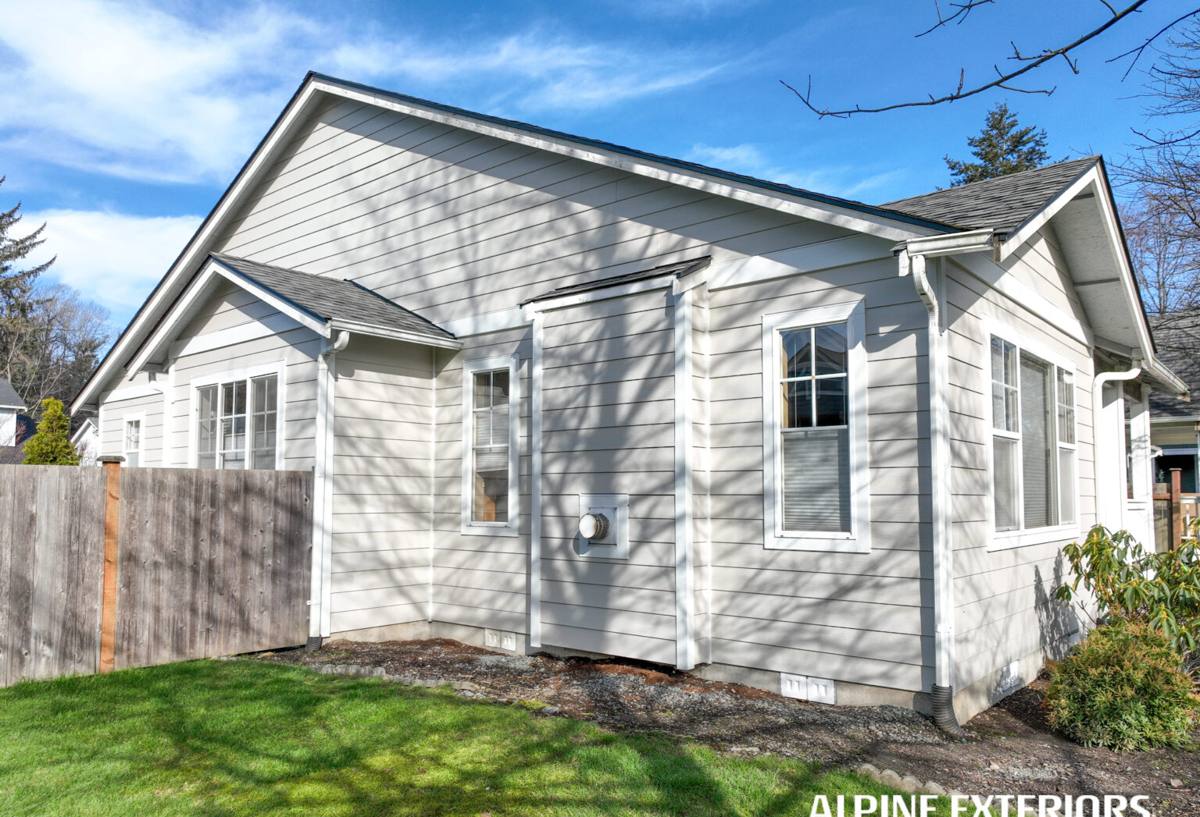
What the Marine Climate Actually Does to a Roof
Salt Air and Metal Components
Salt in the air accelerates corrosion on anything metal — nail heads, flashing, gutter fasteners, vent caps, and the metal edges around chimneys and skylights. Once a fastener starts to corrode, it loses its grip and its seal at the same time, which is how small leaks start in places that look fine from the ground. Standard, uncoated fasteners and thin flashing hold up fine in a lot of the country; near open water in Whatcom County, they're often the first thing to fail.
Wind-Driven Rain
Straight-down rain is easy on a roof — gravity does most of the work of shedding it. Wind-driven rain off the water pushes moisture sideways and upward, under shingle tabs, around vents, and into laps that were never designed to handle water moving against gravity. This is why leaks around Cherry Point so often show up at flashing details — valleys, chimneys, skylights, wall-to-roof transitions — rather than in the open field of the roof.
Moss, Shade, and Trapped Moisture
Whatcom County's long, wet stretch of the year gives moss everything it needs, and shaded north-facing slopes or roofs under tree cover barely get a chance to dry out between storms. Moss doesn't just look bad — its root structure lifts shingle edges, and the mat it forms holds water against the roofing material far longer than it would otherwise sit there. That constant dampness is what eventually rots decking underneath, long after the shingles themselves still look serviceable from the driveway.
Signs a Cherry Point Roof Needs Repair Now
Some damage announces itself with an active leak. A lot of it doesn't, especially in this climate, where moisture damage happens slowly and out of sight. Worth checking for:
- Dark streaking or thick moss growth on north-facing or shaded slopes
- Granule buildup in gutters or at downspout outlets, a sign shingles are wearing thin
- Curling, cupping, or lifted shingle edges, especially near valleys and roof edges
- Rust staining below metal flashing, vents, or fasteners
- Soft or spongy spots when walked, or sagging visible from the ground
- Water stains on interior ceilings, especially after a wind-driven storm
- Daylight visible through the attic roof deck
Any one of these on its own might be minor. Two or three together usually mean water has been getting in longer than it looks like from outside.
Common Repairs We Handle in This Area
| Issue | Typical Cause Here | What the Fix Involves |
|---|---|---|
| Leak at a valley or chimney | Wind-driven rain overwhelming worn or undersized flashing | Remove and replace flashing with correctly lapped, corrosion-resistant material tied into new underlayment |
| Moss-damaged shingles | Prolonged moisture under moss mats on shaded slopes | Moss removal, treatment, replacement of affected shingles, and a look at what's feeding the shade and moisture problem |
| Rusted or failing fasteners | Salt air corrosion over time | Replace with fasteners and flashing rated for coastal exposure, not standard-grade hardware |
| Soft or rotted decking | Long-term hidden moisture, often from an old undetected leak | Cut out and replace the affected decking before any new roofing goes back down |
| Gutter and edge damage | Wind load combined with debris and moss buildup | Repair or replace damaged sections, clear the drainage path, re-secure loose edges |
What an Actual Correct Repair Involves
A roof repair that's going to last through another Whatcom County winter isn't just tarring over a hole or nailing down a lifted shingle. It starts with figuring out why the damage happened in the first place — otherwise you're patching a symptom and the same spot fails again next storm season.
On most calls, that means:
- Tracing the leak or damage back to its actual entry point, which is often several feet from where the stain or drip shows up inside
- Checking the surrounding decking for softness or rot, not just the shingles on top of it
- Matching replacement shingles as closely as possible in type, color, and profile so the repair doesn't stand out
- Rebuilding flashing details — valleys, step flashing, chimney and skylight flashing — with proper laps and corrosion-resistant material
- Using fasteners and underlayment suited to a marine climate, not whatever's cheapest at standard grade
- Checking ventilation and airflow in the area, since poor attic ventilation makes moss and moisture problems worse
Skip any of those steps and the repair looks fine for a season, then reopens.
Moss: Treating the Cause, Not Just the Symptom
Scraping moss off a roof without addressing what's growing it back is a short-term fix. A proper moss job removes the growth without gouging the shingle surface, treats the area to slow regrowth, and looks honestly at what's keeping that section of roof wet — tree cover, poor sun exposure, or a slope that just doesn't drain and dry the way a steeper one would.
Zinc or copper strips near the ridge can help slow moss regrowth on some roofs going forward, but they're a supplement to good repair work, not a substitute for it. If the decking underneath is already compromised, no amount of moss prevention fixes that — the damaged material still has to come out.
Materials and Methods That Hold Up Here
Not every material or install method performs the same near open water. We choose components for Cherry Point repairs based on how they'll actually hold up in this specific exposure, not just what's standard elsewhere in the county.
| Consideration | Standard Approach | Marine-Exposure Approach |
|---|---|---|
| Fasteners | Standard galvanized | Higher-grade corrosion-resistant fasteners that resist salt-air rusting longer |
| Flashing | Minimum-code lap and coverage | Wider, more conservative laps sized for wind-driven rain, not just standard rainfall |
| Underlayment | Basic felt or synthetic | Self-adhering membrane at vulnerable details like valleys and eaves |
| Shingle choice | Standard shingle line | Algae- and moss-resistant shingle options where a full section is being replaced |
None of this means every repair needs the upgraded version of everything — a lot of Cherry Point roofs are perfectly fine with standard materials in most areas and just need the exposed, high-wind, high-moisture spots treated with extra care. Part of doing this job honestly is knowing which is which instead of upselling every repair into a bigger job than it needs to be.
Our Repair Process, Start to Finish
- Inspection. We get on the roof, or use safe access where pitch and access require it, and look at the actual damage, not just the spot you called about — leaks in this climate rarely stay contained to one area.
- Diagnosis and written scope. You get a clear explanation of what's actually wrong, what's driving it, and what the repair will and won't include — no vague verbal estimate.
- The repair itself. Damaged material comes out, decking gets checked and replaced where needed, and everything goes back in with materials suited to this exposure.
- Cleanup. Old material, debris, and moss removal waste leave the site — nothing gets left in gutters or the yard.
- Walkthrough. We show you what was done and why, so you're not just taking our word for it.
Why a Crew That Already Works Cherry Point Matters
A roofer who mostly works inland neighborhoods can still do competent work, but they're guessing at things a crew already familiar with this stretch of Whatcom County already knows: which slopes catch the worst wind-driven rain, how fast moss comes back on a shaded northern exposure this close to the water, and which standard materials just don't hold up long-term out here. That knowledge doesn't show up as a line item on an estimate, but it's the difference between a repair that lasts and one you're calling about again in two years.
It also means faster, more accurate diagnosis. When you've seen the same failure patterns repeat across similar homes in the same conditions, you spend less time guessing and more time fixing the actual problem.
Cost Factors for Roof Repair in Cherry Point
Every repair is different, so we don't quote a number without seeing the roof, but the factors that move the price are consistent:
| Factor | Why It Matters |
|---|---|
| Extent of damage | A single flashing repair costs far less than a section with rotted decking underneath |
| Roof pitch and access | Steep or hard-to-access roofs take longer and require more safety setup |
| Material matching | Older roofs with discontinued shingle lines sometimes need a wider color-blend approach |
| Moss remediation needed | Removal and treatment add time beyond the structural repair itself |
| Decking replacement | Hidden rot found once shingles are pulled back changes the scope |
As a general rule, a simple, isolated repair — a section of flashing or a handful of shingles — tends to be a modest cost. Anything involving rotted decking, a full slope of moss damage, or extensive flashing rebuilds moves into a larger job. We'll always tell you which category yours falls into before any work starts.
If you're seeing moss buildup, a stain on the ceiling, or you just want a straight answer on whether that roof needs attention before winter, we're glad to take a look. The estimate is free, there's no pressure attached to it, and you'll get a plain explanation of what we find — just fill out the form below to get started.