 Custer
 Decks Around Cherry Point Take a Different Kind of Beating
If you own a deck near Cherry Point, you already know it doesn't age the way a deck does twenty miles inland. The marine air moving in off the Strait of Georgia carries salt that settles on fasteners, flashing, and any exposed metal hardware. Add Whatcom County's long wet season — months of driving rain that finds its way into every joint and screw hole — and a deck here is working harder than most people realize. Then comes moss season, which in this part of Washington isn't a few weeks, it's most of the year on shaded or north-facing decks.
None of that means a deck near Cherry Point is doomed. It means the repair work has to account for those conditions, not just patch what's visible on the surface. A board that looks fine on top can be soft underneath from months of trapped moisture, and a fastener that looks solid can be corroding from the inside where salt-laden moisture has been sitting against it.
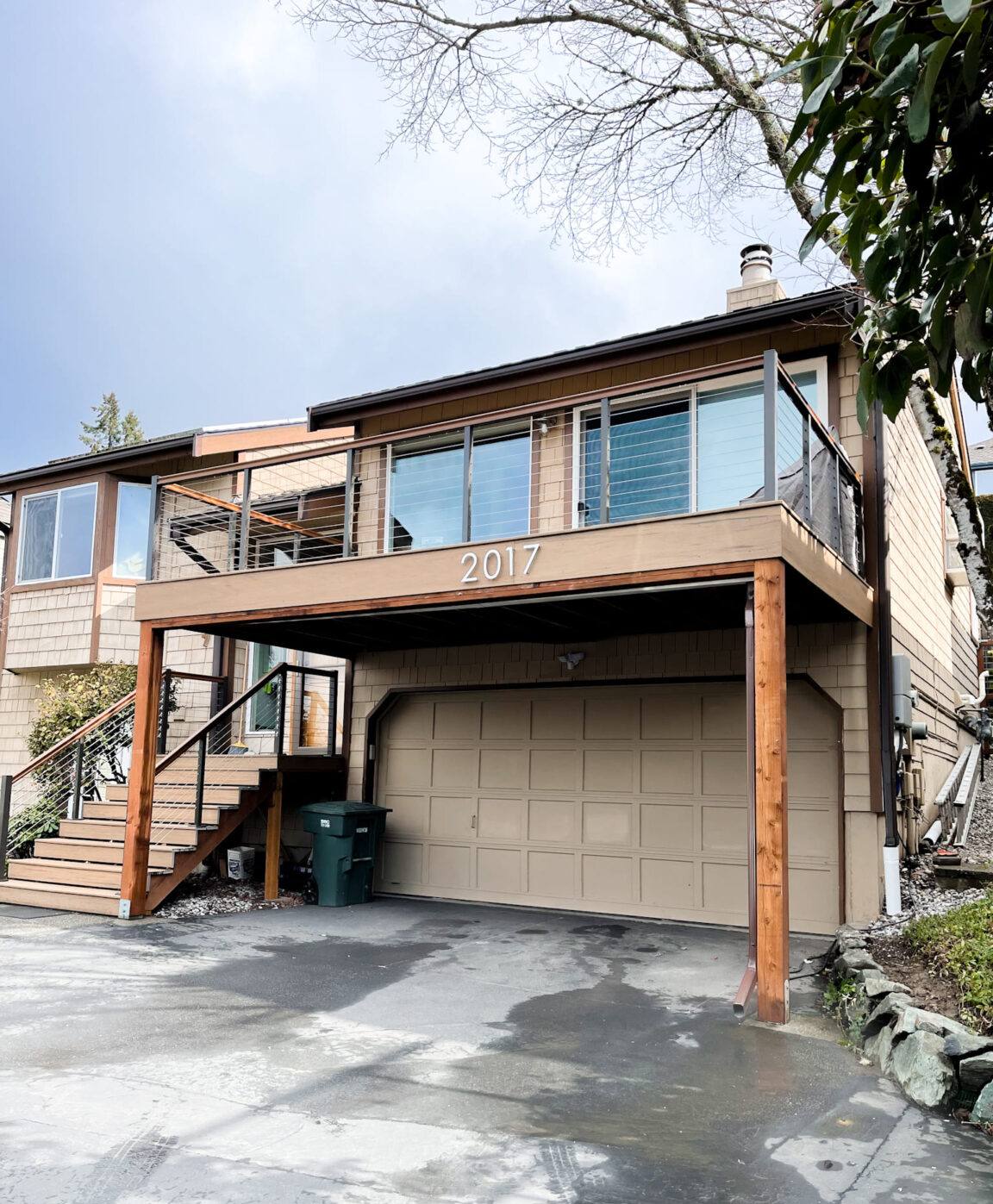
What Salt Air, Rain, and Moss Actually Do to a Deck
Salt Air and Hardware
Standard fasteners and connectors corrode faster in a salt-air environment than in a dry inland climate. Once a fastener starts rusting, it loses grip strength, and a deck ledger board or joist hanger held by weakened fasteners is a structural problem, not a cosmetic one. We see this most often on decks that were built with basic galvanized hardware instead of hardware rated for coastal exposure.
Driving Rain and Trapped Moisture
Rain that comes in sideways gets under railings, behind fascia boards, and into any gap where two pieces of wood meet without proper flashing. Water that can't drain or dry out is what causes rot — not rain itself. Flat-laid boards, poor ledger flashing, and decking installed tight against a house wall are common culprits.
Moss and Extended Wet Season
Moss holds moisture against the wood surface for weeks at a time. On shaded decks or those under trees, moss can establish itself on boards, stair treads, and even structural framing that gets little sun. Beyond making surfaces slick and dangerous, that constant dampness accelerates decay in wood decking far faster than open, sun-exposed areas.
Signs Your Deck Needs Repair
Most deck problems don't show up as one obvious failure — they show up as a handful of smaller signs that add up. Walk your deck and check for these:
- Boards that feel spongy, bounce, or flex more than they used to
- Visible gaps, cupping, or splitting in decking boards
- Rust streaks below fasteners or hardware
- A railing that wiggles or feels less solid than it should
- Soft or discolored wood where the deck meets the house (the ledger board area)
- Persistent moss or dark staining that keeps coming back after cleaning
- Stair stringers that feel uneven or show cracking at the joints
- Any spot where water visibly pools instead of draining off the surface
If you're only seeing one or two of these, it's often a genuine repair, not a full rebuild. If you're seeing several at once — especially soft framing near the ledger — that's worth a closer structural look before we talk about surface fixes.
What a Correct Deck Repair Actually Involves
A repair that just replaces the board you can see and leaves everything underneath alone tends to fail again within a season or two in this climate. A repair done right starts underneath and works outward:
1. Check the Structure First
Ledger board attachment, joists, and posts get inspected before anything cosmetic happens. This is where hidden rot or corroded hardware most often lives, and it's the part of the deck that actually holds weight.
2. Address Water Path, Not Just Symptoms
If a board rotted because water was pooling or trapped, replacing the board without fixing drainage, flashing, or spacing means the new board fails the same way. We look at how water is getting in and moving out before replacing anything.
3. Match or Upgrade Fasteners and Hardware
Given the salt-air exposure around Cherry Point, we default to fasteners and connectors rated for coastal or corrosive environments rather than basic hardware store galvanized. It costs a little more up front and saves a repeat repair down the line.
4. Replace Only What Needs Replacing
Good repair work is targeted. We don't push a full rebuild when a section of joists and a run of boards will solve the actual problem. We also don't patch around a structural issue just to save a return trip.
Repair vs. Replace: How We Help You Decide
| Factor | Leans Toward Repair | Leans Toward Replace |
|---|---|---|
| Structural framing (joists, posts, ledger) | Solid, no soft spots or rot found | Multiple areas of rot or corroded hardware |
| Decking boards | Isolated boards affected | Widespread cupping, splitting, or softness |
| Age of deck | Under 15 years, built reasonably well | Older deck nearing end of typical lifespan |
| Railings and stairs | Structurally sound, cosmetic wear only | Loose posts, cracked stringers, code concerns |
| Moss/moisture history | Manageable with better drainage and airflow fixes | Chronic dampness has compromised framing repeatedly |
This table is a starting point, not a diagnosis. Two decks with the same age can be in very different condition depending on how they were originally built and how much sun or shade they get. That's why we inspect before quoting either option.
Our Process
- Inspection. We check framing, hardware, decking, railings, and drainage — not just the spot you called about.
- Honest scope. You get a clear explanation of what's actually failing versus what's just weathered but sound.
- Written estimate. A straightforward quote covering materials, labor, and timeline before any work starts.
- Repair work. Structural fixes first, then decking, railings, and finish work, using fasteners and materials suited to this area's exposure.
- Walkthrough. We go over the finished work with you and flag anything worth watching or maintaining going forward.
Materials We Use and Why
For decks in this climate, material choice matters as much as workmanship. A few standards we hold ourselves to:
- Corrosion-resistant fasteners and connectors for any hardware exposed to weather, given the salt content in the air near Cherry Point
- Proper flashing at the ledger board so water sheds away from the house rather than sitting against framing
- Board spacing that allows drying instead of boards packed tight, which traps moisture and encourages moss and rot
- Wood or composite decking matched to the deck's sun/shade exposure — heavily shaded decks benefit from materials and finishes that resist moss and mildew staining better than others
We're honest about trade-offs rather than pushing one product as a cure-all. Wood decking, done right with correct fasteners and finish, holds up well here and is easier to spot-repair board by board. Composite decking resists rot and moss staining better but costs more upfront, and any damage typically means replacing full boards rather than sanding or refinishing a section. Neither is wrong — it depends on your budget, how much sun the deck gets, and how hands-on you want to be with maintenance.
Living With Moss Season: Simple Maintenance That Helps
Repair work lasts longer when it's paired with basic upkeep between visits. A few things worth doing on your own:
- Sweep leaves and debris off the deck regularly, especially in fall, so moisture doesn't sit trapped underneath
- Clean visible moss off boards and stairs before it spreads, using a deck-safe cleaner rather than pressure-washing aggressively, which can wear down soft woods
- Check railings and stair connections once or twice a year for looseness
- Keep gutters and downspouts near the deck clear so runoff isn't dumping extra water onto the structure
- Reapply sealant or finish on schedule for your decking material — this is one of the cheapest ways to extend a deck's life in a wet climate
Why Hiring a Crew That Already Works Cherry Point Matters
A contractor who only occasionally works this stretch of Whatcom County might default to standard fasteners, standard flashing details, and standard timelines built for a drier inland climate. That's how you end up with a repair that looks right the day it's finished and starts failing again in a year or two. A crew that regularly works decks around Custer and Cherry Point already knows to check for salt-related hardware corrosion, to build in drainage for a genuinely wet season, and to plan for moss rather than treat it as an afterthought. That familiarity shows up in fewer callbacks and repairs that actually hold up through a full Whatcom County winter.
Get a Free, No-Pressure Estimate
If your deck near Cherry Point is showing soft spots, loose railings, rust stains, or moss that won't quit, we're happy to take a look and give you an honest read on what it needs — repair or replace, no upsell either direction. Fill out the form below and we'll get back to you to schedule a free estimate.