 Custer
 What California Creek's Climate Does to Exterior Siding
California Creek sits in the coastal band of Whatcom County, close enough to the Salish Sea that homes here deal with a different set of siding stresses than houses further inland. Salt-laden air off the water accelerates corrosion on fasteners and trim, driving rain pushes moisture sideways into seams and laps that would stay dry in a calmer climate, and the deep shade and dampness under the tree cover common to this area create a moss and algae season that can run most of the year. None of this is unusual for Whatcom County, but it adds up to real wear on a home's siding faster than most homeowners expect.
Salt air and coastal moisture
Airborne salt doesn't just affect homes right on the water. It travels on wind and settles on siding, trim, and fasteners for a mile or more inland, especially in a low-lying creek corridor like this one. Over years, salt residue holds moisture against the surface of a wall longer than plain rain would, which is hard on paint, caulk, and any metal component that isn't rated for coastal exposure. It also means the same siding product can wear at noticeably different rates on the windward side of a house than on the sheltered side.
Driving rain and wind-driven wetting
Western Washington's rain isn't just frequent, it's often wind-driven, meaning water gets pushed up and under laps and around trim instead of simply running down the face of the wall. Siding systems that rely on caulk alone to keep water out, rather than proper lap geometry, flashing, and drainage behind the cladding, tend to fail here years before they would in a drier or calmer climate. Homes with taller exposed walls or open sightlines toward the water generally take the brunt of this and need extra attention at every joint.
The moss season
Shaded, damp conditions in and around California Creek support moss and algae growth on north-facing and tree-shaded walls for much of the year, not just in winter. Moss holds water against the siding surface, and on materials that swell, delaminate, or rot when they stay wet, that's a slow but steady path to damage. Even on a material that resists rot, moss buildup still traps grime and shortens how long a factory finish looks clean between washings.
Why We Install James Hardie Siding in This Environment
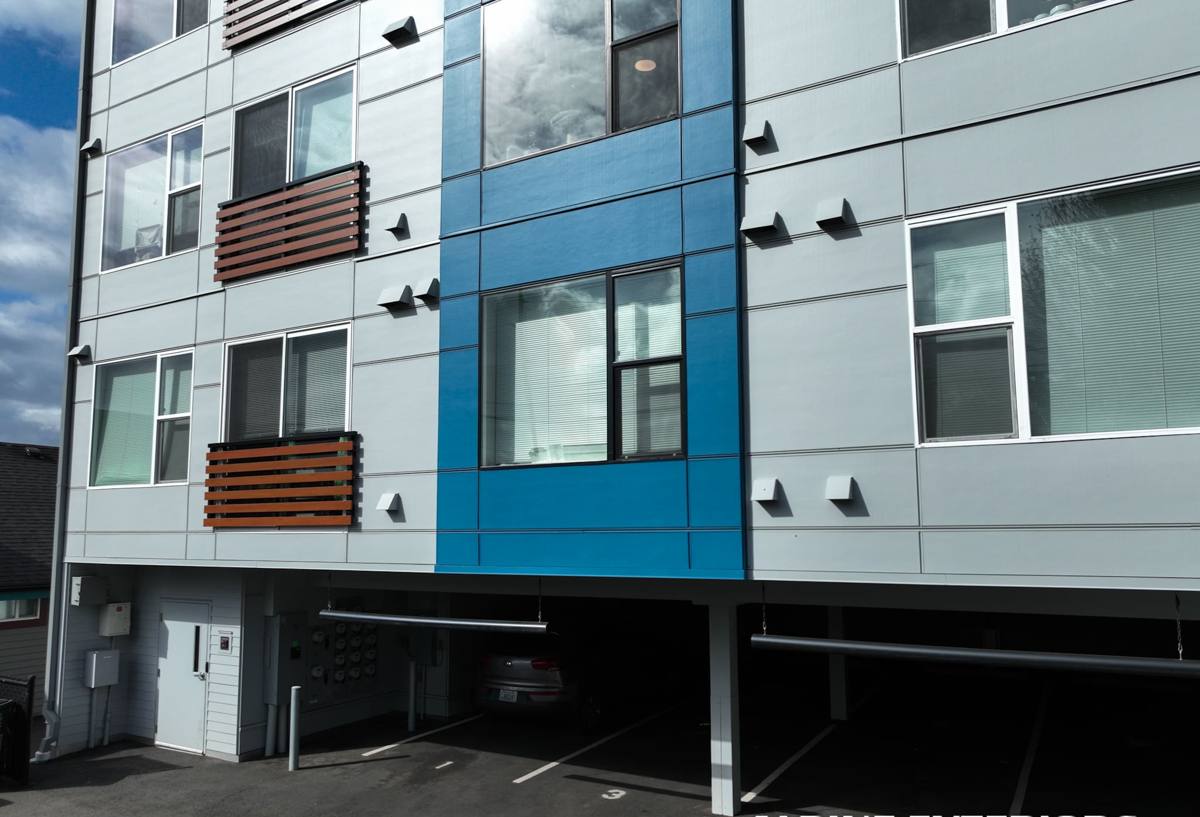
We install James Hardie fiber cement siding exclusively, and California Creek's climate is a big part of why. Fiber cement is made from cement, sand, and cellulose fibers, which means it doesn't absorb and swell with moisture the way wood-based or wood-derived products can, and it won't rot. It's also non-combustible, which matters less for salt air specifically but is part of why we standardized on it across every job we take.
James Hardie engineers its siding in regional HZ5 and HZ10 formulations for climate zones like ours, meaning the plank composition itself is built for a wetter, more humid climate rather than a generic national product. The factory-applied ColorPlus finish is baked on under controlled conditions and backed by its own finish warranty, which matters in a salt-air environment where field-applied paint tends to fail at the coast before it does further inland.
We get asked from time to time why we don't offer vinyl, LP SmartSide, or cedar as alternatives. Vinyl can crack and fade faster under sun and salt exposure and doesn't hold paint well if it does fade. Wood-based products, including engineered wood, still rely on a resin- or wax-treated surface to keep moisture out, and a coastal, moss-prone climate is exactly the environment that tests that protection hardest over time. Cedar is a genuinely good-looking material but needs ongoing sealing and refinishing to hold up here. Fiber cement sidesteps most of that maintenance burden, which is why it's the only product we put on a wall.
James Hardie also backs its siding with a transferable limited warranty, which is worth noting in a market like Whatcom County's where homes change hands. Coverage that follows the house, rather than resetting to zero at the next sale, is one more reason we don't hedge our bets with a mix of products.
What a Correct Installation Looks Like Here
James Hardie siding performs well over decades, but only when it's installed to the manufacturer's specifications and adapted for local conditions. A rushed or generic install erases most of the advantage the material offers.
Clearances and drainage
Hardie's own installation instructions call for specific clearances between siding and roof lines, decks, and grade, and for a minimum gap above concrete or paved surfaces. In a high-rainfall, salt-air area, we don't treat those numbers as suggestions. We also install a drainage plane, a weather-resistant barrier with a gap for water to escape, behind the siding rather than fastening panels directly to a flat wrap, so any moisture that does get past the cladding has somewhere to go besides the sheathing.
Rainscreen and airflow
On walls with heavy shade or the most direct rain exposure, we'll often recommend a vented rainscreen gap between the drainage plane and the siding itself. That small air space lets any moisture that gets behind the cladding dry out instead of sitting against the sheathing, and it helps the wall dry faster after the kind of extended wet stretches this area sees every winter. It's not required on every wall, but it's worth discussing on the sides of a house that stay shaded and damp longest.
Fastening and joints
Coastal salt air is hard on fasteners that aren't rated for it. We use corrosion-resistant fasteners appropriate for the exposure and follow Hardie's fastening schedule rather than cutting corners on nail spacing to save time. Butt joints get flashed, not just caulked, because caulk is a maintenance item and flashing is not.
Trim and caulking practices
We limit caulk to where it belongs, sealed joints and penetrations, and let lap geometry and flashing do the water-shedding work everywhere else. Over-reliance on caulk is one of the most common shortcuts we see on older siding jobs in this area, and it's usually the first thing to fail, showing up as cracked or shrunken bead lines within just a few wet seasons.
Our Process for a California Creek Siding Job
- On-site assessment of existing siding, sheathing condition, and any moisture damage already present, since older siding in this area sometimes hides rot that needs to be addressed before new siding goes on.
- Removal of old siding and inspection of the sheathing and framing underneath, with repairs made before anything new is installed rather than covered up.
- Installation of a proper weather-resistant barrier and drainage plane suited to the wall's exposure and orientation.
- Installation of James Hardie siding, trim, and flashing to manufacturer specification, adapted for the home's specific exposure to wind, rain, and shade.
- Final walkthrough covering caulking points, paint touch-up needs, and basic care going forward so you know what to watch for.
James Hardie Product Lines for This Type of Exposure
Not every Hardie product is the right fit for every wall on a coastal or moss-prone property. Part of what we bring to a California Creek job is knowing which line and plank style suits which exposure.
| Product | Best Use | Why It Fits Here |
|---|---|---|
| HardiePlank lap siding | Most wall areas | Wide range of exposures and textures; performs well with correct lap and flashing detail |
| HardiePanel vertical siding | Accent walls, gables | Fewer horizontal laps for water to work into on steep or high-exposure sections |
| HardieTrim boards | Corners, window and door trim | Resists the swelling and cracking that wood trim shows first in wet, shaded conditions |
| HardieShingle siding | Accent areas, gable ends | Traditional look without the moisture absorption of cedar shingle |
Cost Factors on a California Creek Project
Every home is different, but a few things consistently move the price on jobs in this area more than they might elsewhere.
| Factor | Why It Matters Here |
|---|---|
| Condition of existing sheathing | Moss and driving rain sometimes cause hidden rot that has to be repaired before new siding goes on |
| Wall exposure and orientation | Walls facing prevailing wind and rain need more careful flashing and drainage detail |
| Trim and detail work | Corners, window trim, and transitions take more labor than flat wall area |
| Product line and plank style | Panel style, texture, and pre-finished color affect material cost |
| Access and site conditions | Tree cover, slope, and setbacks common in this area can add setup time |
Broad ranges vary a lot depending on these factors, which is why we walk every home in person rather than quoting off square footage alone.
Living With Hardie Siding in a Moss-Prone, Salt-Air Climate
Correctly installed Hardie siding needs far less upkeep than wood or wood-composite siding in this climate, but less isn't none. A little routine care keeps it performing the way it's designed to for decades.
- Rinse siding, especially shaded and north-facing walls, once or twice a year to keep moss and algae from taking hold
- Keep gutters clear so overflow doesn't run down the wall face repeatedly
- Trim back vegetation and tree cover that keeps walls shaded and damp longer than they need to be
- Check caulking at penetrations, hose bibs, vents, fixtures, annually and re-seal if it's cracked or pulling away
- Watch for chalking or fading on south- and west-facing walls that take the most sun and touch up per ColorPlus warranty guidance if needed
Why Hiring a Crew That Already Works This Area Matters
Siding contractors who mainly work drier, inland areas sometimes install to a generic spec that doesn't account for what a coastal Whatcom County wall actually goes through. A crew that already works California Creek and the surrounding Custer area knows which walls need extra drainage detail, which sides of a house typically grow moss first, and how salt air and driving rain actually behave on a job site here, not just on paper. That local familiarity shows up in fewer callbacks and siding that holds up the way it's supposed to over the long run.
It also means fewer surprises with permitting and inspection, since a crew working steadily in Whatcom County stays current on the local building department's requirements rather than relearning them project to project.
If you're weighing a siding replacement or repair on a California Creek home, we're happy to take a look and walk you through what your specific walls need. Reach out for a free, no-pressure estimate below, no obligation, just a straight assessment of your siding and what it would take to do the job right.