 Custer
 Why Siding Takes a Beating Near California Creek
Homes in the California Creek area, just outside Custer, deal with a combination of weather stresses that a lot of siding products simply weren't built to handle long-term. Being close to the water in this part of Whatcom County means the air itself carries salt, which speeds up corrosion on anything exposed metal — fasteners, trim flashing, hose bibs, light fixtures. Add in the driving rain that comes through with winter storms off the Salish Sea, and you've got wind-driven water finding every gap, lap, and seam in a wall assembly. Then there's the long, mild, wet stretch from fall through spring that Northwest Washington is known for, which gives moss and algae months on end to colonize any siding surface that stays damp.
None of these factors are dealbreakers on their own. Plenty of homes in this area have siding that's held up for decades. The difference is almost always in the product choice and the install quality — not luck. A siding job that's correct for a dry inland climate isn't automatically correct here, and a lot of the siding problems we get called out to look at trace back to details that were fine somewhere else but weren't right for this location.
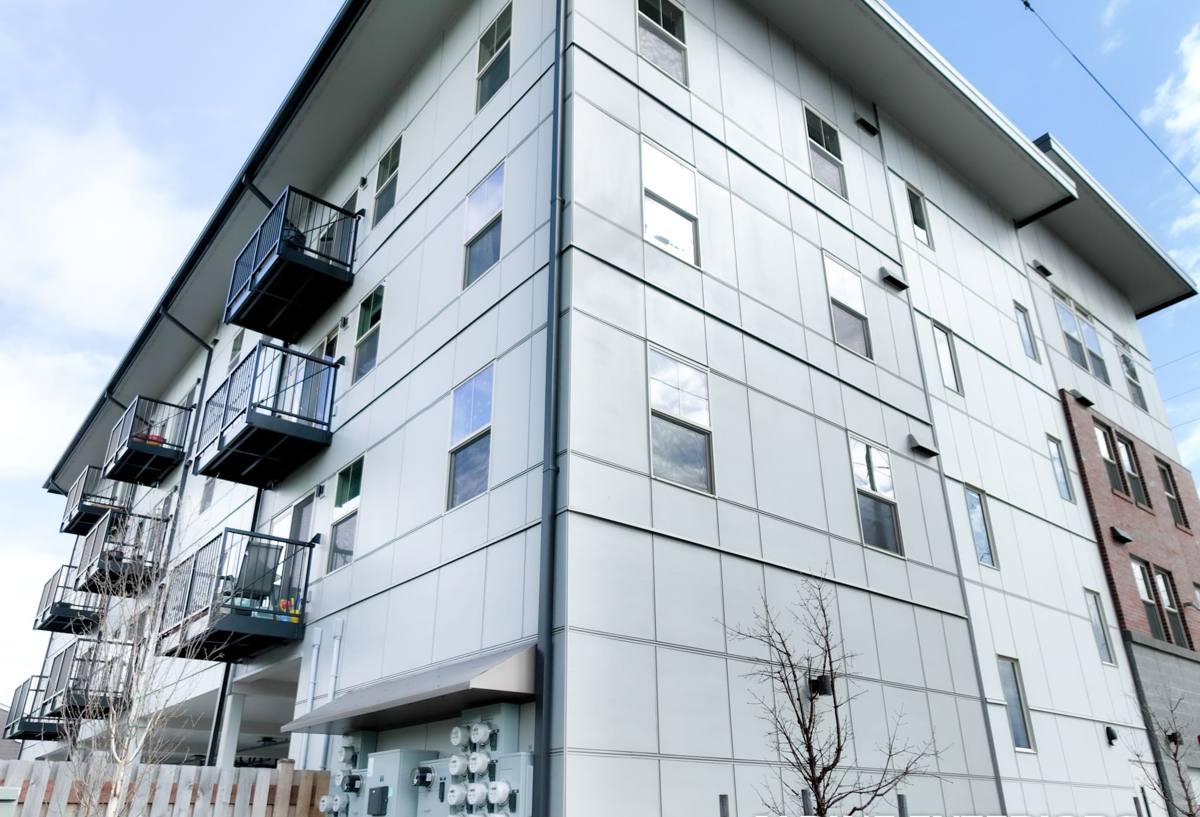
What Correct Fiber Cement Installation Actually Requires Here
Moisture Management Comes First
Fiber cement siding is not a waterproof membrane — it's a durable, weather-resistant cladding that relies on the assembly behind it to actually keep water out of the wall. That means a continuous weather-resistive barrier, correctly lapped and taped seams, proper head flashing over every window and door, and drip caps wherever a horizontal trim piece meets a wall. On homes taking direct exposure to wind-driven rain, we also use rainscreen furring — a small gap behind the siding that lets any water that does get past the cladding drain and dry out instead of sitting against the sheathing. Skipping the rainscreen on a high-exposure wall in this climate is one of the more common shortcuts we see, and it's a big reason siding that looks fine from the street is rotting the wall behind it.
Fasteners, Trim, and Salt Exposure
Salt-laden air corrodes ordinary fasteners faster than most homeowners expect, and a corroded fastener head is a leak point waiting to happen. We use corrosion-resistant fastening — stainless steel or hot-dip galvanized, sized and spaced to the manufacturer's specification — rather than whatever standard nail happens to be cheapest. The same logic applies to trim: flashing and trim components need to actually shed water, not just be caulked over and hoped for the best. Caulk is a supplement to good flashing detail, never a substitute for it. Caulk-only joints are one of the first things to fail in this climate, usually within a few years, long before the siding itself would show any wear.
Why We Only Install James Hardie in This Area
We get asked fairly often why we don't offer LP SmartSide, vinyl, cedar, or primed wood siding alongside Hardie. The honest answer is that we looked at how each of these performs over time in a coastal, wet, moss-prone climate like this one, and we standardized on fiber cement because it's the product we're comfortable putting our name behind here.
| Material | Moisture Behavior | Maintenance Burden | Typical Concern in This Climate |
|---|---|---|---|
| James Hardie Fiber Cement | Non-combustible, engineered to resist moisture-related swelling and deterioration | Low — factory finish holds up without repainting for many years | Requires correct installation detailing, but the material itself is stable |
| LP SmartSide (engineered wood) | Wood-based core; performs well when sealed edges stay intact | Moderate — cut edges and seams need ongoing attention | Long-term moisture exposure is harder on wood-based products than fiber cement |
| Vinyl | Sheds water on the surface but relies heavily on the wall assembly behind it | Low, but limited repair options if damaged | Can warp or become brittle with UV and temperature swings; seams are visible |
| Cedar / Primed Spruce | Natural wood; absorbs and releases moisture with the seasons | High — regular refinishing, caulking, and moisture checks required | Extended damp seasons and salt air accelerate weathering and repainting cycles |
Cedar and primed wood siding aren't bad products — cedar in particular has real appeal and a long tradition on Pacific Northwest homes. But wood-based siding asks for a maintenance commitment that most homeowners underestimate, especially in a climate that stays damp for months at a stretch. LP SmartSide has closed some of that gap with engineered strand technology, but it's still a wood-based product at its core, and we've chosen not to install it where salt air and prolonged moisture are part of daily conditions. Vinyl is low-maintenance but has its own limits — it's thinner, it's not fire-resistant, and it doesn't hold color or shape the same way over decades. Fiber cement, done right, gives us a non-combustible material that's dimensionally stable and holds its factory finish without the repainting cycle wood siding demands.
Choosing the Right Hardie Line and Finish for California Creek Homes
James Hardie makes climate-specific product lines, and for homes in this part of Washington we're working with the HZ5 line, engineered for the wetter, cooler conditions found in the Pacific Northwest. It's formulated to resist the moisture-driven stress that a coastal, rainy climate puts on cladding, which matters more here than it would in a dry region.
We also strongly recommend ColorPlus factory-applied finish over field painting. ColorPlus is baked on in a controlled factory setting, which gives a more consistent, durable finish than paint applied on site, and it carries its own finish warranty separate from the product warranty. In a climate with a long wet season and limited good painting weather, having a factory finish that isn't dependent on ideal on-site conditions is a real practical advantage, not just a convenience.
Our Installation Process
Every job starts with an honest look at the existing wall assembly — not just the old siding, but what's underneath it. That tells us whether we're dealing with hidden moisture damage, inadequate flashing, or a wall that's actually in decent shape and just needs new cladding.
- Remove existing siding and inspect sheathing, framing, and any window/door flashing for hidden damage before covering anything back up
- Repair or replace any compromised sheathing or framing found during removal
- Install a continuous weather-resistive barrier with properly lapped and sealed seams
- Add rainscreen furring on wall areas with direct wind and rain exposure
- Install correct flashing at every window, door, and horizontal trim intersection
- Fasten Hardie panels or lap siding per manufacturer spec, using corrosion-resistant fasteners
- Detail all penetrations — vents, hose bibs, light fixtures, utility lines — so water can't track in around them
- Finish with trim and caulk only where caulk is the correct detail, not as a stand-in for flashing
- Walk the finished job with the homeowner and point out anything they should know for future maintenance
We don't treat the inspection step as optional. Covering up a wall problem with new siding just delays a bigger repair, and it's the kind of shortcut that causes the "why did this fail after only a few years" calls we sometimes get on other contractors' work.
Mistakes We See on Older Siding Jobs Nearby
A lot of the siding problems we're called to evaluate in this area didn't come from bad material — they came from installation shortcuts that don't show up until years later. The pattern is consistent enough that it's worth listing out:
- No rainscreen gap on walls with heavy wind-driven rain exposure, trapping moisture against the sheathing
- Caulk used to seal a joint that should have been flashed instead
- Standard fasteners instead of corrosion-resistant ones, leading to rust streaking and loosened panels
- Siding installed too tight to trim or foundation with no clearance gap, wicking moisture upward
- North-facing or shaded walls with poor airflow, where moss and algae take hold fastest
Every one of these is preventable at install time and expensive to fix later. It's a big part of why we're particular about the details other crews sometimes treat as optional.
Living With Moss Season: Maintenance That Actually Matters
Fiber cement siding, correctly installed, doesn't need much upkeep — but "not much" isn't "none," especially with the extended wet season this area gets. Moss and algae growth is mostly a surface and appearance issue rather than a structural one when the underlying assembly is sound, but ignoring it long enough can trap moisture against the siding face and shorten the life of the finish.
A simple annual check goes a long way: a soft wash (not a high-pressure blast that can force water behind laps or damage the finish) on shaded or north-facing walls where moss tends to establish, a look at caulk lines for cracking or gaps, and keeping gutters and downspouts clear so runoff isn't sheeting down a wall face. Trimming back vegetation that keeps a wall shaded and damp also helps more than most homeowners expect.
What Fiber Cement Siding Costs in the California Creek Area
Pricing depends on the size and complexity of the home, how much of the existing wall assembly needs repair, and the specific Hardie profile and finish chosen. Rather than quote a number that won't reflect your actual house, here's what actually drives the cost up or down on a typical project:
| Cost Factor | Why It Matters |
|---|---|
| Condition of existing sheathing/framing | Hidden rot or water damage found during tear-off adds repair scope before new siding goes on |
| Home size and wall complexity | More corners, gables, and trim detail means more labor and material cutting |
| Siding profile (lap vs. panel vs. shingle style) | Some profiles take more time to install correctly than a standard lap board |
| Rainscreen and flashing scope | High-exposure walls facing prevailing wind and rain need more detailing than sheltered walls |
| Trim and finish selection | ColorPlus finish and upgraded trim packages cost more than base-level options up front but reduce maintenance costs later |
| Access and site conditions | Steep lots, tight setbacks, or multi-story walls affect labor time and equipment needs |
The most reliable way to get an accurate number is a walk-through of your specific home, which is what our estimate process is for.
Why Hire a Crew That Already Works California Creek
A contractor who already works regularly in and around Custer and the California Creek area isn't guessing at how this climate behaves — they've seen how it treats siding over years, not just on paper. That familiarity shows up in small decisions: which walls actually need a rainscreen versus which ones don't, how much clearance to leave at grade given the rainfall pattern here, which fastener spec holds up against the salt air instead of just meeting a minimum code requirement. Those aren't things you learn from a spec sheet — they're things you learn from doing the work in this specific environment, wall after wall, season after season.
It also means straightforward accountability. A local crew has a reputation to maintain in the community they work in, and they're not disappearing to the next region after the job wraps. If a question comes up two years down the road, you're calling someone who's still local and still stands behind the work.
If you're weighing a siding project on a home near California Creek, we're happy to walk the property, take an honest look at what's there now, and talk through what a correct fiber cement installation would involve for your specific house. There's no pressure and no obligation — just fill out the form below to request a free estimate.