 Custer
 Deck Building in California Creek: Built for the Weather We Actually Get
California Creek sits close enough to the water that homes here deal with a different set of conditions than a deck built twenty miles inland. Salt-laden air moves in off the water, rain shows up sideways more often than straight down, and the shoulder seasons bring long stretches of damp, low-light weather where moss and algae get a real foothold on any horizontal surface. A deck built without those factors in mind will look fine for a year or two and then start showing problems — soft spots, lifting fasteners, slick green boards — well before it should.
We build decks specifically for this stretch of Whatcom County, not a generic deck design pulled from a catalog meant for a drier climate. That means different fastener choices, different attention to drainage and airflow underneath the structure, and different expectations about what maintenance actually looks like once the deck is done. This page walks through what that looks like in practice.
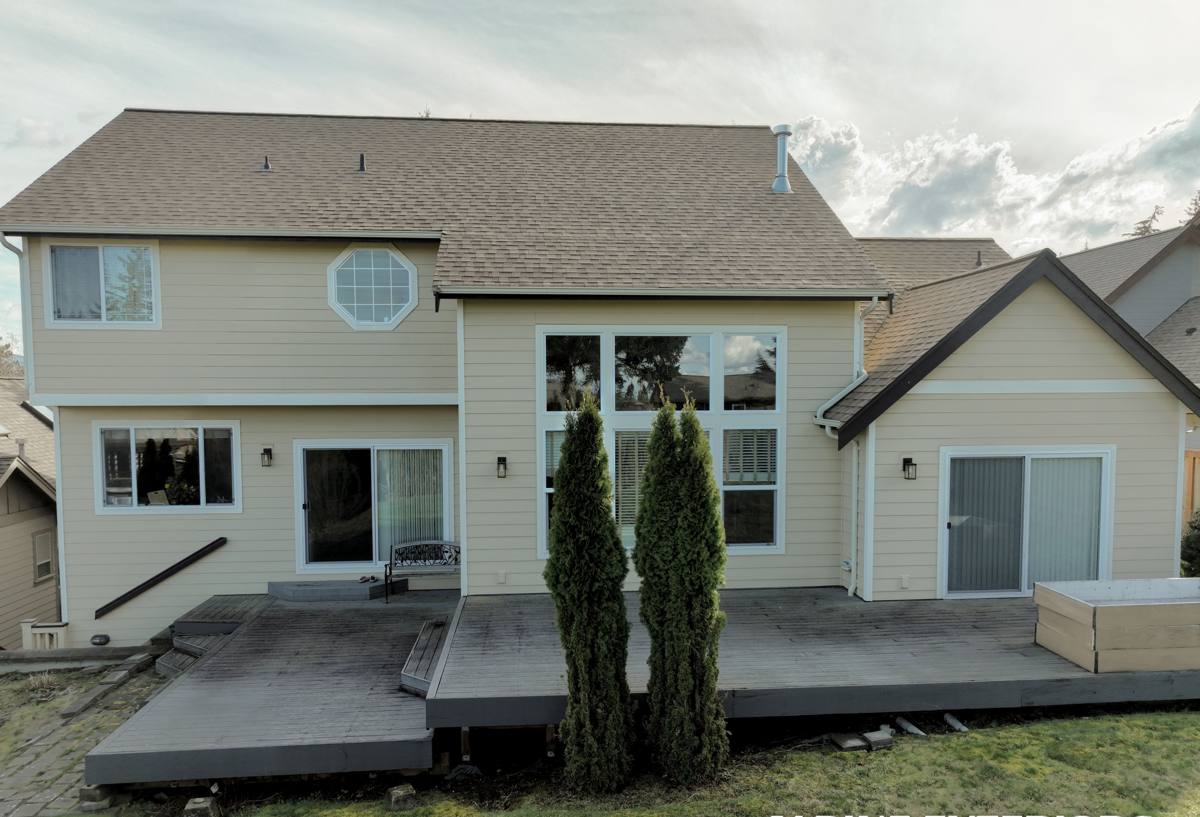
What Salt Air, Rain, and Moss Season Actually Do to a Deck
Salt Air and Metal Hardware
Proximity to saltwater accelerates corrosion on anything metal — joist hangers, screws, bolts, post bases. Standard electro-galvanized fasteners that might hold up fine in a dry inland climate can start rusting within a few seasons here. Rust doesn't stay cosmetic; it weakens the connection between structural members, which is exactly where you don't want weakness in a deck that's supporting people and furniture.
Driving Rain and Moisture Intrusion
Wind-driven rain doesn't just fall on a deck, it gets pushed into gaps, ledger connections, and any spot where the decking meets the house. Where the deck attaches to the structure is the single most common source of long-term rot we see on older decks in this area — not because the original build was lazy, but because the flashing detail wasn't sized for how much water actually gets driven sideways here.
Moss, Algae, and the Long Damp Season
Whatcom County's fall-through-spring stretch of overcast, damp days is long, and any deck surface that doesn't shed water and dry out between rains becomes a growth surface for moss and algae. Beyond looking bad, a mossy deck surface is a slip hazard, and moss holding moisture against wood decking is one of the fastest ways to shorten its life.
What a Correctly Built Deck Involves
A deck that's going to hold up here needs to get several things right at once — the structure underneath, the surface on top, and the connections between the two. None of these are optional extras; skipping any one of them is how decks end up needing major repair inside five years instead of lasting two or three decades.
- Footings sized and set below frost depth, with proper drainage around them so water doesn't pool at the base of the posts
- A ledger connection to the house that's properly flashed and sits clear of standing water, not just caulked and hoped for
- Joist framing spaced correctly for the decking material chosen, not just "what we had lumber for"
- Fasteners and hardware rated for the corrosion exposure of this location, not the cheapest box at the yard
- A surface material and installation pattern that actually sheds water instead of trapping it against the framing
- Ventilation underneath the deck so the framing can dry out between rain events instead of staying damp for weeks
Decking Material Comparison
There's no single "right" decking material for every home — it depends on budget, how the deck gets used, and how much upkeep you're willing to do. Here's how the common options actually compare for this climate specifically:
| Material | How It Handles This Climate | Maintenance | Typical Lifespan Here |
|---|---|---|---|
| Pressure-treated wood | Needs consistent sealing to resist moisture and moss; least forgiving if maintenance slips | Annual cleaning, re-sealing every 1-2 years | 10-15 years with upkeep |
| Cedar | Naturally more rot-resistant but still needs finish maintenance in this much moisture | Cleaning and re-oiling every 1-2 years | 15-20 years with upkeep |
| Composite decking | Doesn't absorb moisture like wood; still needs cleaning to keep algae from growing on the surface film | Periodic washing, no sealing needed | 20-25+ years, varies by product warranty |
| PVC/capped decking | Most resistant to moisture intrusion and staining; surface sheds water well | Occasional washing | 25+ years, typically longest warranty |
We'll walk through these trade-offs honestly during your estimate — composite and PVC cost more up front but the maintenance burden and long-term cost of a wood deck in this climate is real and worth factoring in before you decide.
Our Deck Building Process
1. Site Assessment
We look at grade, drainage, sun and wind exposure, and how the deck will tie into the house before we design anything. A deck on the water side of a California Creek home needs different wind and moisture considerations than one tucked against a more sheltered wall.
2. Permitting and Layout
Deck projects of most sizes require a permit in Whatcom County, and footing depth and structural requirements are tied to that process. We handle the permit application and inspections as part of the build, not as an afterthought.
3. Footings and Framing
Footings go in below frost depth with drainage considered around each one. Framing is built to span and load requirements for the decking material you've chosen — this is where corrosion-resistant hardware matters most, since it's the part of the deck you won't see again once it's covered.
4. Ledger Connection and Flashing
This is the detail we spend the most care on, because it's the most common failure point in older decks in this area. Proper flashing keeps driving rain from working its way behind the ledger board and into the house framing.
5. Decking, Railing, and Finish
Decking goes down with attention to gapping for drainage and expansion, railing is installed to current code, and any wood surfaces get sealed before the project is considered finished.
6. Final Walkthrough
We walk the finished deck with you, cover what maintenance it actually needs, and make sure you know what to watch for as the seasons change.
Hardware and Fastener Choices That Matter Here
Given the salt air exposure around California Creek, we default to stainless steel or high-grade coated fasteners and hardware rather than standard galvanized products, especially for anything structural or hard to access later. We also use joist tape on framing members under the decking surface — a thin barrier that keeps water from sitting directly on top of exposed lumber and dramatically slows rot at the fastener penetrations. These are small line items in the overall project cost, but they're the difference between a deck that needs hardware repairs in eight years and one that doesn't.
What Drives Deck Building Costs in This Area
| Factor | Why It Matters Here |
|---|---|
| Height and grade | Decks on sloped or elevated sites near the water need taller posts, additional bracing, and sometimes stairs, all adding cost |
| Decking material | Composite and PVC cost more upfront but reduce long-term maintenance in this moisture-heavy climate |
| Ledger and flashing detail | Doing this correctly for driving-rain exposure takes more material and labor than a basic caulk-and-screw approach |
| Hardware grade | Stainless or marine-grade fasteners cost more than standard galvanized but resist salt air corrosion |
| Permit and inspection requirements | Whatcom County permitting adds time and a modest fee but is required for most deck sizes |
Maintaining a Deck in California Creek's Climate
Even a well-built deck needs some seasonal attention here. This is the routine we recommend to homeowners after a build:
- Sweep debris off the deck surface regularly in fall to keep organic material from feeding moss growth
- Wash the deck surface at least once a year to remove algae and moss buildup before it gets established
- Check the ledger connection and any visible flashing for gaps or damage each spring
- Re-seal wood decking on the schedule recommended for your specific product — don't wait until it looks dry and gray
- Inspect railing connections and stair stringers annually, since these see the most repeated stress
- Clear leaves and debris from under the deck periodically so airflow underneath isn't blocked
Why Hire a Crew That Already Works This Neighborhood
Deck building isn't complicated in theory, but building one that actually holds up in California Creek's conditions takes knowing what fails here and why. We already know the flashing details that hold up against driving rain off the water, the hardware grade worth paying for given the salt air, and the permitting process for Whatcom County jobs. That's the difference between a crew that builds decks and a crew that builds decks that last in this specific spot. We're not guessing at what your climate will do to a deck — we've already seen it, repaired it, and built around it on other homes nearby.
If you're planning a new deck or replacing one that's showing its age, we're happy to come take a look and walk you through what it would take on your specific property. There's no pressure and no cost for the estimate — just a straight answer on what the job actually involves.