 Custer
 Why Blaine Homes Wear Out Siding Faster Than Most
Blaine sits close enough to the water that salt air is a daily fact of life, not an occasional nuisance. Combine that with Whatcom County's long wet season, driving rain off the Strait, and the shade cover that keeps moss thriving nine or ten months a year, and you get a set of conditions that are genuinely hard on exterior building materials. Siding here doesn't just get dirty — it gets attacked from multiple directions at once: moisture intrusion behind the cladding, surface staining and biological growth on the face, and slow degradation of caulk, fasteners, and trim that most homeowners never think about until something fails.
We work on homes throughout the Custer and Blaine area regularly, and the pattern is consistent. Siding that would last 25-30 years in a drier inland climate is showing real problems in half that time here, especially if it was installed without the right water management details or with a product that wasn't engineered for this kind of exposure.
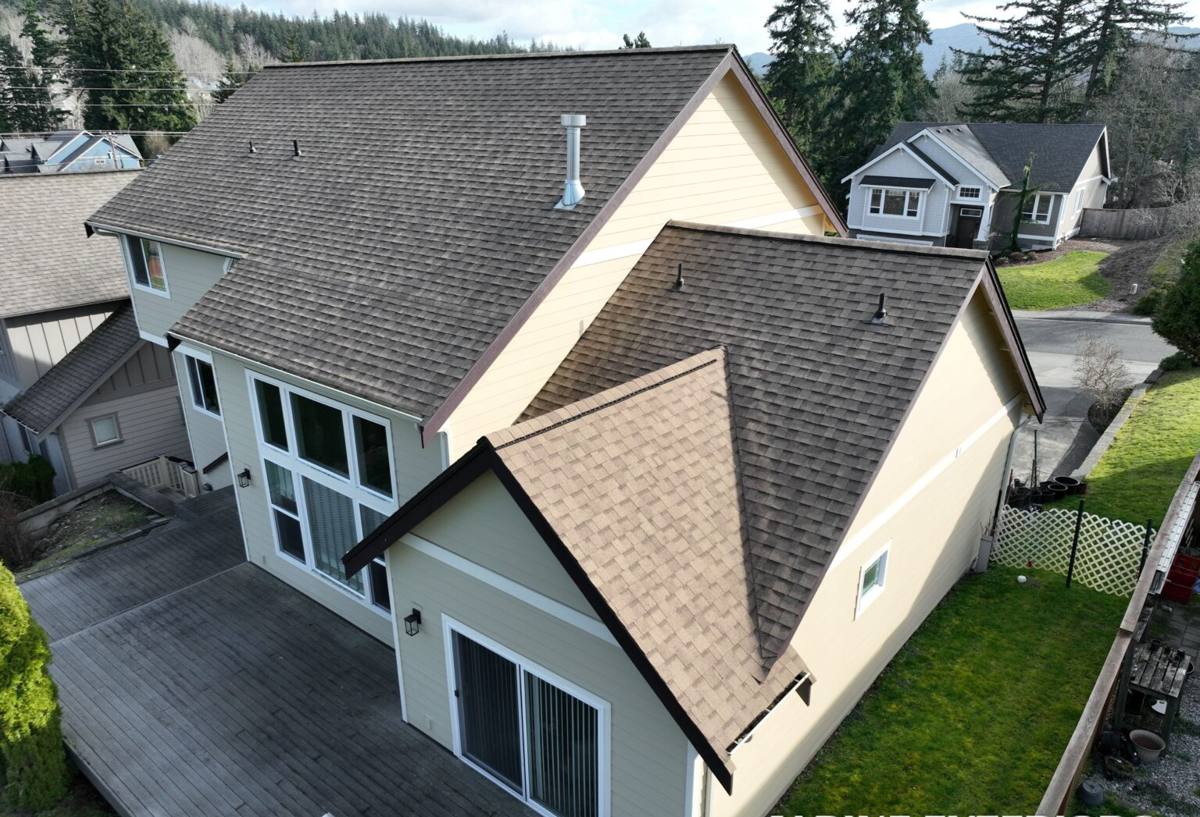
What "Correct" Siding Replacement Actually Means in This Climate
Replacing siding in Blaine isn't just swapping old panels for new ones. A replacement job done right addresses the reasons the old siding failed in the first place, or it just resets the clock on the same problems. That means:
- Removing old siding down to the sheathing so hidden rot, soft spots, and moisture damage can actually be found and fixed — not covered over
- Installing a proper weather-resistive barrier and flashing details at every window, door, and penetration, since driving rain finds gaps that calmer climates never test
- Using a rainscreen or drainage gap where conditions call for it, so any moisture that does get behind the cladding has somewhere to go instead of sitting against the wall
- Choosing a cladding material that's dimensionally stable and doesn't feed moss and mildew the way some products do
- Sealing and fastening to the manufacturer's actual specifications, not a generic "close enough" approach
Skip any one of these steps and the new siding can look fine for a year or two while the underlying problem quietly continues.
Why We Install Only James Hardie Fiber Cement
We made a deliberate decision to install James Hardie fiber cement siding exclusively, and we don't apologize for it. We don't install vinyl, LP SmartSide, Cemplank, Allura, primed spruce, or cedar. That's not a marketing angle — it's a standard we hold because of what we've seen these products do (or fail to do) in exactly this kind of coastal, wet, moss-prone environment.
Vinyl siding is inexpensive and easy to install, but it expands and contracts with temperature swings, can warp or crack in wind-driven rain events, and offers limited protection where flashing details matter most. Wood-based products like primed spruce or cedar bring real design appeal, but wood is an organic material — it can absorb moisture, and in an area with this much sustained dampness and shade, that means a heavier maintenance burden and a shorter realistic lifespan unless a homeowner is committed to frequent upkeep. Engineered wood composites like LP SmartSide have improved over the years, but they're still wood-based at the core, which means the same moisture-sensitivity trade-offs apply, just with different packaging.
James Hardie fiber cement is non-combustible, dimensionally stable across wet and dry cycles, and doesn't feed mold or fungal growth the way wood-based products can. Its ColorPlus factory finish is baked on under controlled conditions rather than field-applied, which matters enormously in a climate where a job site paint day might get one dry window a week in the wrong season. Hardie's HZ5 product line is specifically engineered for cold, wet climates like ours, and the warranty coverage on both the substrate and the finish is stronger and more clearly documented than what most competing products offer.
What the Replacement Process Looks Like
1. Inspection and Assessment
We start by walking the exterior and, where old siding is coming off anyway, checking the sheathing and framing underneath for moisture damage. In a lot of Blaine homes we've worked on, this is where hidden problems get found — soft sheathing near old window flashing, or moss and mildew staining that traces back to a drainage gap that was never installed.
2. Tear-Off and Substrate Repair
Old siding, trim, and house wrap come off. Any damaged sheathing gets replaced before anything new goes back up — there's no point installing a 30-year product over a compromised wall.
3. Weather Barrier and Flashing
A new weather-resistive barrier goes on, along with correctly lapped flashing at every window, door, and penetration. This step is where most of the long-term performance of the job actually gets decided, more than the siding material itself.
4. Hardie Panel Installation
James Hardie planks or panels are installed to manufacturer spec — correct fastener type and spacing, correct clearances at grade and roof lines, and factory-finished ColorPlus material so field painting isn't relied on to protect the substrate.
5. Trim, Caulking, and Final Detail
Trim work and sealant get finished with attention to the joints and transitions that see the most water exposure in wind-driven rain — corners, band boards, and anywhere two materials meet.
Cost Factors for Blaine Siding Replacement
Every home is different, and we'll always give a specific number after seeing the actual job, but the factors that move the price are consistent:
| Factor | Why It Matters Here |
|---|---|
| Extent of hidden moisture damage | Coastal moisture and moss cover mean sheathing repair is more common than in drier areas |
| Existing siding type | Removing old vinyl or wood is different work than removing old fiber cement or stucco |
| Home height and complexity | Multi-story homes and steep or cut-up rooflines take longer to flash and finish correctly |
| Rainscreen/drainage gap installation | Adds labor but is often warranted given how much sustained moisture this area sees |
| Trim and detail work | Corner boards, band boards, and window trim add material and labor time |
| Product line and profile | Hardie's various plank widths, textures, and panel styles carry different material costs |
Signs Your Blaine Home Needs Siding Replacement Now
Some warning signs are easy to miss because they develop slowly. Watch for:
- Persistent moss or dark streaking that comes back within weeks of cleaning
- Soft or spongy spots when you press on siding near the bottom courses or around windows
- Paint or finish that's bubbling, peeling, or chalking heavily
- Visible warping, cupping, or gaps between boards
- Musty smells or interior wall staining near exterior walls
- Rising energy bills that might point to compromised insulation behind failing siding
Any one of these can be minor. Several together, especially on the sides of the house that take the most weather, usually mean it's time for a real inspection rather than another round of caulk and paint.
Why a Crew That Already Works Blaine Matters
Siding installation isn't identical everywhere, and a crew that mostly works drier inland regions can miss details that matter on the Whatcom County coast. Knowing how much clearance to leave at grade given local rain patterns, which sides of a house need extra flashing attention because of prevailing wind and rain direction, and how aggressively moss and algae will attack a given finish are things you learn by working this specific area over and over, not from a general training manual. We're not commuting in from somewhere with a different climate profile — this is the environment we install in every week, and our process reflects it.
What to Expect After Installation
James Hardie fiber cement, installed correctly, holds up well against the salt air and moss pressure that wear down other materials faster. It won't warp, rot, or feed fungal growth the way wood-based products can, and the ColorPlus finish resists the fading and chalking that field-applied paint struggles with in a climate that doesn't offer many dry painting days. That said, no siding is maintenance-free. Periodic gentle washing to keep moss and organic buildup from taking hold, and an annual check of caulking at joints and trim, will keep a Hardie installation performing the way it's designed to for decades.
If your Blaine home's siding is showing its age — or you just want an honest opinion on whether it's a repair situation or a replacement situation — we're happy to take a look. There's no pressure and no cost to get our assessment; use the form below to request a free estimate.