 Custer
 Why Birch Bay Roofs Wear Differently
Birch Bay sits right on the water, and that changes what a roof deals with compared to a house even a few miles inland. The salt-laden air off the bay accelerates corrosion on exposed metal fasteners, flashing, and vent caps. Driving rain off Georgia Strait doesn't fall straight down — wind pushes it sideways and under laps that were never designed to handle water moving uphill. And the tree cover and damp air across Whatcom County give moss a long growing season, often eight or nine months out of the year, which means a roof that's clean in spring can be matted with growth again well before fall.
None of that means Birch Bay roofs are doomed — it means the repair work has to account for those specific stresses instead of treating every roof the same. A patch that would hold up fine in a dry climate can fail here in a season if it doesn't address the salt exposure, wind-driven moisture, or moss root systems underneath it.
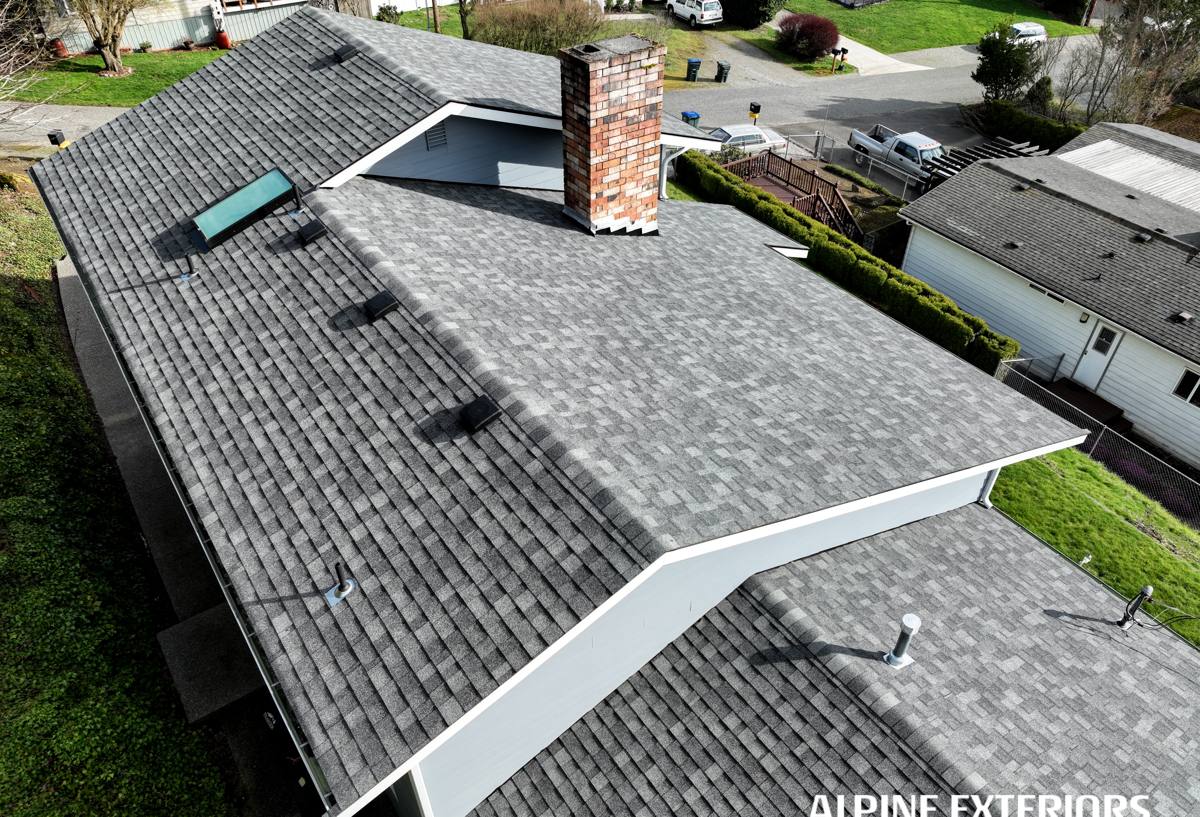
What Actually Causes Roof Damage Near the Bay
Salt Air and Corrosion
Bare steel fasteners, uncoated flashing, and cheaper vent boots corrode faster this close to saltwater. Once a nail head rusts and loses its grip, or a metal flashing edge pits through, water finds a path in. This is usually slow and hidden — you don't see it until there's a stain on a ceiling or soft decking in the attic.
Wind-Driven Rain
Storms rolling off the water don't just drop rain, they drive it sideways and push it up under shingle laps, around chimney flashing, and into any gap at a roof-to-wall transition. A repair that only addresses the visible hole and ignores how wind pressure moves water at that spot will leak again in the next storm.
Moss and Organic Growth
Moss doesn't just sit on top of shingles — it holds moisture against the roofing material and works its rhizoids under shingle edges and into granule loss areas, lifting tabs and creating channels for water. Left long enough, it also blocks drainage paths so water pools instead of shedding, which is its own separate problem from the moss itself.
Repair vs. Replacement: Making the Right Call
Not every roof problem in Birch Bay needs a full replacement, and not every leak is fixable with a patch. The honest answer depends on the roof's age, how widespread the damage is, and whether the underlying decking is still sound.
| Situation | Repair usually makes sense | Replacement usually makes sense |
|---|---|---|
| Age of roofing | Under 12-15 years, isolated issue | Near or past expected lifespan for the material |
| Extent of damage | Localized — one flashing detail, one section | Widespread granule loss, multiple leak points |
| Decking condition | Solid, no soft spots | Soft, delaminated, or previously water-damaged |
| Moss history | Recent growth, roof surface intact underneath | Years of untreated moss, shingle degradation underneath |
| Storm damage | A handful of lifted or torn shingles | Wind uplift across large sections, exposed underlayment |
We won't sell a full replacement when a proper repair will genuinely hold — but we also won't patch over a roof that's structurally past the point where patching is the honest answer. Part of our job is telling you which situation you're actually in.
What a Correct Repair Actually Involves
A roof repair that's going to hold up through Whatcom County's wet season involves more than swapping out a few shingles. Here's what we check and address on every repair call:
- Pulling back the affected area to inspect the underlayment and decking, not just the surface layer
- Checking flashing at every penetration nearby — chimneys, vents, skylights — since one leak often means a flashing detail failed, not just the shingles above it
- Replacing corroded fasteners rather than nailing new material over compromised ones
- Confirming proper shingle lap and nailing pattern so wind-driven rain can't work its way in from the side
- Removing moss and organic debris from the repair area and treating it, not just covering it over
- Checking attic ventilation near the repair — poor airflow traps moisture and accelerates rot from underneath
- Matching materials as closely as possible so the repair doesn't stand out or create a mismatched wear pattern down the line
Skipping any one of these steps is how a "fixed" roof leaks again in the next wind event.
Moss Treatment as Part of Repair, Not an Afterthought
Because moss season runs long here, we treat moss removal as part of the repair scope whenever it's present near the damaged area — not as a separate upsell. Moss growing right next to a repair site will just undermine the work again if it's left in place. We remove growth carefully by hand rather than power-washing, since aggressive pressure washing strips granules and shortens the life of the surrounding roofing. Where it makes sense, we'll talk through longer-term moss control options for the whole roof, but the repair itself always addresses what's growing at the point of failure.
Our Process for a Birch Bay Repair Call
1. Inspection and Honest Diagnosis
We start by finding the actual source of the leak or damage, which is often not directly above where the stain or drip shows up inside. Water travels along decking and framing before it becomes visible.
2. A Straightforward Explanation
Before any work starts, you'll know what we found, what caused it, what the repair involves, and what it costs. No pressure to upgrade to a full replacement if a repair is the right call.
3. The Repair Itself
We do the work to the standard above — proper flashing, correct fastening, matched materials, moss addressed at the site. We don't consider a repair finished until it's watertight at that detail, not just patched over.
4. Cleanup and Walkthrough
We clear debris, including old moss and shingle material, and walk you through what was done so you know exactly what's under the new work.
What Drives the Cost of a Roof Repair
| Factor | Why it matters |
|---|---|
| Roof pitch and access | Steeper roofs and harder-to-reach sections take more time and safety setup |
| Extent of hidden damage | Soft decking or rotted framing found once we open the area adds material and labor |
| Flashing complexity | Chimneys, skylights, and multiple roof planes meeting in one spot take more precise work than open field shingle |
| Material match | Older or discontinued roofing can be harder to match, sometimes requiring a larger repair section |
| Moss and organic buildup | Heavier growth means more removal time before the actual repair can start |
We give a firm number after inspection, not a phone estimate, because roof repairs are one of the areas where what's underneath the surface changes the scope more than people expect.
A Homeowner's Quick Self-Check
Between visits from a roofer, there are things you can watch for yourself, especially after a windstorm or heavy rain off the bay:
- Ceiling stains or discoloration, especially near chimneys, skylights, or where two roof planes meet
- Shingles that look curled, cracked, or missing granules in patches
- Visible moss buildup, particularly on north-facing or shaded sections
- Rusty streaks running down from metal flashing or vent caps
- Gutters filling with granules faster than usual — a sign the shingle surface is breaking down
- Any soft or spongy feeling if you're ever on the roof near a valley or penetration
If you see two or more of these, it's worth having someone look before the next storm rather than after.
Why a Crew That Works Birch Bay Specifically Matters
A roofer who mostly works drier, inland areas of the county may not default to salt-resistant fasteners, may underestimate how far wind-driven rain travels under a lap, or may treat moss as cosmetic rather than a repeat cause of failure. Working Birch Bay and the surrounding Custer area regularly means we're used to diagnosing leaks in homes exposed to that combination of salt air, wind off the water, and near-constant moss pressure — and we build the repair around those conditions rather than a generic checklist.
It also means we're not guessing at how a roof in this specific setting typically fails. We've seen where the recurring problem spots are on homes exposed to the bay, and that shapes where we look first and what we check even beyond the obvious damage point.
Get an Honest Look at Your Roof
If you're dealing with a leak, storm damage, or a moss problem that's gotten out of hand on a Birch Bay or Custer home, we're happy to take a look and give you a straight answer — repair or replacement, with a clear reason either way. Reach out for a free, no-pressure estimate using the form below.