 Custer
 Why Birch Bay Roofs Wear Differently Than Roofs Inland
Birch Bay sits right on the water, and that changes what a roof has to deal with year-round. Homes just a few miles inland in Whatcom County still get plenty of rain, but they don't get the same salt-laden air coming off the bay, the same wind-driven rain hitting shingles at an angle instead of straight down, or the same stretch of damp, shaded months that let moss and algae get a foothold. An asphalt shingle roof in Birch Bay is doing more work than the same roof would be doing twenty minutes away, and it should be built and maintained with that in mind.
We're not describing anything exotic here — asphalt shingles are still the right, cost-effective choice for the vast majority of homes in this area. But "right shingle, wrong installation" is a common way we see roofs fail early on the water side of the county, and it's usually preventable.
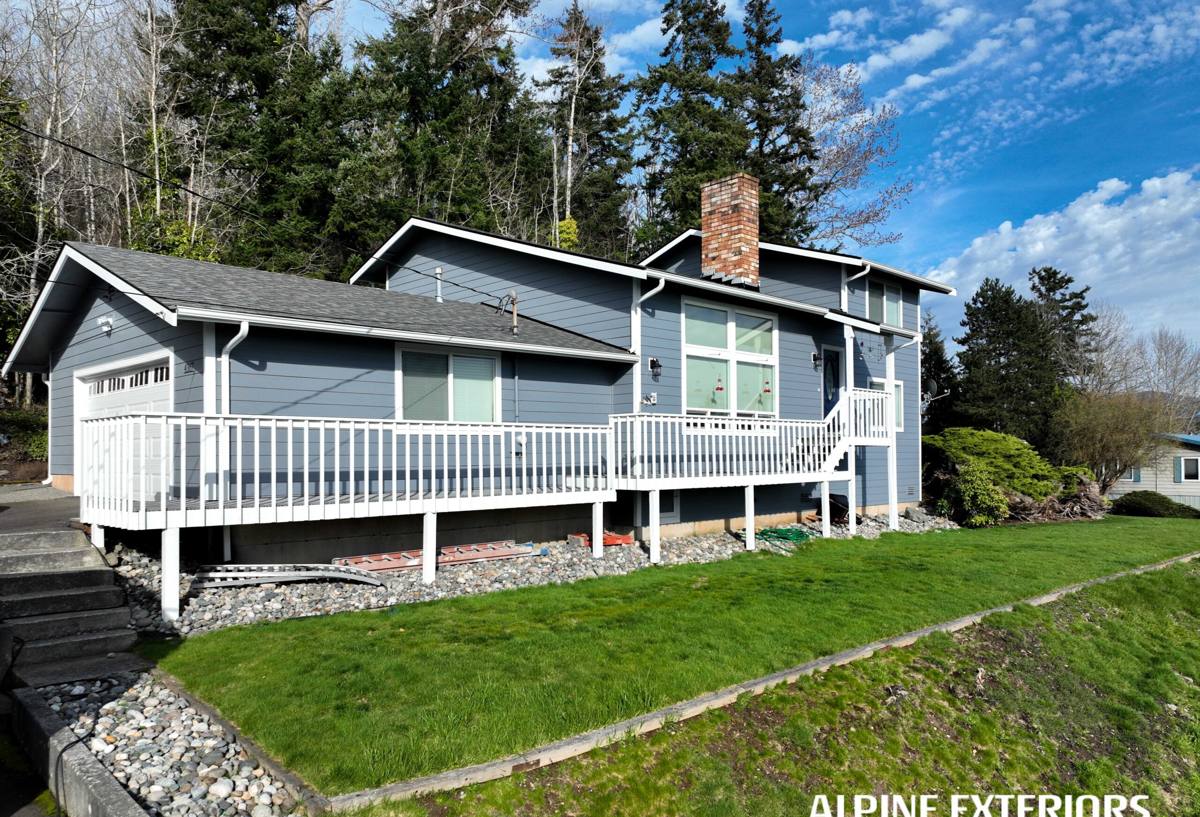
What Salt Air, Rain, and Moss Actually Do to a Shingle Roof
Salt Air and Metal Fasteners
Salt in the air accelerates corrosion on any exposed metal — nail heads, flashing edges, gutter hardware, vent stacks. On a roof that's otherwise sound, corroded fasteners and flashing are often the first thing to fail, and once flashing starts to lift or a nail head rusts through, water finds its way underneath the shingle mat, not just on top of it.
Wind-Driven Rain
Storms off the water tend to push rain sideways rather than straight down. Shingles are designed to shed water running downhill, so when rain is being driven upward or sideways under a shingle edge, the seal strip and the underlayment beneath it are what actually keep the deck dry. A roof with weak sealing or thin underlayment in this environment will leak well before its shingles look "old."
The Long Moss Season
Whatcom County's damp, mild winters and shaded, tree-lined lots give moss a long window to establish itself, and Birch Bay's proximity to the water keeps humidity up even on days without rain. Moss doesn't just look bad — it holds moisture against the shingle surface, works its way under tabs as it grows, and can lift shingle edges enough to let wind and water in. Left unchecked over several seasons, moss will shorten the life of an otherwise good roof.
Choosing the Right Asphalt Shingle for a Coastal Whatcom County Home
Not every asphalt shingle product is built the same way, and the differences matter more here than they would in a drier, calmer climate. The table below is a general guide — the right choice for any specific roof depends on the home's exposure, roof pitch, and budget.
| Shingle Type | Typical Lifespan | How It Handles Salt Air & Wind-Driven Rain | Moss Resistance |
|---|---|---|---|
| 3-Tab Shingles | 15–20 years | Lower wind rating; seal strips are more exposed on exposed, wind-facing slopes | Standard, no built-in resistance |
| Architectural (Laminate) Shingles | 25–30 years | Heavier, better wind ratings, thicker mat holds up better to driving rain | Standard unless algae-resistant granules are specified |
| Algae-Resistant (AR) Shingles | 25–30 years | Same as architectural, with copper- or zinc-infused granules | Actively resists algae and slows moss growth |
| Impact-Rated / High-Wind Shingles | 25–30+ years | Reinforced for higher wind exposure; best for open, water-facing lots | Varies; can be paired with AR granules |
For most Birch Bay homes — especially anything with a direct line of sight to the water or an open, unshaded roof — we lean toward algae-resistant, higher-wind-rated architectural shingles. The upfront cost difference over standard 3-tab shingles is modest, and it buys real resistance to the two things that age roofs fastest here: moss and wind.
What a Correct Installation Actually Involves
The shingle itself is only one piece of the system. A roof that's going to hold up to Birch Bay's conditions needs every layer underneath it done right.
Underlayment and Ice-and-Water Barrier
We install synthetic underlayment across the full deck, with self-adhering ice-and-water barrier at eaves, valleys, and around penetrations — the spots most likely to take on water when rain is blowing sideways instead of falling straight.
Flashing
Step flashing at walls and chimneys, and properly lapped flashing in valleys, matters more in a salt-air environment because it corrodes faster than shingles wear out. We use corrosion-resistant flashing material and make sure it's integrated with the underlayment correctly, not just caulked over.
Fastening
Proper nail placement and nail count per shingle — not staples, and not high-nailing to save time — is what keeps shingles attached in sustained wind. This is a detail that's invisible once the roof is finished but shows up as blown-off shingles a few winters later if it's skipped.
Ventilation
Balanced intake and exhaust ventilation keeps the attic dry and temperature-regulated, which protects the underside of the deck and helps prevent the moisture buildup that can encourage rot and interior moss/algae growth on the deck itself, not just the shingle surface.
Our Process for a Birch Bay Roofing Job
- Inspection and estimate. We look at the existing roof, deck condition, flashing, ventilation, and exposure (how much direct wind and salt air the roof actually faces) before quoting anything.
- Tear-off and deck check. Old shingles come off down to the deck so we can check for soft spots, rot, or prior water damage that's been hidden under the old roofing — common on older homes near the water that have had smaller repairs over the years instead of a full replacement.
- Deck repair as needed. Any damaged sheathing is replaced before anything new goes down. Installing new shingles over a compromised deck just hides a problem, it doesn't fix it.
- Underlayment, ice-and-water barrier, and flashing. Installed to current code and manufacturer specification, with extra attention at eaves, valleys, and penetrations.
- Shingle installation. Proper nailing pattern, correct exposure, and manufacturer-specified starter strips at eaves and rakes for wind resistance.
- Ventilation check and adjustment. We confirm intake and exhaust are balanced for the attic space, adding or adjusting vents where needed.
- Cleanup and walkthrough. Full site cleanup including a magnetic sweep for nails, and a walkthrough so you know what was done and what to watch for going forward.
What Drives Cost on a Birch Bay Roof
| Factor | Why It Matters Here |
|---|---|
| Roof pitch and access | Steeper or harder-to-access roofs take longer and need more safety setup |
| Number of existing layers | Tear-off of multiple old layers adds labor and disposal cost |
| Deck condition | Rot or soft sheathing found during tear-off means repair before shingles go on |
| Shingle grade selected | Standard vs. algae-resistant vs. impact-rated shingles carry different material costs |
| Flashing and penetrations | Chimneys, skylights, and multiple valleys all add flashing work |
| Ventilation upgrades | Adding or correcting intake/exhaust vents if the current setup is inadequate |
Moss and Moisture Maintenance Between Roofing Jobs
Even a well-installed roof benefits from some seasonal attention in this climate. A little consistency goes a lot further than an occasional deep clean.
- Keep gutters clear so water isn't backing up under the shingle edge at the eaves
- Trim back overhanging branches to reduce shade and let the roof surface dry out between rains
- Have moss and algae growth removed gently — pressure washing directly on shingles can strip granules and shorten shingle life
- Check flashing around chimneys, skylights, and vent pipes annually for corrosion or lifting
- Look at the attic occasionally for damp insulation, staining, or daylight coming through — early signs of a developing leak
Signs a Birch Bay Roof Needs Attention Sooner Rather Than Later
- Granules collecting in gutters or at the base of downspouts
- Shingle tabs curling, cupping, or lifting at the edges
- Visible moss or dark algae streaking, especially on north-facing or shaded slopes
- Rusting or lifting flashing around chimneys, skylights, or vent stacks
- Any daylight, staining, or dampness visible from inside the attic
- Missing shingles or exposed nail heads after a wind event
Any one of these on its own isn't necessarily an emergency, but they're worth having looked at before the next stretch of wet weather rolls in off the water.
Why It Matters to Hire a Crew That Already Works This Area
Roofing crews that mostly work drier, inland parts of Whatcom County aren't wrong about roofing in general — but they may not build in the extra margin that Birch Bay's exposure calls for: the corrosion-resistant fasteners and flashing, the wind-rated shingle and nailing pattern, the attention to moss-prone shading, and the ventilation balance that keeps moisture from building up in a wetter-than-average attic. We work on homes along this stretch of coastline regularly, so those aren't special add-ons for us — they're just how we build a roof out here.
If your Birch Bay home needs a roof inspection, a repair, or a full asphalt shingle replacement, we're happy to take a look and give you a straightforward assessment. Reach out for a free, no-pressure estimate using the form below.