 Custer
 What Nooksack's Climate Actually Does to a Shingle Roof
Nooksack sits close enough to the water and low enough in Whatcom County's weather pattern that roofs here don't age the same way they do further inland. Salt-carrying air off the Strait and the Sound works its way into fasteners, flashing, and shingle granules year-round, not just during storms. Layer on driving, wind-pushed rain that comes in sideways more often than straight down, and you get water finding its way into laps and seams that would stay dry in a calmer climate. Add the tree cover common to this part of the county, and you get shaded roof sections that never fully dry out between rain events. That combination — salt, wind-driven moisture, and shade — is why a roof that would be fine on a dry, open lot elsewhere can start showing granule loss, moss colonization, or soft decking years ahead of schedule out here.
None of this means asphalt shingle roofing is a poor choice for Nooksack. It's still the most practical, cost-effective option for the vast majority of homes in this area. It means the installation details — the parts that don't show up in a sales brochure — matter more here than they would in a milder climate. Get those details right and a shingle roof holds up well. Skip them, and the same shingle, from the same manufacturer, fails five to ten years early.
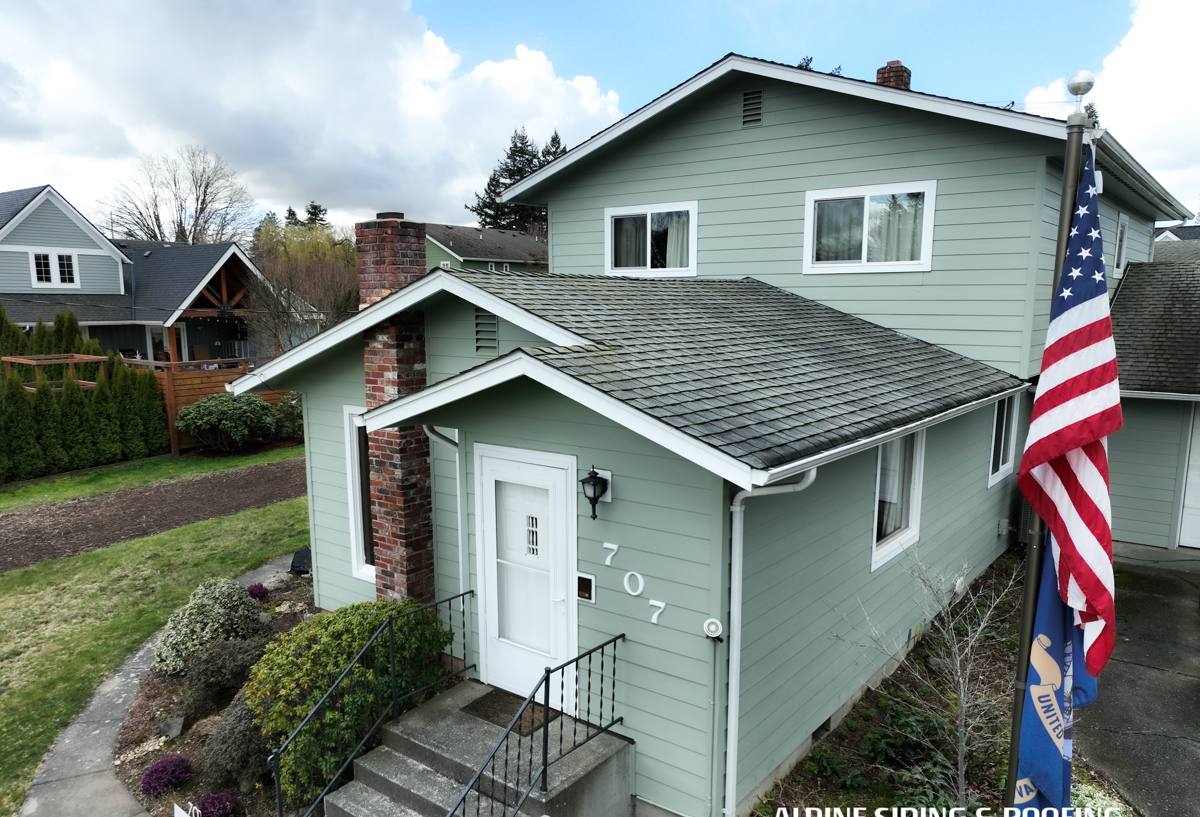
What a Correctly Installed Roof Needs in This Climate
Underlayment and Water Protection
In a region with sustained wind-driven rain, the underlayment is doing more work than most homeowners realize. We use synthetic underlayment as the standard field layer because it holds up better to job-site moisture during install and resists tearing in wind before the shingles go down. In vulnerable zones — eaves, valleys, and any area prone to ice damming during a cold snap — we add self-adhered ice-and-water membrane. That membrane is a sealed barrier against wind-driven rain finding its way under the shingle course, which is the single most common cause of hidden leaks we find on older Nooksack roofs.
Ventilation That Actually Works
A shingle roof that can't breathe traps moisture in the attic, and trapped moisture rots decking from underneath, invisibly, long before it shows up as a ceiling stain. Proper ventilation means balanced intake at the eaves and exhaust at the ridge, sized to the attic's actual square footage rather than whatever vent happened to be on the truck. On homes with mature tree cover and shaded roof planes, we pay extra attention to this because damp shade plus poor airflow is the exact combination that accelerates both deck rot and moss growth.
Flashing Is Where Roofs Actually Fail
Shingles rarely fail in the open field. Roofs leak at the transitions — chimneys, sidewalls, skylights, plumbing vents, and roof-to-roof valleys. Step flashing, counter-flashing, and properly lapped valley metal have to be installed in the correct sequence with the shingle courses, not caulked on afterward as a shortcut. Caulk is a maintenance item, not a waterproofing method, and in a climate with this much sustained rain, a caulk-dependent flashing detail is a leak on a delay.
Shingle Selection for Wind and Algae Exposure
We favor architectural (laminated) shingles with a solid wind rating and algae-resistant granules for most Nooksack homes. The algae-resistant granules contain copper or zinc compounds that slow the growth of the black streaking common on shaded, moisture-prone roofs in this region — it doesn't make a roof immune to moss, but it measurably slows the staining and biological growth that comes with our wet season. Wind rating matters separately from that; a roof exposed to open gusts off the water needs a shingle and nailing pattern rated for it, not just a shingle that looks similar on the shelf.
Our Process for a Nooksack Asphalt Shingle Roof
The process itself isn't exotic — good roofing rarely is. What matters is not skipping steps under time pressure, which is where most corner-cutting happens on reroof jobs.
- Inspection and scope. We walk the roof, check the decking condition from the attic side where accessible, and note existing ventilation, flashing condition, and any soft spots before quoting anything.
- Tear-off. Full removal down to the deck on reroofs — we don't install a new layer over old shingles. Overlaying traps moisture, hides deck problems, and voids most manufacturer warranties.
- Deck repair. Any soft, delaminated, or water-damaged sheathing gets replaced before anything else goes down. This is the step that's easiest to shortcut and most expensive to skip.
- Underlayment and ice-and-water membrane installed per the detail above, with extra attention to eaves and valleys.
- Flashing replaced or reused only where it's still sound, installed in proper sequence with the shingle courses.
- Shingle installation to manufacturer nailing pattern and exposure specs — not a faster, looser pattern.
- Ventilation check to confirm intake and exhaust are balanced for the finished roof.
- Cleanup and magnetic sweep for nails and debris, plus a final walk-through.
Comparing Shingle Options for a Nooksack Home
Not every home needs the same shingle, and the right choice depends on exposure, budget, and how long you plan to own the house. Here's how the common options stack up for this specific climate.
| Shingle Type | Typical Lifespan Here | Wind Performance | Best Fit |
|---|---|---|---|
| 3-tab (standard) | Shorter end of range in this climate | Lower wind rating | Budget-driven projects, rental properties |
| Architectural / laminated | Longer service life, better weathering | Higher wind rating, more resistant to gust lift | Most primary residences in Nooksack and Custer |
| Algae-resistant laminated | Same as standard architectural, slower staining | Same high wind rating | Shaded lots, north-facing planes, homes near mature trees |
| Impact-resistant (Class 4) | Longer, with added resistance to debris impact | High wind rating, often paired with insurance discounts | Open, exposed lots or homeowners prioritizing long-term durability |
What Actually Moves the Cost of a Reroof
We don't quote a price without seeing the roof, and we're not going to throw out numbers here that don't reflect your actual house — but the factors below are what genuinely drive the cost up or down on a Nooksack reroof, more than the shingle brand itself.
| Factor | Why It Matters |
|---|---|
| Roof size and number of planes | More square footage and more cuts around valleys and hips means more labor and material |
| Pitch and access | Steeper roofs are slower and riskier to work, which affects labor time |
| Layers to remove | A roof with an existing overlay takes longer to tear off than a single-layer roof |
| Decking condition | Rot or delamination found during tear-off adds repair cost that can't be known until the old roof is off |
| Flashing and penetrations | Chimneys, skylights, and multiple vent penetrations add detail work |
| Shingle grade chosen | Standard, algae-resistant, and impact-resistant shingles carry different material costs |
Moss, Algae, and Long-Term Maintenance
A long moss season is close to unavoidable on a shaded Nooksack roof, and pretending otherwise doesn't help anyone. What you can control is how much damage it does. Moss holds moisture against the shingle surface and, over years, can lift shingle edges and work granules loose. The fix isn't aggressive pressure washing, which strips granules faster than moss ever would — it's periodic gentle removal (soft brushing or low-pressure rinsing), keeping gutters and valleys clear so water isn't sitting anywhere, and trimming back branches that keep a roof plane in permanent shade. Zinc or copper strips near the ridge can help slow regrowth on roofs with chronic moss pressure. None of this replaces a correctly installed roof, but it extends the life of one significantly.
Why a Crew That Already Works in Nooksack Matters
Roofing crews that mostly work drier, inland climates tend to underbuild for conditions like ours — not out of carelessness, but because it's not what they see every day. A crew that regularly works Nooksack and the surrounding Custer area already knows which details get skipped on a typical spec install and why those details fail first out here: the flashing sequence, the underlayment coverage at eaves, the ventilation balance under heavy tree cover. That familiarity shows up less in the sales pitch and more in the roof still performing correctly a decade in. It also means faster response if a storm causes damage and you need someone who already knows the area, not a crew driving in from out of the county.
Signs Your Nooksack Roof Needs Attention
Most shingle roof problems give warning signs well before a leak shows up inside the house. Worth checking for periodically, especially after a hard winter storm season:
- Granules collecting in gutters or at downspout outlets
- Shingles that look cupped, curled, or are visibly lifting at the edges
- Dark streaking or moss patches, particularly on shaded or north-facing slopes
- Soft or spongy spots when walking the roof (assessed by a professional, not a DIY walk)
- Rusted, cracked, or separating flashing around chimneys, vents, or skylights
- Daylight visible through the roof deck from inside the attic
- Missing shingles or exposed nail heads after a windstorm
- Interior ceiling stains, even faint ones that seem to dry up and disappear
Any one of these on its own isn't necessarily an emergency, but it's worth a professional look before the next wet season rather than after.
Get a Straight Answer on Your Roof
If your Nooksack roof is showing any of the signs above, or you're just trying to plan ahead before the next wet season sets in, we're glad to take a look. Fill out the form below for a free, no-pressure estimate — we'll tell you honestly what we see, what it needs, and what it doesn't.