 Custer
 Blaine's Climate Puts Real Demands on a Roof
Blaine sits right up against Boundary Bay and the Salish Sea, which means homes here deal with a combination of weather stresses that inland Whatcom County properties don't face nearly as hard. We've worked on roofs across this corner of the county long enough to know that a shingle roof installed the same way you'd install one in Bellingham or Ferndale often underperforms once it's a few blocks from the water in Blaine. Salt air, wind-driven rain, and a moss season that can run eight or nine months out of the year all attack a roof differently, and each one calls for specific choices in materials and installation detail.
Salt Air and Metal Corrosion
The airborne salt that comes off Boundary Bay and Semiahmoo Bay doesn't just affect siding and gutters — it works on every exposed metal component of a roof system. Nail heads, flashing, vent stacks, and drip edge all corrode faster near the water than they would a few miles inland. On a standard asphalt shingle roof, the metal details are exactly where leaks start once they fail, so the fastener and flashing spec matters more in Blaine than in a lot of other towns we serve.
Driving Rain and Wind-Driven Moisture
Storms off the Strait of Georgia frequently arrive with enough wind to push rain sideways and up under shingle tabs, rather than letting it simply run off. That kind of wind-driven rain finds every weak seal, every underdriven nail, and every gap in flashing around chimneys, skylights, and roof-to-wall intersections. A roof that would hold up fine in calm rain can still leak in Blaine if the installer didn't account for wind uplift and lateral water intrusion.
The Long Moss Season
Whatcom County's damp, shaded, mild winters are close to ideal growing conditions for moss, and Blaine's proximity to the water keeps humidity high for much of the year. North-facing slopes and roofs shaded by evergreens are especially prone to moss and algae growth that holds moisture against the shingle surface, degrades granules over time, and can lift shingle edges as mats build up. Left unaddressed, moss shortens the working life of an asphalt shingle roof more than almost any other single factor in this region.
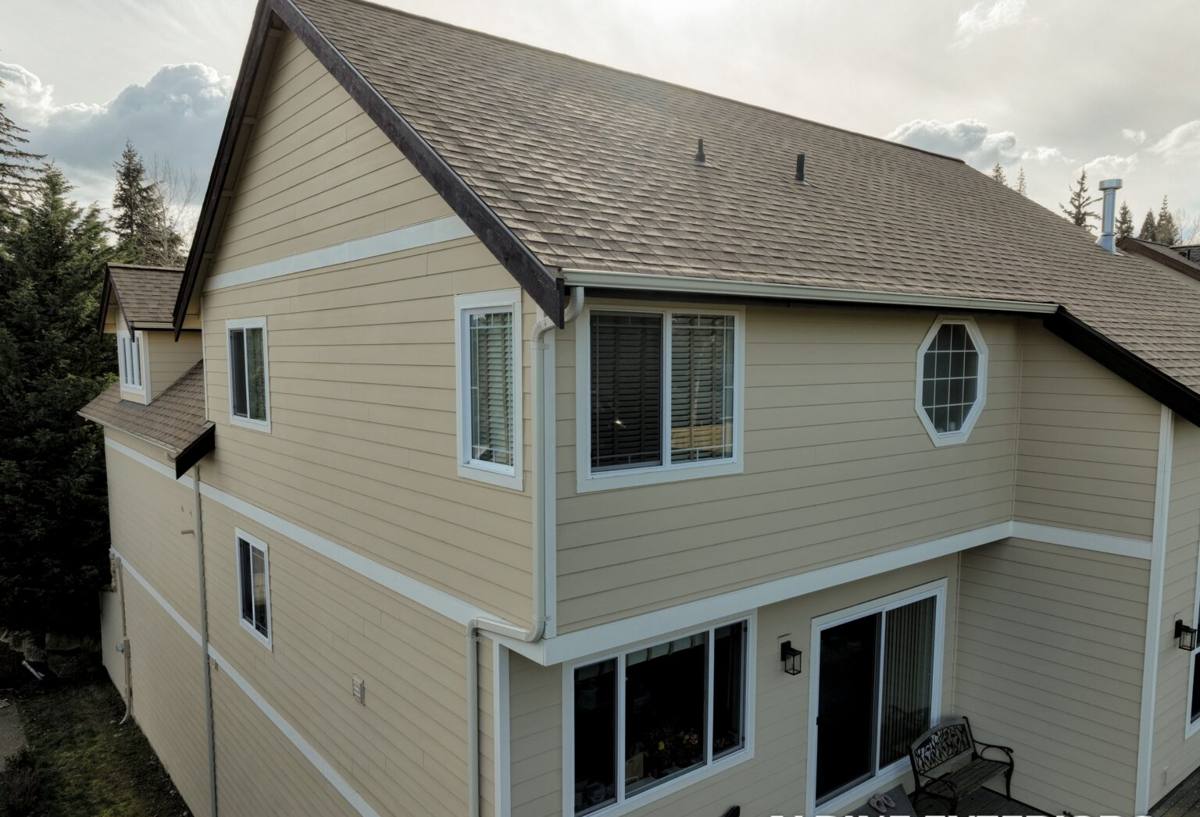
What a Correct Asphalt Shingle Installation Actually Involves
Asphalt shingles look like a simple product, and the shingle itself usually isn't where problems start. Most of the roofs we get called out to repair failed because of what's underneath or around the shingles — the parts homeowners never see once the job is done. Getting these right the first time is the difference between a roof that lasts its full rated life and one that needs attention in year six or seven.
Tear-Off and Deck Inspection
We remove the old roofing down to the deck rather than layering over it. That lets us actually inspect the sheathing for soft spots, rot, and delamination — problems that are common on older Blaine homes where a slow leak has been sitting under a previous roof for years without being obvious from inside the attic. Any damaged decking gets replaced before anything new goes down; roofing over bad sheathing just hides the problem and shortens the life of the new roof.
Underlayment and Water Barrier
Given how much wind-driven rain this area sees, we don't treat underlayment as an afterthought. A synthetic underlayment with good tear strength, combined with self-adhering ice-and-water barrier at eaves, valleys, and any low-slope transitions, gives the roof a real second line of defense if wind ever drives water past the shingle surface. This is one of the details that costs little at install time but matters enormously during a January storm.
Flashing at Every Penetration
Every chimney, vent pipe, skylight, and roof-to-wall junction is a place water can get in if the flashing isn't formed and stepped correctly. We use corrosion-resistant flashing material given the salt air, and we counter-flash and seal these details rather than relying on caulk alone to bridge a gap. Caulk fails; properly lapped and stepped metal doesn't.
Ventilation
A shingle roof needs balanced intake and exhaust ventilation to manage heat and moisture in the attic. Without it, moisture gets trapped, which accelerates sheathing rot and can void a shingle manufacturer's warranty outright. In a humid, marine climate like Blaine's, we treat ventilation as part of the roofing scope, not an optional extra.
Choosing the Right Shingle for a Blaine Home
Not every asphalt shingle product handles this climate the same way. The table below reflects how we think through the trade-offs for homes in this specific area, rather than a generic national comparison.
| Shingle Class | Wind Resistance | Algae/Moss Resistance | Typical Warranty Length | Best Fit |
|---|---|---|---|---|
| 3-Tab (standard) | Lower | Standard, no algae-resistant granules | Shorter | Budget projects on sheltered, inland lots |
| Architectural / Laminate | Higher, rated for stronger gusts | Often available with algae-resistant granules | Longer | Most Blaine homes, especially near water or under trees |
| Premium Laminate | Highest in the asphalt category | Algae-resistant granules standard | Longest, often with enhanced wind coverage | Exposed, waterfront, or high-wind lots |
For most Blaine properties, we steer homeowners toward an architectural shingle with algae-resistant (copper-infused) granules and a wind rating suited to coastal exposure. The extra upfront cost over a basic 3-tab product is modest, and it directly addresses the two conditions that shorten roof life here: moss growth and wind-driven rain.
Our Process, Start to Finish
Homeowners generally want to know what's actually going to happen once they hire us, so here's the sequence we follow on a typical Blaine reroof:
- On-site evaluation. We walk the roof, check the attic for ventilation and moisture signs, and note any soft decking, moss buildup, or flashing wear.
- Written estimate. You get a clear scope covering tear-off, decking allowance, underlayment, flashing, shingle selection, and ventilation work — no vague line items.
- Scheduling around the weather. We plan install windows with Whatcom County's rain patterns in mind and stage materials to keep the deck covered if conditions shift mid-job.
- Tear-off and deck repair. Old roofing comes off, decking is inspected, and any rot or delamination is replaced before anything new goes on.
- Underlayment, flashing, and shingle installation. Installed to the details above, with attention to nailing pattern and fastener spacing per manufacturer spec — under-driven or over-driven nails are a common cause of early failure.
- Ventilation check and correction. Intake and exhaust venting is verified and adjusted if the existing system is inadequate.
- Cleanup and magnetic sweep. Job site and yard are cleared of debris and nails before we consider the project done.
- Final walkthrough. We go over the finished roof with you, not just leave an invoice.
Keeping a Blaine Roof Healthy Between Installs
A correctly installed roof still needs some basic upkeep in this climate, particularly around moss control. This checklist covers what actually moves the needle for homeowners in and around Blaine:
- Have moss physically removed rather than just treated, since mats hold moisture against the shingle even after the moss itself is dead
- Keep gutters clear so wind-driven rain has somewhere to go instead of backing up under the shingle edge
- Trim back overhanging branches on shaded, north-facing slopes to cut down on the moisture and debris that feed moss growth
- Have flashing around chimneys and vents visually checked every couple of years given how fast salt air corrodes exposed metal
- Watch for granule buildup in gutters, which signals accelerating shingle wear rather than normal aging
- Get the attic checked periodically for signs of trapped moisture, especially if the home doesn't have modern ventilation
Problems We Commonly Find on Blaine Roofs
Because we work this area regularly, a handful of issues show up again and again on older or poorly maintained roofs near the water:
- Corroded flashing that was never upgraded during a previous reroof, leaving the same failure point in place under new shingles
- Moss mats on north-facing slopes that have lifted shingle edges and let water track underneath
- Inadequate or blocked attic ventilation from insulation stuffed into soffit vents during a past upgrade
- Nail pops and lifted tabs from wind exposure combined with a fastening pattern that wasn't adjusted for a coastal wind rating
- Layered roofing from a prior "roof-over" job that's now hiding decking damage underneath
What Affects the Cost of a Blaine Reroof
Pricing depends on the specifics of the home, but these are the main factors that move an estimate up or down:
| Factor | Why It Matters |
|---|---|
| Roof size and number of slopes/valleys | More cuts and seams mean more labor and material waste |
| Deck condition | Rot or delamination found during tear-off adds repair cost not visible before the job starts |
| Shingle class chosen | Architectural and premium products cost more per square than 3-tab but resist moss and wind better |
| Flashing scope | Homes with chimneys, skylights, or multiple penetrations need more custom flashing work |
| Access and pitch | Steep or hard-to-access roofs take longer and require more safety setup |
| Existing ventilation | Adding or correcting intake/exhaust venting is added scope, not a hidden fee |
We'd rather walk you through these factors on-site and give you a real number than quote a rough price over the phone that doesn't hold up once we see the roof.
Why It Matters That We Already Work Blaine
A crew that's only seen inland or drier climates tends to treat asphalt shingle installation as a one-size-fits-all job. We've spent enough time on roofs in Blaine and the surrounding parts of Whatcom County to know which details actually get tested by this specific environment — the salt air on flashing, the wind direction that drives rain up under tabs, and the shaded slopes where moss takes hold first. That local pattern recognition is what keeps a roof performing for its full expected life instead of needing repairs a few years in.
If you're weighing a reroof, a repair, or just want an honest read on how much life is left in your current roof, we're glad to come take a look. The estimate is free, there's no pressure, and you'll get a straight answer about what your roof actually needs — use the form below to get started.